• Our hope-filled future is bound up in sharing the story of Jesus, in discipling others, in bringing those disciples together into communities of believers, and in developing and releasing those believers to create other communities... till Jesus the King comes again!

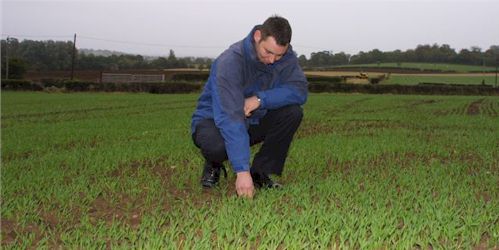
Counting Sheep

Whenever one talks about assessment, it evokes a response.  Not many of us enjoy being assessed or evaluated.  There is a certain fear of “not measuring up” that can rise up in our hearts when we are asked to take a closer look at our activities and work.  Yet, a good assessment process can provide us with much needed input for further development and growth.

Any assessment, though, “requires a shared definition of mission”.  We as a community have this shared definition in our global vision to see “innovative teams multiplying disciples and communities of believers, bringing the Gospel within reach of lost people everywhere we go.” We recognize that any assessment of our work and ministry in light of our vision must take into consideration elements of ‘quality’ and ‘quantity’.   We do not want to see more disciples just so we can add “more sheep to our numbers.”   We long to see disciples who multiply themselves in others.  We are looking for quality, for depth, and for growth.  Nevertheless, we are looking for and praying for a ‘number’ of disciples.

A good assessment process would seek input in at least three ways.  One, it would ask for feedback from the larger community.  Input from other workers and partners (both expat and national) would give a fuller picture of how the work has progressed.  Second, it would take a ‘long view’ of the work.  It would look at how the work is helping establish reproducible and sustainable growth in people’s lives, and in the life of the community of believers.  Finally, it would listen for stories; stories of what God has been doing in us and through us as workers.  These stories would frame the work in the larger context of the mission and vision to which God has called us.

‘Counting sheep’ is a lot more than numbers.

Still Not Satisfied

I agree that there are a certain number of false dichotomies such as being versus doing, people oriented versus task oriented, and faithfulness versus fruitfulness.  It is not either/or, but both/and.

I agree that it is God who “brings the increase”, who chooses to work in us and through us in order that fruit may come from our efforts for His glory; that we are not called to measure the value of our work simply by the fruit that comes or does not come from our efforts.

But I am still not satisfied with our answer as to how to “assess” the ministry, the work to which God has called us.  I am not satisfied because the Bible repeatedly encourages us to “make further progress” in our faith; to “bear fruit that lasts”; and “to teach faithful people who will be able to teach others also”. 

In other words, the Bible implies that as stewards of the resources God has entrusted to us, we will “enter wholeheartedly into our work, to take risks, to try new strategies.”  We will also allow ourselves to be accountable as a means to constructively evaluate how we can use our gifts best for God’s work.

If we were to truly “one another” one another (i.e. be accountable to another), then we would be, or should be willing to sit down with another and ask:

(1)   What is my (and your) assessment of my recent ministry activity?  Have I worked as hard as I could?  Did I follow a healthy or poor strategy?  Is there further training that I need?  Am I in the best place or role for fully using my particular strengths and gifts?

(2)   What is my (and your assessment) of my recent ministry activity?  Has my ministry stirred up a competitive spirit in my heart, a prideful and self reliant spirit?  Have I faithfully and honestly reported what has happened in my ministry?  Have I neglected my own life and journey with Jesus?

We should ‘think on these things’.

Prayer Work(s)

I started trying to write out some ‘prayer cards’, like those that we read about last week in Paul Miller’s book, A Praying Life.  It’s not an easy task.  But then I read his short chapter on “Prayer Work” and realized what Paul is talking about is not a task, but a journey; a process in which I am intimately involved with the Father, and with others:

My prayer for Bob had a familiar threefold pattern.  First, I wrote the prayer down.  Then I watched for God to work while I prayed.  Finally God provided an opportunity where I “worked” the prayer request. By worked I mean that God involved me in my own prayers, often in a physical and humbling way.” (236)

In reality, God is working to change me through my work in praying for others.  As Paul Miller writes later, “If Satan’s basic game plan is pride, seeking to draw us into his life of arrogance, then God’s basic game plan is humility, drawing us into the life of His Son.” (238)

How has this been your experience in your journey in prayer?

Faith in Himself

William Still was pastor of the Gilcomston South Church in Aberdeen Scotland.  He wrote the following which I think might have some relevance to our discussion of “faithfulness” and “fruitfulness”:

God’s faith is not in frail sinners whom he chooses, but in himself, and in his ability to keep them.  When he gives you a task to do that must be done thoroughly and wisely and well, he is not trusting your frailty, although you may think all depends on you.  He is trusting himself, and there is nothing he cannot do through you that he wants to do.”

Read also John’s comment to yesterday’s post.  It provides another helpful perspective.

Which One Is It?

Ministry is our life, but when we come down to “assessing” that ministry, we run into a seemingly endless debate. 

Some will argue that what God asks of us is nothing more than to be “faithful”.  Any accomplishment or fruit is ultimately His work.  We should not focus on “success”, but on faithfully carrying out the work that God has called us to.  Texts such as 1 Corinthians 4:2 “Now it is required that those who have been given a trust must prove faithful” and 2 Timothy 2:2 “And these things which you have heard from me in the presence of many witnesses, these entrust to faithful men, who will be able to teach others also” are offered to support this thought.

Others argue that God has called us to bear fruit for His glory.  God entrusted us with a message, and desires that this message bear fruit in more disciples, more leaders, and more communities.  Texts such as John 15:8 “By this is My Father glorified, that you bear much fruit, and so prove to be My disciples” are put forth as clearly teaching that our work needs to lead to something.

What about if both of these elements have flaws?  I have always thought the simple answer was that you needed both in ministry.  But, as I reflected more on this discussion, I realized there are questions that arise with each element.

For one, if faithfulness is your primary value, the hard question would be: what standard will you use to assess how you have used God’s gifts to you?  Over and over, the Bible makes reference (through parable and straight up teaching) to the wise use or investment of God’s resources, and the subsequent “return” on those resources.  Certainly, some of that “return” may not happen in your lifetime, but this is a legitimate question that arises.

If fruitfulness is your primary value, the hard question would be: at what moment does your “work” become an obstacle to the further expansion of God’s work?  The emphasis in the Scriptures is making disciples who will make disciples; it’s a ‘giving away’ of our work and fruit.  Yes, God wants us to bear fruit, but we must show ourselves as faithful “stewards” of what God has given to us, always moving out of the way, and giving away what He allows us to see as fruit.

Being “faithful” and “fruitful” requires that we be willing to address these hard questions.

Prayer “Cards”

I have used a prayer list for years.  So, I was fascinated by Paul Miller’s idea of “prayer cards” which he talks about in chapter 27 of A Praying Life.  Not that I was looking for another “tool”, but I have often felt my list keeping me from greater engagement and conversation with my Father because I “had to get through the list” before I finished praying.

Paul Miller shares that “a prayer card has several advantages over a list.  A list is often a series of scattered prayer requests, while a card focuses on one person or area of your life.  It allows you to look at the person or situation from multiple perspectives.  Over time, it helps you reflect on what God does in response to your prayers.  You begin to see patterns, and slowly a story unfolds that you find yourself drawn into.”

I love the idea of “keeping track of the story” through prayer; of focusing on seeing what God is doing rather than on my ability to get through a scattered list of requests and losing the larger focus. 

It might be worth the effort to try writing out a few cards this week, not as some kind of new “tool”, but as a means to better direct my prayers, your prayers for others.

Prayer is asking God to incarnate, to get dirty in your life.  Yes, the eternal God scrubs floors.  For sure we know he washes feet.  So take Jesus at his word.  Ask him.  Tell him what you want.  Get dirty.  Write out your prayer requests: don’t mindlessly drift through life on the American [Western] narcotic of busyness. If you try to seize the day, the day will eventually break you.  Seize the corner of his garment and don’t let go until he blesses you.  He will reshape the day.”