• Our hope-filled future is bound up in sharing the story of Jesus, in discipling others, in bringing those disciples together into communities of believers, and in developing and releasing those believers to create other communities... till Jesus the King comes again!

Needing other voices

I recently re-read an article from several years ago entitled: “Different for God’s Greater Glory: Benefits of and Barriers to Embracing Ethnic and Generational Diversity in Mission Leadership.” The authors point us to the necessity of seeking to intentionally “work together with the universal church.” This means that we as workers, called to reach the unreached, must diversify the voices speaking into our lives and participating in strategy and leadership discussions and decisions.

But why?  Why should I spend the effort to diversify the voices involved when it already takes so much time to understand one another from the same cultural context?

One compelling reason given: “By having leaders with a broader range of ages and ethnicities guiding the movement, the leadership team can “see” better.  Diversity gives the leadership team a wider base of experiences, as well as varied cultural and generational perspectives to draw from when making decisions or crafting ministry strategy in a given area.”  That statement, though it takes time, effort, and humility, resonates with our hearts: “The leadership team can “see” better”. 
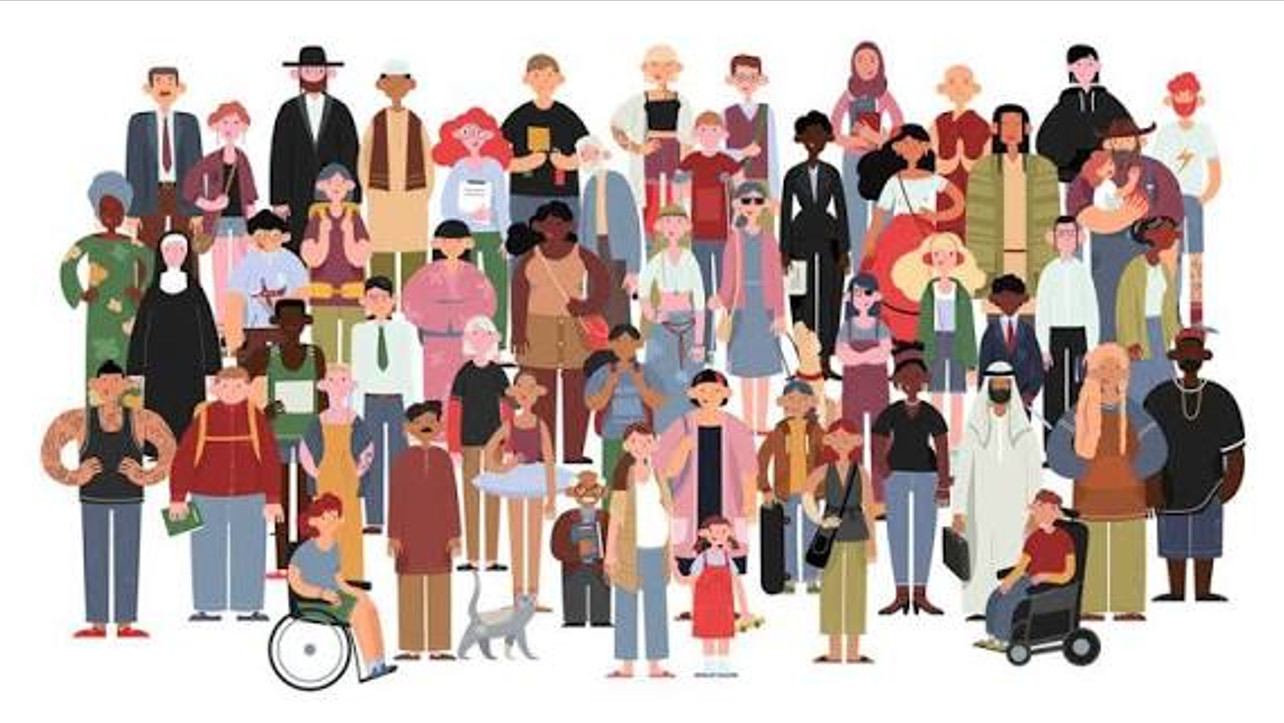
Working as a team with diverse voices strengthens the unity that we are to have as the body of Christ. Working together demonstrates our need for others with different gifts, cultural insights, and experiences.

When we look at the world, we see it with our own cultural lens and easily “miss” others and what they want to say to us and the team. Their own cultural & people group “glasses” provide other ways to see a situation or strategy that we might not have thought of.

During a visit to one of our teams in Asia, our global board members participated in a tour of the ministry centre where our team served. When we debriefed the visit afterwards, most of the board members commented on the ministry fruit and the service given to the larger community. However, one board member from another culture commented on how pleasantly surprised he was to see so many local workers from that culture involved in the work. No one else “saw” that, but his insight launched a discussion on how to invest, equip, and release others into the ministry.

One way we seek other voices would be to sit down with a younger leader or a leader from a culture that is significantly different from your own. Then take a recent ministry issue (not breaking confidence) and ask them how they would have approached or addressed the situation.

A second way would be to ask a ministry colleague from another cultural background to read and talk with you through the book, The Culture Map, by Erin Meyer.  The goal would be to understand in a small way the benefit of insights from cultures different from your own.

The Importance of “We”

Working on a study of the church with one of our new elders in training, I came across this statement in the book that we are studying together (free translation from the French text): “A person does not exist isolated, independent from others: he/she is a person in community; he/she is built by and for the community. No one is an island sufficient in himself/herself”

I’m sure that all of us would agree. As individual members of a local church, we are “built by and for community.”  That’s what we teach, share and preach to others. That’s what I’m seeking to impress upon this elder in training. 

However, many times the importance of the “community” element in our personal growth and development seems to get lost in cross-cultural ministry.  Over time, we can learn to function autonomously and see input (read: constructive feedback) from others as unnecessary and a way for them to simply unload on us. We avoid looking for and receiving feedback from others.  We may work on a team, but we do not allow ourselves to be built by this community.

What we want in the church we are seeking to establish is for believers to recognize their need for others: “Rather, speaking the truth in love, we are to grow up in every way into him who is the head into Christ” (Ephesians 4:15). It’s the “we” that takes priority because we believe that we need one another to be built up into Him.

I am always saddened to read that the number one reason cross-cultural workers leave the ministry is because of other cross-cultural workers. Certainly, there are a number of other reasons to explain this attrition. But working to sift feedback from others and then applying that helpful feedback would be a first step to allowing the community to grow us up into Christ.

So, how do we allow ourselves to built by the community that we are part of?  That’s for another blog post.

Reset 2025

If we were to take a quick glance at what is happening in global missions, we would have to observe the growing presence of many more players, coming from everywhere and desiring to serve anywhere in the world.  

Rather than resources, initiatives, and missional ingenuity coming primarily from only one sector of the world, we can now identify numerous majority world and non-majority world agencies and organisations seeking to multiply disciples and communities of believers.

Lausanne 2024 organisers call this dynamic: a polycentric focus.

So, we would do well to push the ”reset’ button concerning our approach and engagement in what God is doing in the world.

Perhaps we might say that as a tangible demonstration of this polycentric focus, we (the WT community wherever we might be serving around the globe) pledge to serve as a “collective”.

In other words, we would commit ourselves to sharing more widely to learn of what God is doing in different places around the globe through multiple possible partners; to communicating more deeply the “we” of our community rather than the “me” so as to express the unity of Christ; to cooperating and collaborating more with one another and like-minded partners for greater expansion; and working together to provide all the resources needed around each initiative we would jointly hold as a collective.

That is our challenge for 2025! 

What are you learning?

We have often said to participants in the Leader cohort or Leader intensive trainings that most cross-cultural workers stop learning at age 40.  J. Robert Clinton insisted in his work on leadership that most leaders, from age 40 on, rely on what they have learned up to that point in their life and ministry.

In the global WT community, we talk a good deal about lifelong learning. However, I would guess that most of us are “sporadic” lifelong learners at best. We lack consistency and direction.

To get us started again towards consistent and regular growth, might I suggest the following ideas?

  1. List 1-3 books, articles, podcasts, or training videos you would like to read, listen to or do in the coming month. Ask some trusted friends for their advice. Then prioritize your list.
  2. Make a plan. Many of us resist this part, yet we do this most days of our lives. We make a plan for how to visit our supporters and supporting churches. We make a plan for our outreach events this coming year. We make a plan for going away on vacation. We should be able to the same with our lifelong learning.
  3. Share with another an insight you gain from any of the materials you read or listen to.  Tell the person what you learned and how you see it applying to your life or ministry. This is an under-rated part of the learning process.  Capturing in your own words what you have learned from a book or a podcast will reinforce the principle or insight you gained.
  4. If the book, article, podcast or training video caused you to grow, share it with another person and tell them why you think it would be helpful to them and their lifelong learning and growth.

If you are looking for an example of how this might look, drop me a note and I’ll share a recent personal example from my read of the book, Insight, by Tasha Eurich.

If you have other thoughts or ideas, feel free to share them by commenting on this post.

Preparing for the Resurrection

Easter is the celebration of the amazing news that: “He is risen!” 

In the history of the Church, Easter was an event for which one prepared weeks in advance.  Unfortunately, this time of Lent (the 40 days prior to Easter) has become known primarily as a time to ‘give up something’.  So, my encouragement to you is to use this next week as a time to prepare well to hear again the good news that “He is risen!”

We know that the Gospel is not a series of statements to which we adhere but is the power of salvation (Romans 1) that transforms a hope-less life into one with the firm assurance that nothing will be able to separate us from the love of Christ.

And Easter is the culminating event in the year of all those daily reminders of the price He paid to redeem us and the natural outpouring of our life in service to Him for His gift of grace in saving us. 

So how might we prepare to hear again those incredible words: “He is risen”? There are many helpful Lenten devotionals (see the recent Wellness Wednesday) which would guide you in your preparation.  However, I want to emphasize an element which is sometimes lost in our preparation: community.  Preparing for Easter is both an individual and community activity.  However, when we forget the community aspect, we deprive ourselves of the depth of insight and support that comes from sharing in this preparation for Easter together. This could be in one’s, small group, team, family or local community of believers.

One of the Church Fathers, in his Lenten devotional, wrote: “The Christian, I say, sees all that, and confessing to himself his impossibility to free himself in his own strength from the venom of sin, and to acquire by his own means a virtue so pure and so perfect, he falls in lowliness of heart before the throne of God’s grace and exclaims: Lord and Master of my life, keep from me a spirit of idleness, of listlessness, of ambition, and of idle talking. But grant me, Thy servant, a spirit of temperance, of humility, of patience and of love!”  It is interesting to note that each of the elements he mentions for confession or growth is community related.  In other words, the activity becomes an area of struggle or growth because it involves his/her engagement with others. 

Practically, what might this look like?  Here are a few recommendations.  Feel free to share others by sending a note to me and I’ll post those ideas as a blog post.

  • Share an insight you gained in your recent Lenten devotional or Bible reading with another.  Tell him/her how that insight is helping prepare your heart for the celebration of Easter.
  • Read out loud with others one of the many texts surrounding the crucifixion and resurrection (Matthew 27:32-56; 28:1-10).
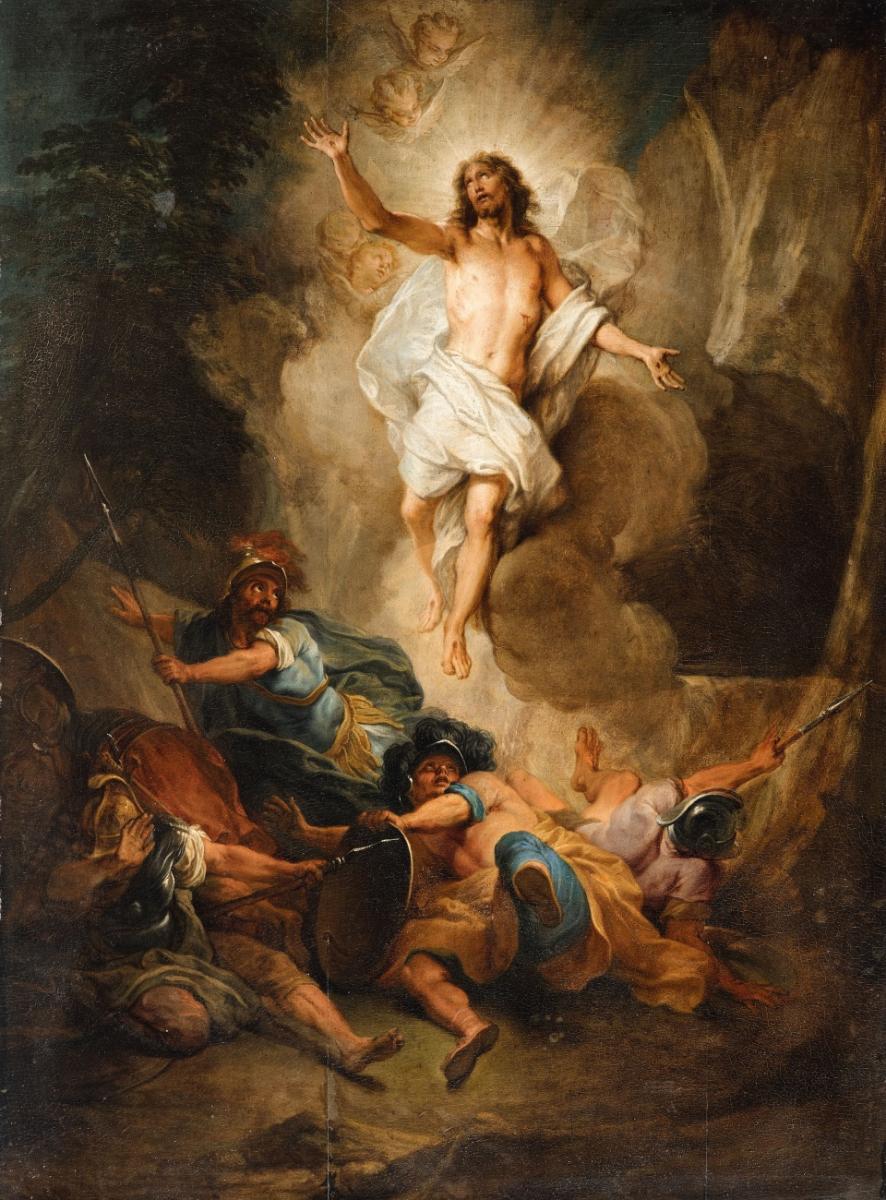
  • Take the time to reflect with another on one of the many works of art which depict the resurrection or the events following.  Talk to one another about what this particular work of art tells you about Christ and His resurrection.

The WE voice

In the midst of all the voices seeking to be heard in our world today, one voice that often seems predominant is: the “me” voice.  It is not very often that one hears the “we” voice.

When I use the phrase: the “we” voice, I am referring to that heart response that longs to seek the good of others.  Paul put it this way in Galatians 5:13: ‘It is absolutely clear that God has called you to a free life. Just make sure that you don’t use this freedom as an excuse to do whatever you want to do and destroy your freedom. Rather, use your freedom to serve one another in love; that’s how freedom grows.” [The Message]

The “me” voice is focused on doing “whatever it wants to do”; it shuts off its heart from the needs of others and from the need for others.  Rather than serving one another, the “me” voice pushes one to serve self and self only.

Honestly, none of us would say that the “me” voice is a primary voice of our heart and of our actions.  And yet …

The Psalmist tells us to ask God “to search our hearts and see if there is any hurtful (or grievous) way in me” (139.23-24). So, that “me” voice must lurk somewhere in our hearts and seek ways to assert its will.  For example …

— Hoping for a free Saturday for once, our small group proposes to have an outside picnic together on that very Saturday.  The “me” voice comes up with at least twenty reasons why this would not be a good idea.  With most reasons coming from my wanting a free Saturday.

— I have a new idea for our CP team. I bring it to the team, but when pushback comes, I choose to listen to the “me” voice and not profit from the insights found in the feedback from others.

— A fellow worker sits down to talk with me. During the conversation, this worker shares their disappointment with me and the way that I responded in a recent group discussion. The “me” voice goes into overdrive wanting nothing more than to defend myself.

Turning more to the “we” voice is not the simple answer.  Our need is far greater.  The “we” voice should drive us back to Christ where our true identity and acceptance is found; where our only hope for true and complete forgiveness can be received.

Listening more for the “we” voice will help us help one another to go back to the cross and receive again all that we need from the One who came to give His life for us, and to give us the freedom to love and serve one another.