• Our hope-filled future is bound up in sharing the story of Jesus, in discipling others, in bringing those disciples together into communities of believers, and in developing and releasing those believers to create other communities... till Jesus the King comes again!

What do we do if ministry has become an idol?

Several of you shared the struggle that can easily arise as we let ministry become an ‘end all’ in our lives.  What do we do, though, when we become aware that we have “inflated something to function as a substitute for God”?  When something other than Jesus Christ has become our ‘savior’?

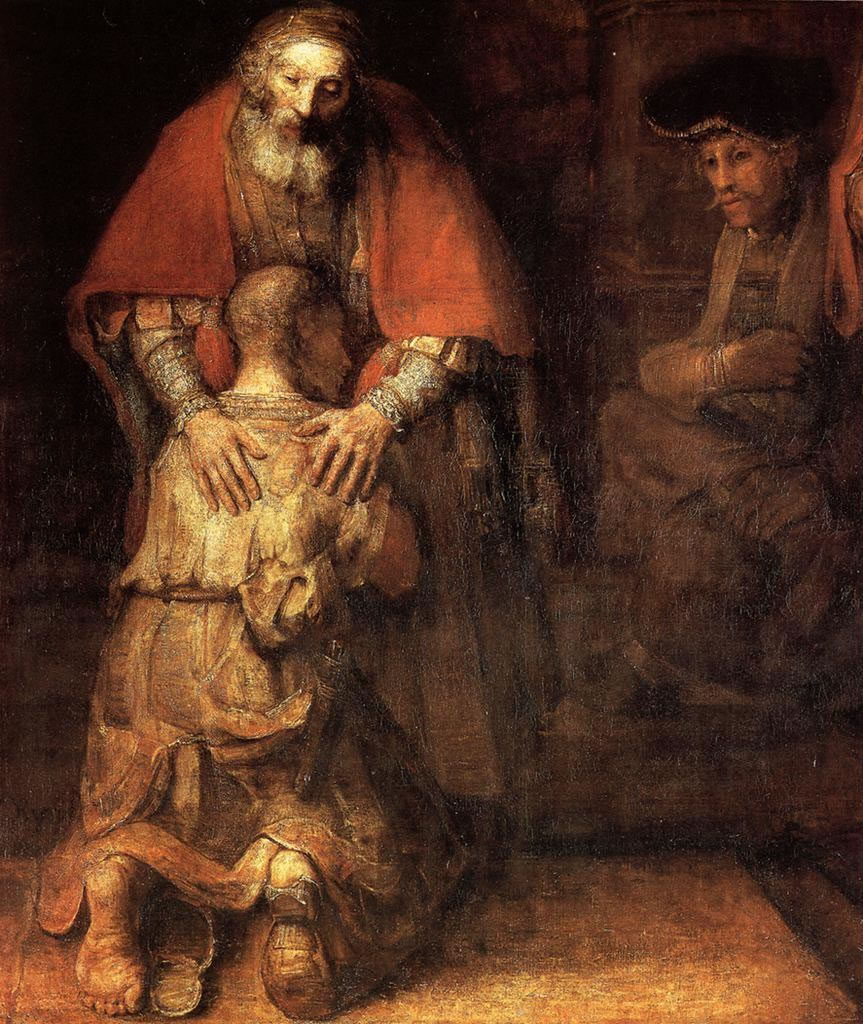
We should “turn and rush”. “For they themselves report concerning us the kind of reception we had among you, and how you turned to God from idols to serve the living and true God, and to wait for his Son from heaven, whom he raised from the dead, Jesus who delivers us from the wrath to come.” (1 Thessalonians 1:9-10)

We should “turn”, that is, we should acknowledge our sin, own it and turn from it.  We call this repentance.  We should also “rush” back into the arms of Jesus, the One who saved us from the mess of sin.  We call this faith.   

Sounds straightforward in some respects, but we are all susceptible to the wiles of the evil one and our own sinful tendency towards excuses that keep us from acknowledging the depth of our sin and our great need of His love and forgiveness.  One writer has written: “Satan’s main temptation is to convince us that we are half the sinner we actually are and that we have half of Christ’s acceptance as we actually do.”  [Charles Spurgeon has a wonderful message which describes this response of turning from idols and rushing into His arms: http://www.spurgeon.org/sermons/2236.htm]

This is why the community around us is so important.  We need others who can help us to ask those hard questions that dig deep to search out the roots of sin and idolatry in our lives.  We need others to remind us again and again and again of His unfailing love, forgiveness and righteousness.  This is the kind of community we should be building and nurturing around us.


Can ministry become an idol?

That’s a hard one to answer.  In one sense, it’s difficult to believe that ministry can become an idol when the very nature of ministry is to help people “turn to God from idols to serve the living and true God” (1 Thessalonians 1:9).  It’s a spiritual work.  It certainly is not true that ministry has become an idol when we are saddened or upset when someone or something frustrates the spiritual work in which we are engaged.

Yet, in another sense, many of us may have become functional idolaters without realizing it.  One writer describes idols this way: “[They] are objects or persons to which we give inordinate attention.  Idols are things that we glorify other than God.  An idol is anything that gets more glory, more weight, more importance in our eyes than God does.”

What do you lead with in conversations?  That question alone can reveal the core direction of our heart.  Is our conversation sprinkled with what we do (ministry) or who we serve (God)?

When there are difficulties in ministry, how do we respond?  Are we devastated, do we blow up at others, or do we turn away in self-pity?

Idolatry, Os Guiness says, is to “inflate something to function as a substitute for God.”  Ministry can become our god; it can function as a substitute for God when our lives revolve around the work in which we are engaged, rather than the God who called us to that calling.

We need to keep asking questions like the ones above to help us expose the roots of idolatry of ministry and in our ministries.


When the gospel is central

Thanks to many of you for the various comments and e-mails about recognizing that we are rescued people needing to learn to become dependent people.  It’s a process, a journey that we are on with Jesus and each other.

That journey has its ups and downs as we struggle to learn how the gospel works itself out in our everyday lives and relationships.  I experienced that that struggle just yesterday.  Growth comes as we learn to live our lives “by faith in the Son of God who loved us and gave himself for us.”  (Galatians 2:20)  This is our daily journey.

One writer put it this way: “Gospel power comes when the gospel is central.”  In other words, the struggle comes when something else becomes central to our lives; when something else or someone else becomes our ‘savior’.

This is when we need each other.  So often we can be blinded as to how we have strayed from Jesus; from trusting Him alone as our Savior. Well placed words by others of gospel reminder can shake the heart and mind from its stupor and set us back on the road to the cross, to forgiveness, to laying claim to His righteousness on our behalf.

Do you have people like that in your life, as part of your community?


Rescued people are dependent people

Rescued people learn to become dependent people.  It is not a onetime event, but a process over a lifetime. 

How does one know if he/she is growing in dependence or is simply remaining in his/her sinful independence?  Darrin Patrick writes: “We often do not know whether we are living in dependence upon God because we are disengaged from our hearts.”   So, we must engage with our hearts, discerning its movements and motivations.  Patrick provides us with some questions that might help us in this process:

1)      Which do I want more: to know God or to achieve for God?  [Some verses to meditate on: Philippians 3:10; Exodus 33:13; 1 Timothy 4:6-10]

2)      When was the last time I experienced a prompting of the Holy Spirit?  [Some verses to meditate on: John 4:7-19; Acts 16:6-10]

3)      Am I consistently being convicted of sin in my life?  [Some verses to meditate on: Hebrews 12:5-11; John 16:7-8; 1 John 3:9]

4)      Am I consistently accepting my acceptance by God through Christ? [Some verses to meditate on: 2 Corinthians 5:17, 21]

5)      Where do my thoughts go when I am not forced to think about anything?  [Some verses to meditate on: Psalm 63:1-4]

I was greatly ‘exercised’ by this list; discouraged might be another way of putting it.  Then I realized the problem.  I was responding to a series of questions about being dependent by trying to just exercise my own independent will.

Rescued people learn to become dependent people by choosing to go God for the power to change; for the ability and strength to engage one’s heart and learn what it means to depend on God the Father more and more.

Rescued people

I have appreciated the interaction we have been having on innovation.  Over the weekend I read a quote which refocused my heart on that which is most important in all that we do: “While a church planter may be a good person or a talented person or a clever person, he/she must be, first and foremost, a rescued man, a rescued woman.  He/she must be a person who has been rescued from the slavery and foolishness of their own sin and saved by the freedom and “foolishness” of a God who displayed his perfect justice and love by laying down his life on behalf of the very ones who wronged him.” [Darrin Patrick] 

It’s ultimately not our goodness, our talents, our wisdom, nor even our capacity for innovation that is the driving source of our passion to multiply disciples and communities of believers.  It’s that we know we are rescued people.

Let me leave each of us to reflect on these challenging words from another older saint, Richard Baxter: “Take heed to yourselves, lest you be void of that saving grace of God which you offer to others, and be strangers to the effectual working of that gospel which you preach; and lest, while you proclaim to the world the necessity of a Savior, your own hearts should neglect him, and you should miss of an interest in him and his saving benefits.”

What do you mean when you say “innovation”?

I am sometimes asked a question in light of our global vision statement.  It goes something like this: “What do you mean when you say ‘innovation’?”  Rightly so, it is hard to be intentional about something, if we don’t understand what we mean by the concept (see 04.01.2012 post)

Wikipedia defines innovation this way: “Innovation is the creation of better or more effective products, processes, services, technologies, or ideas that are accepted by markets, governments, and society. Innovation differs from invention in that innovation refers to the use of a new idea or method, whereas invention refers more directly to the creation of the idea or method itself.”  This is somewhat helpful, particularly the distinction between invention (or creativity) and innovation.  However, it still doesn’t help us answer the practical question.

The word innovation also comes from the Latin word meaning “to renew or change.”  So, innovation is the process of initiating change or renewal.  However, what does that look like?

The more I thought about it, the more I realized that the harder I try to “define” innovation, the farther away I move from it.  Rather than defining it, here are a few concrete examples. From these we can discern what innovation means and might look like in our context.

  • A worker in Asia proposes to his board to buy a storefront and open a training school for refugees temporarily resettled in his country.  Being a certified chef, he suggests the school train refugees in food preparation, a marketable skill in most places of the world.  From the very start of the course, this worker talks openly and freely of his faith, offering opportunity for students to share needs and for prayer to be offered.  An innovative approach to outreach.
  • A worker in Europe sees several people come to Christ.  These new believers express a desire to study the Word, and they agree to meet for Bible study once a week.  The worker wants to implicate new believers more quickly in owning and taking responsibility for gatherings.  At the very first meeting, the worker deliberately does not show up.  When these new believers realize that the worker is not coming, they start the study themselves and continue on for weeks before recontacting the worker.  An innovative approach to discipleship or small group leadership.
  • Given the prolific number of cell phones in our world today, one group of workers developed short videos that presented the person of Jesus Christ.  They then sent these videos out to numerous contacts in ‘closed countries’ where they served.  Many came to a personal relationship with Jesus Christ as a result.  An innovative approach to sharing the Gospel.

A creative idea that leads to prayer and new approaches.  What do you mean when you think innovation?