
• Our hope-filled future is bound up in sharing the story of Jesus, in discipling others, in bringing those disciples together into communities of believers, and in developing and releasing those believers to create other communities... till Jesus the King comes again!

We’re on a mission

mission unstoppableKenneth Berding wrote the following in his short article, “At the Intersection of Mission and Spiritual Formation in the Letters of Paul”: The process of spiritual formation supports mission because the person on a mission is upheld in his work as he experiences ongoing transformation … This may be the area most emphasized in Paul’s writings regarding how important spiritual formation is for mission.  Paul writes: “… we have renounced the things hidden because of shame, not walking in craftiness or adulterating the word of God, but by the manifestation of truth commending ourselves to every man’s conscience in the sight of God.”  (2 Cor. 4:2).  There is a transformation that takes place through the ministry of the Spirit while one is on the mission – a transformation “from glory to glory” (2 Cor. 3:17-18).”

At the start of this new year, knowing that there are several ‘bends in the road’ ahead of us, it is important to remind ourselves that all our work is an overflow of our deepening relationship with Christ and the ongoing transformation being worked by His Spirit as He searches our hearts (Psalm 139) and drives us back to our only Hope: Jesus.

We’re on a mission.

However, that mission is not just the task of taking the Gospel to others.  It is the work of daily putting self to death and learning to live more and more to righteousness.

We’re on a mission.

Part of that ‘putting self to death’ may involve opening ourselves up more and more to others, so that God might use those people to build us up more and more into the image of Christ.  The mission of transformation goes through community.

We’re on a mission.

This means that there will be attitudes and reactions we will lay down as individuals and as a community this year, so that we might affirm more loudly with our voice and with all our heart: We’re on a mission … giving thanks to Jesus for working in us and through us.

Miss trust

Decision making may not be an easy science, but we can grow in our competence in regards to the various decision making approaches. Several of you suggested tools that are available to help us get needed training in the different ways to process decisions in groups or individually. The real sticking point, however, comes when we start talking about the context or the atmosphere in which decisions are made, particularly when a decision is made where one doesn’t have a ‘vote’.trust sandy

Trust has a major bearing on the context created.  Trust means that I give or grant you the right to influence my life and work.  I don’t do that quickly necessarily, but once I give you my trust, I know that you will act with my best interests in mind.

However, because we are often more self sufficient than other centred, we can chafe under decisions made by others.  We don’t like it when others ‘make decisions for us’ or ‘in our place’.  Our words and thoughts at that moment often communicate that my world is no larger than myself; that though I may speak about accountability, I am ultimately believe I am accountable to myself alone.

This stance runs counter to the biblical call to community.  Yes, community implies sharing of tasks and responsibilities.  However, it also implies that others may be making decisions for the group because group members have chosen to ‘trust’ that person to lead the group well.

When we ‘miss’ trust, we can end up doing everything ourselves.  We can hold back from sharing responsibilities with others.  We can become islands unto ourselves that ‘bump’ into each other at meetings rather than deeply intersect with one another’s lives.

Trust takes time to build, but it begins when we simply say to another: “I trust you.  I know you have my best interests in mind.  I will be a Christ like follower, bringing my best part to the work of this group.”

How am I (we) supposed to decide?

Decision making is not an easy science.  It is complex in part because it relies on a number of different factors both external and internal.  We need to differentiate as well between what is an individual and what is a group decision.group_decision2

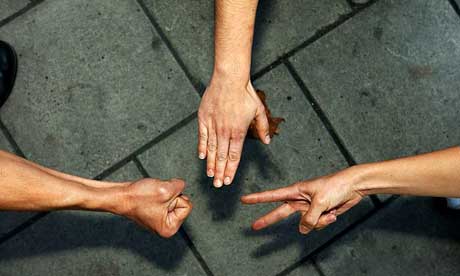
There are a host of articles and books on the subject.  We could summarize several possible approaches in the following categories: avoidance; analytical; intuitive; and chance. The avoidance approach is taken when there is insufficient information to be able to make a reasoned decision.  The analytical approach works from facts in a logical process.  The intuitive approach relies more on strong feelings and a godly ‘hunch’.  The chance approach is more impulse decision making that does not rely on thought or analysis.

Call the approaches what you would like. The real issue is that each of us has a default approach to decision making which makes us suspicious or distrustful of all other approaches.  Add to any of the above approaches a ‘congregationalist’ process for a group decision making and misunderstanding is bound to arise.

A couple of takeaways at this point:

  • Any group needs to understand the various approaches available to them in a decision making process.  Group members need to consider what approach(es) might serve them best in being able to make a sound decision in light of all the variables and how their own default approach impacts a team approach.
  • Learn to differentiate between decisions that need everyone’s approval and those that call just for each person’s input.  Being heard is as important as holding a vote.
  • Proactively create a culture that nurtures trust.  One thing that comes through in a number of articles on this subject is the importance of environment, context or culture in the process of decision making.  Mistrust undermines an effective process.  Trust facilitates good decision making processes.   How?  That’s for another blog post.

“Congregationalist” decision making

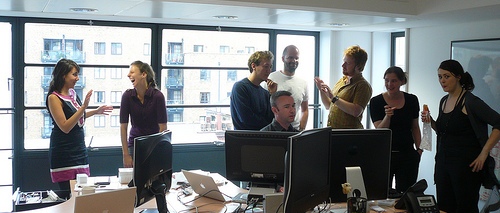
I remember the first ‘business meeting’ I attended at a local French church.  It seemed endless.  What might have taken two hours, ended up lasting over five hours.  Families who had brought kids were at the end of their rope as their children were running wild everywhere.  Non decisions became decisions as people wearied of the length of the meeting and little refreshment.  It appeared that every person needed to have an opportunity to express himself or herself on most every subject. group-decision-making

I later described this experience as ‘congregationalist’ decision making gone awry.  You know, the kind of decision making process where everyone needs to be informed, speak to the issue and all come to agreement.  It certainly sounds just and fair.  However, it is one kind of decision making process; and not the only one.

Most of us have a particular bent or default method for making decisions [similar to the different leadership approaches associated with situational leadership]. Our difficulty is that we can make that particular bent our one and only approach, avoiding other approaches for a variety of reasons.

We as a WT community have a bent for and often call for a ‘congregationalist’ decision making process to the exclusion of any other kinds of decision making processes.  What can drive this desire is not so much a concern for the involvement of the largest number of workers, but a distrust of those who have oversight of us.  By focusing on only one approach, we can inhibit true delegation and slow needed change.

We would do well to consider the source of our mistrust and examine the various approaches to decision making so we could determine the best approach for each situation.  What might that look like? That’s for another blog post.

The art of sacrifice in a region (Europe)

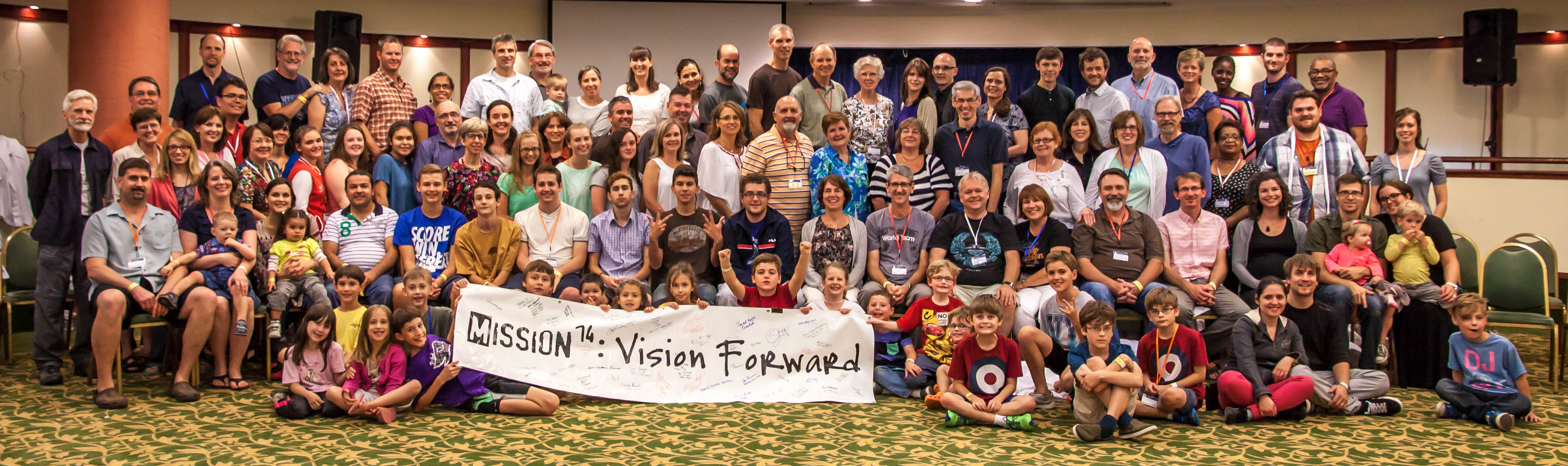
The Mission¹⁴: Vision Forward Europe conference was the final Area conference in 2014.  The conference focused on personal and leader development with presentations by Albert, Steve and Mark, and  was furthered through small group interaction. One highlight was the number of new workers partnering with WT Europe since the last Area conference.  About 15-20 workers have joined WT Europe within the last three years and a number of those workers come from partnerships with other like minded agencies.2014 Europe Conference Picture 2

As I wrote in the previous post, “I shared a number of challenges with each region or Area.  The purpose was to affirm and celebrate what God has done through us over the past few years as well as to challenge Area members to “excel still more” in their work and ministry for Jesus.”

During the WT Europe conference, I shared the following challenges.

First challenge: give away the ministry. Though our drive may be to hold on to the ministry, we must allow, empower, and give others the responsibility to carry out spiritual ministry.  This calls for a strong grasp of the Gospel which reminds us that our ultimate value is not to be found in our work, but in Him.  Multiplication then is a natural outgrowth of a heart that is centred in the Gospel.

Second challenge: choose afresh apostolic rather than pastoral.  A cross cultural worker is by nature someone who is concerned with the spiritual state of others; he/she has a pastoral stance towards others in the sense of wanting those apart from Christ to come into a personal relationship with Him.  However, our calling is to be starters and equippers; our calling is an apostolic one.  We can easily fall into a pastoral stance and inhibit the development of nationals to build and shape the ministry. From the start of any new work, our approach needs to be apostolic.

Third challenge: live in and out of community.  Our values can make great sound bites.  However, for our values to become the compass by which our work and ministry is directed, we must work out those values in the context of community.  The TC4u challenge was a reminder to the WT community of our need as workers to find and build a community where we can speak into others lives as well as allow others to speak into our lives.

Fourth challenge: learn to measure progress.  Numbers are important, but stories tell so much more.  The challenge is to do both well.  Metrics is not a pleasant word for many, but we are called to give an account of what we have done with the resources God has placed at our disposal.  However, accountability is not just about counting disciples or churches, but also about demonstrating the progress and growth that has occurred.   Both are needed and that is the challenge that faces all of us.

I share these challenges given to the WT Europe workers with all of us both as a reminder of the challenges given, but also as a motivation to pray for one another as we seek to learn the further change and growth to which God is calling us.

The art of sacrifice in a region (Asia)

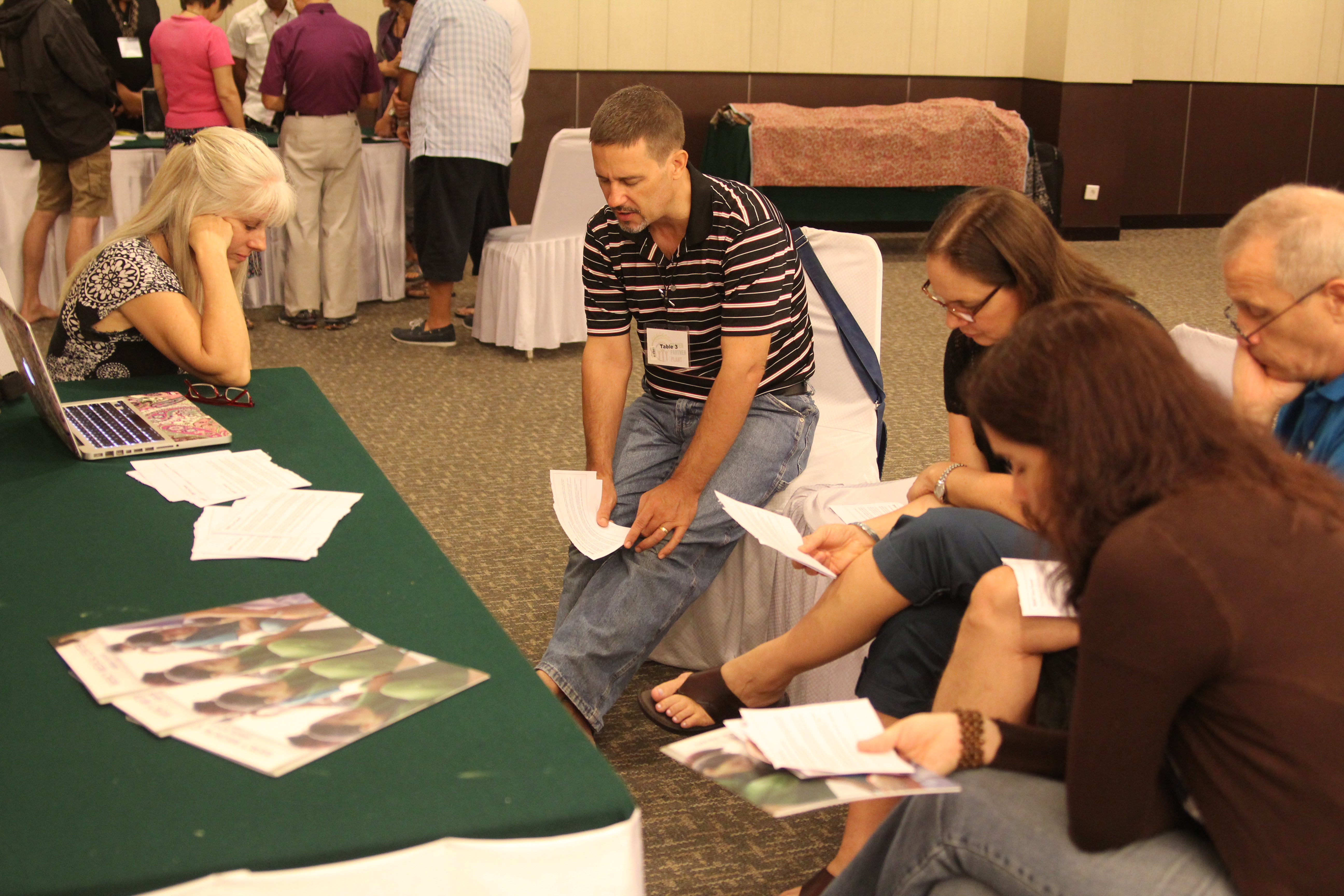
The Mission¹⁴: Vision Forward Asia conference was the third Area conference in 2014.  The conference focused on facilitative church planting with presentations by Tom (Biola University) along with several workshops by Area members.  One innovative highlight was the “prayer corners” offered on several mornings.  These “prayer corners” allowed workers to briefly share their ministry and then have a small group pray for the needs shared.  After a certain time, groups then shifted to other “prayer corners” and began the process again.Bali 2014 042

As I wrote in the previous post, “I shared a number of challenges with each region or Area.  The purpose was to affirm and celebrate what God has done through us over the past few years as well as to challenge Area members to “excel still more” in their work and ministry for Jesus.”

During the WT Asia conference, I shared the following challenges.

First challenge: allow others to speak into your life. Our natural tendency is to defend ourselves when others (from inside or outside our context) seek to share insights about our life and ministry. We do not receive well critical comments from others.  However, those comments often contain elements of truth and insight to help us further grow in our journey with Christ.  With our hearts centred in the truth that we are loved more than we dared imagine, we can hear and receive well what others would share with us.

Second challenge: choose facilitation. Choosing facilitation means that we will set aside our goal of self accomplishment in order to enter others into the ministry who can then join in the task which God has entrusted to us as a community.  It will call us to learn how to begin ‘doing less and leading more’.  By that, I mean that we will more quickly share, delegate and facilitate others; giving away ministry rather than holding it for ourselves.

Third challenge: live out our values.  As a World Team global community, we are committed to Gospel centred life and ministry, adoration, community, and building into others. Those values can often be just words on a page, aspirational values if you will. We must choose to live together out of these values as they form the bedrock of who we are and all we do.

Fourth challenge: excel still more.  WT Asia has seen significant growth in its ministry over the past number of years.  We should not rest on what has already happened, but continue to desire to do even more for Christ.  It calls us to ‘think outside of our current box’ and recognize that God is using a variety of modes and means to bring the Gospel to unreached peoples around the globe.  We must continue to grow, to change and to be ever passionate about our calling: to multiply disciples and communities of believers.

I share these challenges to the WT Asia workers with all of us both as a reminder of the challenges given, but also as a motivation to pray for one another as we seek to learn the further change and growth to which God is calling us.