
• Our hope-filled future is bound up in sharing the story of Jesus, in discipling others, in bringing those disciples together into communities of believers, and in developing and releasing those believers to create other communities... till Jesus the King comes again!

Needing other voices

I recently re-read an article from several years ago entitled: “Different for God’s Greater Glory: Benefits of and Barriers to Embracing Ethnic and Generational Diversity in Mission Leadership.” The authors point us to the necessity of seeking to intentionally “work together with the universal church.” This means that we as workers, called to reach the unreached, must diversify the voices speaking into our lives and participating in strategy and leadership discussions and decisions.

But why?  Why should I spend the effort to diversify the voices involved when it already takes so much time to understand one another from the same cultural context?

One compelling reason given: “By having leaders with a broader range of ages and ethnicities guiding the movement, the leadership team can “see” better.  Diversity gives the leadership team a wider base of experiences, as well as varied cultural and generational perspectives to draw from when making decisions or crafting ministry strategy in a given area.”  That statement, though it takes time, effort, and humility, resonates with our hearts: “The leadership team can “see” better”. 
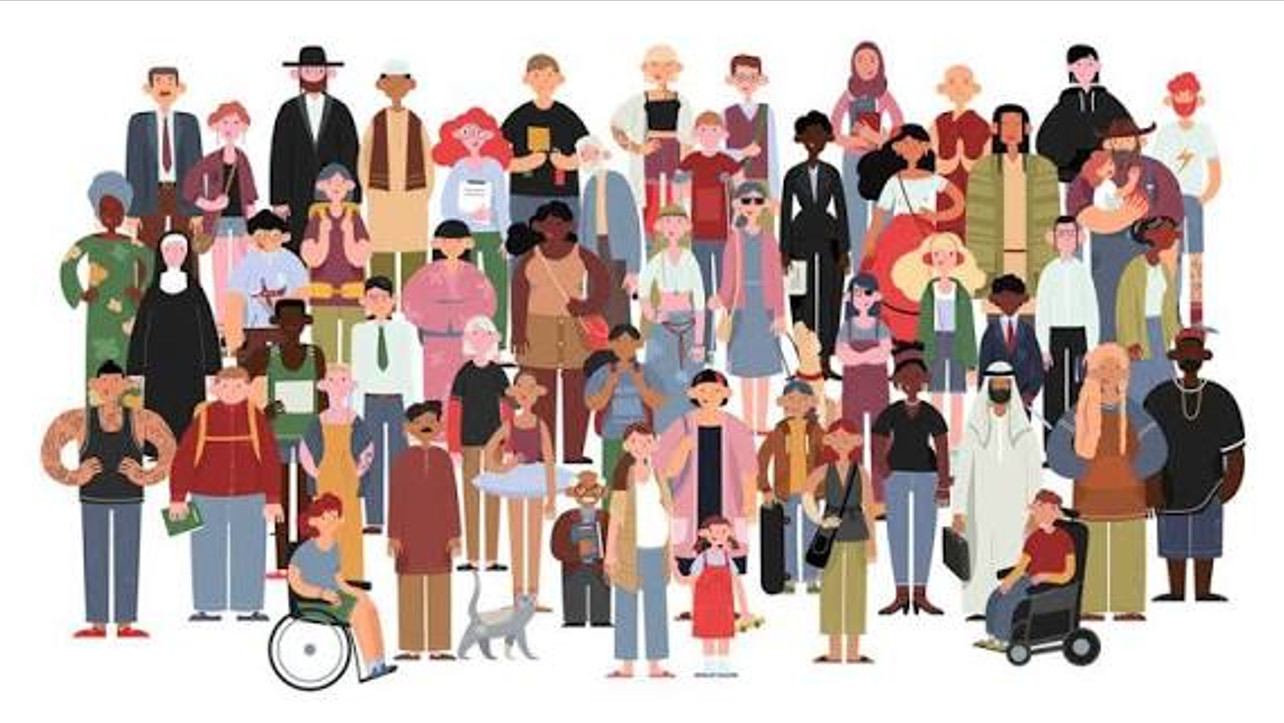
Working as a team with diverse voices strengthens the unity that we are to have as the body of Christ. Working together demonstrates our need for others with different gifts, cultural insights, and experiences.

When we look at the world, we see it with our own cultural lens and easily “miss” others and what they want to say to us and the team. Their own cultural & people group “glasses” provide other ways to see a situation or strategy that we might not have thought of.

During a visit to one of our teams in Asia, our global board members participated in a tour of the ministry centre where our team served. When we debriefed the visit afterwards, most of the board members commented on the ministry fruit and the service given to the larger community. However, one board member from another culture commented on how pleasantly surprised he was to see so many local workers from that culture involved in the work. No one else “saw” that, but his insight launched a discussion on how to invest, equip, and release others into the ministry.

One way we seek other voices would be to sit down with a younger leader or a leader from a culture that is significantly different from your own. Then take a recent ministry issue (not breaking confidence) and ask them how they would have approached or addressed the situation.

A second way would be to ask a ministry colleague from another cultural background to read and talk with you through the book, The Culture Map, by Erin Meyer.  The goal would be to understand in a small way the benefit of insights from cultures different from your own.

Hearing from Others

Many of us have quoted this verse from Proverbs: “Where there is no guidance, a people falls, but in an abundance of counselors there is safety.” Good counselors provide the needed input and wisdom we need. However, I find that I will often seek the counsel of those who will agree with me and avoid the counsel that may raise questions about the direction or decision I am considering.

In the book, Thanks for the Feedback, the authors state that the problem with feedback comes not from the one giving it but from the one receiving it.  Simply because the receiver is not sure what to do with, or how to sift, the feedback that is given. Learning to sift feedback to discover the kernel of truth embedded in what was said is an essential component of learning to really ‘hear’ others. What others share with us, and even those with whom we may disagree, can contain elements of truth that are essential for whatever we may be in the process of deciding.

Add in the element of cultural difference(s) and the process becomes a bit more complex. The principle, however, remains the same. If we can learn to sift the feedback that is given, by expending added effort to understand the context from which it is given, we can benefit from this new angle of insight. An insight that we perhaps would not have received from those within our own cultural context.

In the long run, and in a changing global context, we need feedback from people close to us, farther away from us culturally, and from those who see things differently than we do.

Now all that is easy to say in theoretical terms.  Seeking feedback (input) from others will mean going out and asking for it, so that we can practice the skill of hearing others well.

Five Coins

As I was heading my way to the gathering of WT Asia leaders this week, I remembered an article that I had read.  The basic gist of the article was that in many conversations with other colleagues, we tend to talk way more than we listen to the others in the room.  The author stressed that robust dialogue and discussion come when we give a majority of our time to listening as opposed to speaking.  Listening serves as the critical context for responding (speaking) well to others.

Now, we recognize that this principle is a basic biblical truth: “Know this, my beloved brothers (and sisters): let every person be quick to hear, slow to speak, slow to anger.”  (James 1.19)  I think the problem for many of us is that we know this truth, but we’re not sure the best way to actually practice it.  Oftentimes, we’ll try to practice this truth by talking to ourselves into being a better listener: “You know, David, in this next meeting, you need to just listen more and not talk so much.”  Then we get into that next meeting, and before we know it, we’re speaking up the bulk of the time!

Now there are certainly a number of possible applications, and we know that the only way we will become a better listener is by the working of grace in our hearts.  However, the author of the article I read suggested an idea that might provide some fuel for the Spirit in our ‘training’.

Here’s the author’s simple recommendation:  imagine walking into a conversation or discussion with five (5) coins in your hand. Each coin represents one time where you inject your thoughts into a conversation.  When the five coins have been ‘used’, your ‘microphone’ is turned off.

Now I’m not saying we should slavishly practice this idea, but I will say it causes you to think more carefully about the words you think are so important to share at each and every moment in a conversation.  It also pushes you to listen well and try to better understand what the other is really saying before speaking.

I’m hoping by the end of this week, I (and each of us) will have ‘made some progress’ in listening well and speaking with more wisdom … by using our five coins well.

Preparing our minds for action

‘Drifting’ is something that can occur while standing and talking with someone.  I can be listening to the person, but in effect not really listening to them because I am not being ‘mindful’.  I am not ‘present’ with them at that moment.  Mindfulness is a discipline, a reflex that each of us should work on.

However, I also recognize that I can ‘drift’ in my walk with Christ.  I can go through the motions of spiritual disciplines without those disciplines or habits having enough impact to change the way I think and act.  I could say that ‘mindfulness’ applies not only to cross cultural communication, but to my life and ministry in general.

When Peter writes in 1 Peter 1:13: “Therefore, preparing your minds for action, and being sober-minded, set your hope fully on the grace that will be brought to you at the revelation of Jesus Christ,” is that not in some way a call to mindfulness in regards to our spiritual life? 20-week

Each time you run a marathon or participate in a triathlon, there is a preparation schedule or plan that you follow.  That plan oftentimes extends over many months and is meant to help you in ‘building’ towards the actual event.

The good news is that we are not alone in this preparation.  Surrounded as we are by the community with whom we serve, we can daily remind one another to ‘prepare our minds for action’.  Becoming more mindful in our life and ministry is a joint effort.

Drifting

On a recent health questionnaire for a medical checkup here in Europe, I read the statement: “I have a tendency to doze off while reading.”  You were supposed to state whether that specific ‘tendency’ happened rarely, occasionally, often or regularly.  I thought the question was kind of silly.

However, early in this week I read the following quote from a book on building cultural intelligence: “The idea of mindfulness is what we often talk about as being “fully present” or “in the moment”. With our minds always active and thinking about a million different things, it is sometimes difficult to just be present and focus our attention squarely on our current situation and surroundings …. Mindfulness also goes beyond this and involves how we absorb and assimilate what we hear in interactions with others from different cultural backgrounds.”

wandering thoughtsTo put it in other terms, we can ‘drift’ when we are in discussion with others, when we are engaging others in conversation and dialogue.  We may be physically present in the same room, but we are kilometers away emotionally ,and are intellectually unengaged.  If that discussion involves others who are different from us (particularly culturally different), the ‘drift’ deprives us even more of opportunities to grow in our cultural intelligence and empathy.

Mindfulness then is a habit, a reflex, a discipline that needs to be developed.  It needs to be developed in order for us to be of greater service to God in a world that is growing more and more multicultural every day.

A small step in that discipline would be to try and summarize what was said in a conversation, at different intervals, and ask the other to amend or add to what you thought you heard.

It’s a bit of work, but the effort would be rewarded in greater ‘mindfulness’.

If I could dream again

Have you ever found yourself ‘dreaming’ of how things might go better if even small things changed?  Have you ever ‘dreamed’ about the potential that would be released in the ministry and relationship spheres of a team if solutions were found for certain issues that beleaguered them?

If I could dream, if I could envision how we as a global community of World Team would be different four months from now, I would see a community of workers who choose to think well of others and hear them out.kids-listening

Whether it is a leader-leader, leader-worker, or worker-worker relationship, I am often surprised by how little ‘weight’ we give to the thoughts, ideas and direction of others.  In the case of leaders, I have noticed an unspoken assumption that whenever a leader ‘speaks’ (in writing or in person), their input can be discounted because the thinking is that he/she must not have the best in mind for those he/she leads.  In the case of teammates, we may talk much about community, but in the end ‘we will do what we have to do’ and will choose to ignore the input of others in our community to do what we (personally) think is best.

Yes, we can disagree with others with whom we work.  However, are we actually ‘mining’ the feedback, direction or ideas we receive for all it can teach us?  Is our style of followership causing those who lead us to ‘groan’ rather than ‘be joyful’ and thus depriving ourselves of their influence in our lives?

It’s a hard sentence to get out, but it might help us choose to think well of others and hear them out: “So tell me more about what you mean when you said …”

If I could dream, if I could envision how we as a global community of World Team would be different four months from now, I would see a community of workers who choose to think well of others and hear them out.