• Our hope-filled future is bound up in sharing the story of Jesus, in discipling others, in bringing those disciples together into communities of believers, and in developing and releasing those believers to create other communities... till Jesus the King comes again!

Prayer in community

John wrote an excellent comment to my blog post from the other day: “Who is your one? (bis)” in which he stressed the importance of the role of community in spiritual formation.  I just hadn’t applied that idea to prayer.

In most of the articles on prayer and CPM, the emphasis seems to be placed on the church planter’s (singular) life of prayer, and rightly so.  However, because prayer is foundational to church planting movements (CPM), it is vital that we also pray in community, that we hold ‘concerts of prayer’ together.

concertofprayeropenartweb_edited-2Years ago, David Bryant wrote the book, Concerts of Prayer, in which he argued for prayer communities and offered a ‘format’ for hosting a concert of prayer.  What I pulled from the book could be simply stated: we need to pray together, in community.

Yes, it takes effort to pray with others.  It takes time to find the time; it takes time to walk, drive or take the scooter to someone else’s place; it takes time just to pray in a group.  It’s always ‘easier’ to pray by oneself, but because this is God’s mission, given to God’s people, it calls for God’s people together to pray.

The World Team Day of Prayer is coming up in just a few weeks.  I challenge each of us to be thinking of ways to ensure that we will be ‘in community’ that day to pray.  God will certainly enjoy the concert!

What difference does it make?

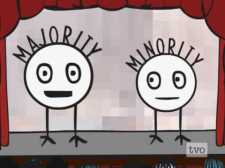
What difference does it make to be in the majority or the minority?hqdefault

Around the globe today, that’s a question on which a number of people are reflecting.  For some, it’s a financial question; for others, it’s a political question; and for still others, it’s a social structure question.

To be in the majority means that one’s way of seeing the world is the operating principle for the context in which one lives and works.  It’s a comfortable place to be.  To be in the minority means that one’s way of seeing the world is not the standard operating principle.  This can be an uncomfortable and awkward place to be.

Imagine that you have been invited to a dinner party where the host, and most of the guests, is an extrovert.  If you are an extrovert, you will feel very much at home at the dinner party and probably tell people later what a great time you had.  You are in the majority.  If you are an introvert, you will feel like the proverbial ‘fish out of water’ amongst all these extroverts.  The dinner party might be hard, uncomfortable, or awkward.  Rare would be the person at such a dinner party, from the majority group, who notices your uncomfortableness and tries to ‘bridge’ you into the conversation.

So, why am I writing all this?  In our World Team Ministry Framework, one of the elements of our organizational culture (our context) is community.  Community, Gospel community, calls us to address the differences, the disparities that may exist between us.  Gospel community calls us to think about others who may not be in our ‘majority’ in terms of language, culture, temperament or style of thinking; to think about others who may not be in our ‘majority’ and how they might feel. Gospel community calls us to turn away from ways that may isolate others, and move towards others to learn from their way of perceiving the world.

Have you ever wondered about when John writes: “And I heard, as it were, the voice of a great multitude and as the sound of many waters and as the sound of mighty peals of thunder, saying, “Hallelujah!  For the Lord our God, the Almighty, reigns. Let us rejoice and be glad and give the glory to Him, for the marriage supper of the Lamb has come and His bride has made herself ready””, what language will be spoken when we are all gathered together in that way?  And what cultural cues will we follow as we sit down to the marriage feast of the Lamb?

Community: is the experience of God’s people sharing in common their relationship with Christ, stimulating each other toward growth in maturity … this kind of community operates through voluntary transparency and through speaking and receiving the truth in love.


Have you heard about monoculturals?

To be ‘monocultural’ is the idea of looking at another culture only from the perspective of our culture of origin.  However, have you ever heard of ‘monoculturals’?monoculturals

Monoculturals is a term that refers to people who see themselves as being connected globally to people from all different walks of life.  It’s the feeling that there is one ‘culture’ to which everyone has access and in which you engage others.   Facebook, Twitter, and the global music culture create the opportunity for people to relate to others from Cambodia, Paraguay and Denmark.  We have the possibility of ‘reaching out and touching others’ from a host of different places.

There is a caveat.  The caveat is that we can begin to ignore the specific underlying cultural assumptions and views of one another because of the ‘monoculture’ in which we believe we are all living.  The veneer of being ‘united’ can cloud the reality that there is more to each person than just a specific post or song lyrics.

If we apply this to our larger agency, we know that we are ‘united’ by a common culture, a ‘monoculture’ if you will of an unwavering commitment to multiplying disciples and communities of believers among the lost.  However, we can easily lose sight of the ‘cultural’ differences that mark each one of us and create unnecessary tensions in our relationships with one another.

Just as we did when we first started to learn a new language and culture, we should give ourselves more to listening well to others, and particularly to asking probing questions that will help us better understand what is ‘underneath’ each one of us in terms of our personal cultural values and assumptions.

Offer one’s help to another

One of the strengths of the World Team Global community, in my mind, is our willingness to reach out and offer our help to others.  This notion of community is strong among us and I, like you, have many times experienced the blessing of such service.hands-reaching-out

However, the call to ‘fall on our face’ and ‘look up’ together causes us to ask a deeper question: what is our true heart motivation for offering one’s hand to help another? 

It could be that our motivation is one that flows out of a heart that has been mastered by the Gospel; where the Gospel of grace has ‘gone downtown’ in our hearts and brought about deep transformation, leading to a godly longing to serve others.  It could be that our motivation flows out of a heart that is less discerning and tends towards seeking the value or acceptance of the other as we serve them.

It’s not my work to ‘assess’ the motivation of others.  However, it is my work to ‘assess’ my own motivation.  To do that effectively, I need the Holy Spirit and others to help me.

And it is my work to build up others by thanking them for the ministry and service they have had in my life.

Stand up with me

A number of months ago, I saw this commercial online and felt it captured, in a humorous way, the struggle that many of us have in ministry calling others to join us in the vision God has placed before us.

As believers, we talk a lot about community, working together, teamwork, and learning how to carry out the ‘one another’ exhortations.  However, in practice we are at times reticent to join with others; to stand up with them.  The simple reason being that we believe we often have a better idea or better vision than the one being suggested. Instead of giving support to a vision, we prefer to evaluate and critique that direction.  Is this beginning to sound a little like a group that wandered through the desert for a number of years?

Now I’m not suggesting that we each drop the dream God may have given to each of us.  However, it is time for us as a World Team global community to stand up together and to lock arms together to fulfill the mission & vision God has given to us: Innovative teams multiplying disciples and communities of believers, bringing the Gospel within reach of lost people everywhere we go.

It’s time for us as a World Team global community to stand up together and share our resources with one another (human, prayer, intellectual and financial).  It’s time we stand up together and challenge young and old into cross cultural ministry with us.  The idea of World Team growing to 500 workers in the next five years will not happen if we don’t stand up together and mobilize together.  It’s time we stand up together and speak the Gospel to one another day in and day out so that our confidence would be in the Lord and not in ourselves.  It’s time we stand up together and live by what we say are our guiding principles and organizational ethos, and fulfill our central ministry focus.

Will you stand up together with me?

This is who we are

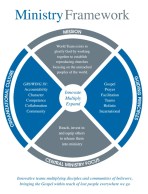
wt-ministry-framework-jan-2016A couple of months ago, we ‘launched’ the World Team Ministry Framework.  It’s our best attempt as a global community to describe ‘who we are’ and ‘what we do’.  You hopefully have seen this graphic or other slightly different ‘versions’ of it around World Team.  We’re trying to ‘contextualize’ this graphic to our various contexts.  However, the point is not having a ‘nice’ graphic that you and I like; the real point is calling each other to live and work in line with what we have decided best describes who God has called us to be.

We are at times better ‘word-smithers’ and discussion activists than implementers.  However, the world around us watches to see if all our ‘words’ will actually cause transformation and change in the way we work with one another, in the way we treat one another, in the way we freely forgive one another.

What should get us out of bed everyone is the call to “reach, invest in, and equip others to release them into ministry.”  Obviously, this focus centers on our primary stakeholders who are the lost (see Matthew 28:16-20).  However, this same focus should drive the way we support one another build up another, and forgive one another, so as “to release one another into ministry”.

I pray that our Ministry Framework will ‘frame’ the way I build into other’s lives and the way I reach out to those who do not yet know Jesus.