


A number of months ago, I saw this commercial online and felt it captured, in a humorous way, the struggle that many of us have in ministry calling others to join us in the vision God has placed before us.
As believers, we talk a lot about community, working together, teamwork, and learning how to carry out the ‘one another’ exhortations. However, in practice we are at times reticent to join with others; to stand up with them. The simple reason being that we believe we often have a better idea or better vision than the one being suggested. Instead of giving support to a vision, we prefer to evaluate and critique that direction. Is this beginning to sound a little like a group that wandered through the desert for a number of years?
Now I’m not suggesting that we each drop the dream God may have given to each of us. However, it is time for us as a World Team global community to stand up together and to lock arms together to fulfill the mission & vision God has given to us: Innovative teams multiplying disciples and communities of believers, bringing the Gospel within reach of lost people everywhere we go.
It’s time for us as a World Team global community to stand up together and share our resources with one another (human, prayer, intellectual and financial). It’s time we stand up together and challenge young and old into cross cultural ministry with us. The idea of World Team growing to 500 workers in the next five years will not happen if we don’t stand up together and mobilize together. It’s time we stand up together and speak the Gospel to one another day in and day out so that our confidence would be in the Lord and not in ourselves. It’s time we stand up together and live by what we say are our guiding principles and organizational ethos, and fulfill our central ministry focus.
Will you stand up together with me?
Filed under: Community, Gospel, Vision, WT Ministry Framework | 1 Comment »
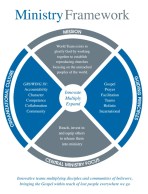 A couple of months ago, we ‘launched’ the World Team Ministry Framework. It’s our best attempt as a global community to describe ‘who we are’ and ‘what we do’. You hopefully have seen this graphic or other slightly different ‘versions’ of it around World Team. We’re trying to ‘contextualize’ this graphic to our various contexts. However, the point is not having a ‘nice’ graphic that you and I like; the real point is calling each other to live and work in line with what we have decided best describes who God has called us to be.
 sovereign, wise plan for her son and the rest of the family. Our basic problem is this:
  well thought through or sustained by less prayer?

 learn a lot from ‘digging deeper’ into an issue through the help of those who process more slowly and take more time to make decisions. However slow processors and slow decision makers can learn a lot from being ‘moved along’ in the journey towards a decision by those who process more rapidly so that a ‘divine opportunity’ is not missed because the team took too long to come to a decision.
