
• Our hope-filled future is bound up in sharing the story of Jesus, in discipling others, in bringing those disciples together into communities of believers, and in developing and releasing those believers to create other communities... till Jesus the King comes again!

Global Realities tWo

In his book, The Meeting of the Waters, Fritz Kling outlines seven global currents that he believes impact missional work in our world today.  Here’s a brief description of each one:

Mercy:
Younger people of faith around the world increasingly demonstrate their love for Christ and others by serving – by feeding the hungry, addressing AIDS, rescuing girls sold in slavery, saving the earth, and much more.

Mutuality:
While the West was previously the center of worldwide “Christendom,” now Christians from countries all around the world have the education, access, resources, and confidence to take leadership.

Migration:
People everywhere are on the move, to meet economic needs, flee repression or combat, seek freedom or asylum, etc.  Missions used to be from the west to the rest, but now it’s “everywhere to everywhere.”

Monoculture:
Pervasive brands, celebrities, and fads, are spreading around the globe, and values and worldviews are spreading too.  In the global youth culture, kids in Cape Town and Shenyang often have more in common with kids in Nairobi or L.A. than with their own parents.

Machines:
The pace of technological change is stunning, rendering old approaches ineffective or obsolete.  From evangelism to discipleship to disaster relief, technology offers exciting new opportunities for Christian workers.

Mediation:
Some experts say that the world is “flattening” and that differences are lessening.  Actually, the internet and other media are providing more opportunities and tools for division.  Christians will need, more than ever, to be reconciliers in a polarizing world.

Memory:
Even in the face of so many world-changing trends, every country, region and village has its own “backstory.”  Christian workers must be alert to historical events which shape a people’s receptivity or resistance to the gospel today.

It is not my objective to get everyone to agree with what Fritz Kling has written.  However, these global currents should cause us to stop and prayerfully reflect on our world, and the tremendous changes that are occurring.

In light of those reflections, we will need to define broad based solutions or strategies that will allow us to proactively respond to those global currents we perceive impact our work.  These fresh approaches then will frame our ministries as we move into the future.

As we journey forward, this global conversation and our prayers become more and more essential to discerning God’s will together.


Global Realities oNe

Over the past few months, I’ve asked a number of World Team leaders and workers to read the book, The Meeting of the Waters, by Fritz Kling.  In one of the opening sections, Fritz Kling writes: “I read a report by an international panel of church experts charging that, all too often, global church leaders do long-range planning as if the future is simply going to be an extension of the present. The report questioned whether the Christian church has the ability or desire to recognize a world in flux and figure out how to respond.”

We as believers need to be biblically wise in discerning the times and learning how to hear the voice of the Lord for our journey forward.  We need to be willing and prepared to shift the way in which we think or work in light of changing global realities as the Lord opens our spiritual eyes to those needed changes.

One outworking of this desire to discern the times is learning to listen well to one another. 

In preparation for meetings this week of World Team leaders, several working groups of World Team workers were created to provide input about shifting global realities.  A number of individuals were also asked to provide input.  This input has been insightful and of incredible value.

We will need much more of this kind of interaction as we journey forward.

Pray for us as leaders that we might listen well and discern the needed practical outcomes from all the input we have received and are receiving.


Unfinished Stories

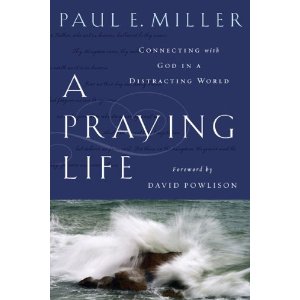
I’m not sure there is any better way to finish our study of A Praying Life other than quoting from the beginning and end of Paul Miller’s final chapter:

In the stories I’ve told in this book, we can see God weaving a tapestry.  In my experience, as we abide in him, he usually shows us what he is doing.  But sometime he doesn’t … We live in many overlapping stories, most of which are larger than us.  Each of us will die with unfinished stories.  We can never forget that God is God. Ultimately it is his story, not ours …

Some stories aren’t tied up until heaven.  Because of Kim, Jill longs for heaven.  This desire permeates her conversation.  Jill doesn’t say, “It’s a beautiful day outside.”  She says, “This would be a good day for Jesus to come back.  Everyone can see him.”  Jill wants to go home.  Living in unfinished stories draws us into God’s final act, the return of Jesus.  While we wait for his return, it is easy to predict the pattern of the last days.  The book of Revelation pictures a suffering church, dying as creation itself is unraveling.  Through suffering God will finally make his church beautiful and reveal his glory.  In the desert you see his glory.  In the last days the bride will be made beautiful, pure, waiting for her lover.  Come quickly, Lord Jesus.”

May the knowledge of the coming return of our King cause us to persevere with grace and courage in a “praying life”!

I would love to hear your reflections on this book in light of these questions.  Please post them as comments to this post.  I will make a summary of that feedback for a future post.

  • What has God shown you about a “praying life” through reflecting on the chapters in this book?
  • How do you desire to grow and change in your “praying life”?

“Radical”

In Tom Steffen’s new book, The Facilitator Era, he relates a number of case studies that seek to provide models of facilitation.  A comment in one of those studies kind of jumped off the page at me: “Here and in other M villages scattered around the continent, the church is being born, and the instruments God has chosen are young South American Christians committed to a radically incarnational lifestyle among people they have come to love in Jesus’ name.”

What he means is that these young people were willing to back up their words with concrete actions in their relationships with one another (as a team and
community) and with those in the culture around them.  As another person described it, “for the person who is abiding in God, loving obedience overflows into love for others.”

Why is this lifestyle stance so unique?  Why do we often describe it as ‘radical’ when it should be, as we just read, the natural overflow of our relationship with God?  I often hear that the number one reason why cross cultural workers leave where they serve is because of other workers. Something is amiss.  We need to ask some hard questions about our lifestyle stance in light of the Gospel.

The Gospel regularly calls us back as a community to humility, integrity and simplicity.  Paul wrote: “Complete my joy by being of the same mind, having the same love, being in full accord and of one mind.  Do nothing from rivalry or conceit, but in humility count others more significant than yourselves. Let each of you look not only to his own interests, but also to the interests of others.” (Philippians 2:2-4)

How does this challenge you?

Real Life Living

“Love bade me welcome, yet my soul drew back

Guilty of dust and sin.

But quick-eyed Love, observing me grow slack

From my first entrance in,

Drew nearer to me, sweetly questioning

If I lacked anything.

“A guest,” I answered, “worthy to be here”;

Love said, “you shall be he.”

“I, the unkind, the ungrateful?  Ah my dear,

I cannot look on thee.”

Love took my hand, and smiling did reply,

“Who made the eyes but I?”

“Truth Lord, but I have marred them; let my shame

Go where it doth deserve.”

“And know you not,” says Love, “who bore the blame?”

“My dear, then I will serve.”

“You must sit down,” says Love, “and taste my meat.”

So I did sit and eat.”

It’s a funny way perhaps to start a series of posts on what it might mean for us to live for Christ in this time frame, in this century, but I do think this poem by George Herbert (“Love Bade Me Welcome”) shares an encouragement for us to live differently as well as some foundational values to be worked out in our lives.

Real-Life Praying

The celebration of the resurrection of Jesus is the most important event in the life of any community of believers.  It is the announcement that Jesus has broken
the power of sin over our lives, and that we can now freely enter into God’s presence to talk and interact with him.  It is a day when we hear our name spoken in a  new way as Mary Magdalene did when she encountered Jesus in the garden (John 20).

Our hope is found in our ‘conversation’ with the Father on a daily basis.  I think that is what Paul Miller is getting at when he writes his chapter on “Real Life Praying.”

Prayer,” Paul Miller says, “is where I do my best work as a husband, dad, worker, and friend.  I’m aware of the weeds of unbelief in me and the struggles in others’ lives.  The Holy Spirit put his finger on issues that only he can solve.  I’m actually managing my life through my daily prayer time.  I’m shaping my heart, my work, my family – in fact, everything that is dear to me – through prayer in fellowship with my heavenly Father.  I’m doing that because I don’t have control over my heart and life or the hearts and lives of those around me.  But God does.”

I believe that, but it is the daily practice of conversation in prayer where I can struggle.  Maybe that is why it is so important to regularly hear the voice of Jesus and be reminded of His great love for me, demonstrated in such a powerful way in His death and resurrection.