• Our hope-filled future is bound up in sharing the story of Jesus, in discipling others, in bringing those disciples together into communities of believers, and in developing and releasing those believers to create other communities... till Jesus the King comes again!

Many Voices: One Mission

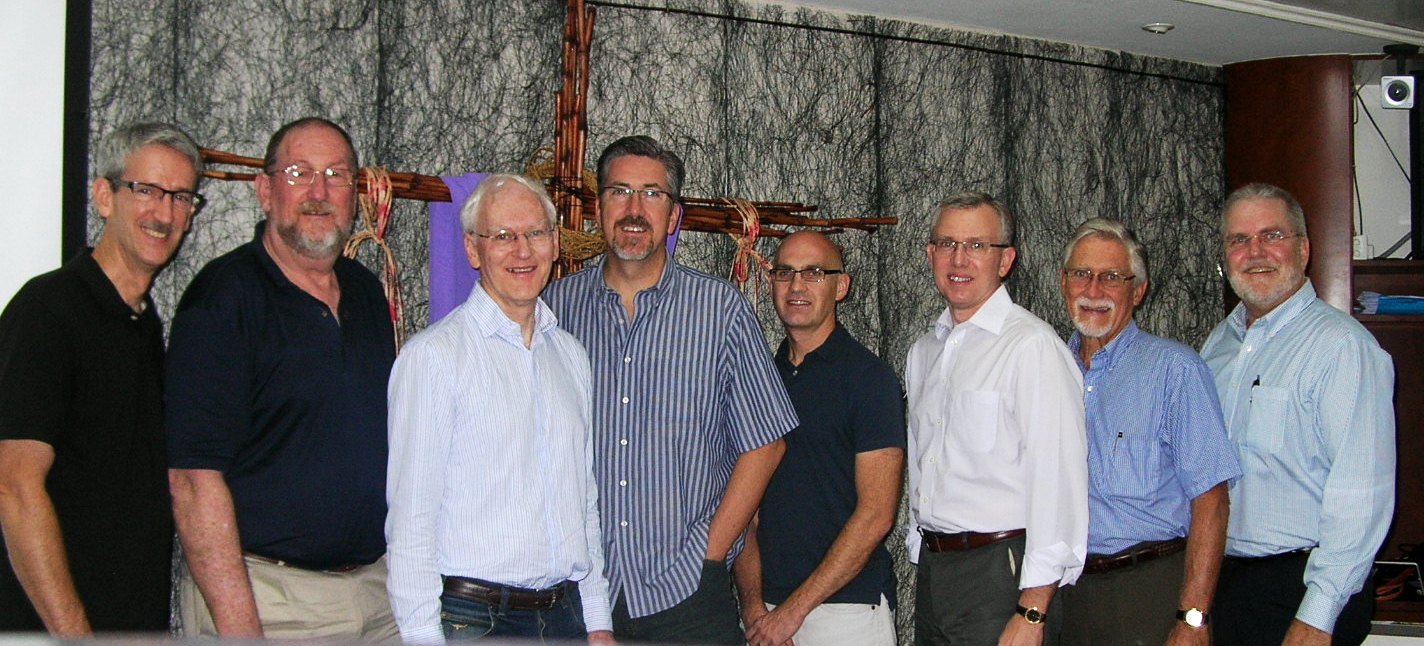
As these many voices, which now form the World Team Global Alliance, come together around one shared mission, World Team will be in tune with and able to respond more quickly to the ever-changing global currents that impact the way we evangelize, disciple and establish communities of believers. A broadened perspective at the global leadership level will make for a more nimble and relevant response to the needs of our world. The Alliance does not change the mission and purpose of WT; it serves them by bringing more voices to bear on how we fulfill our purpose.

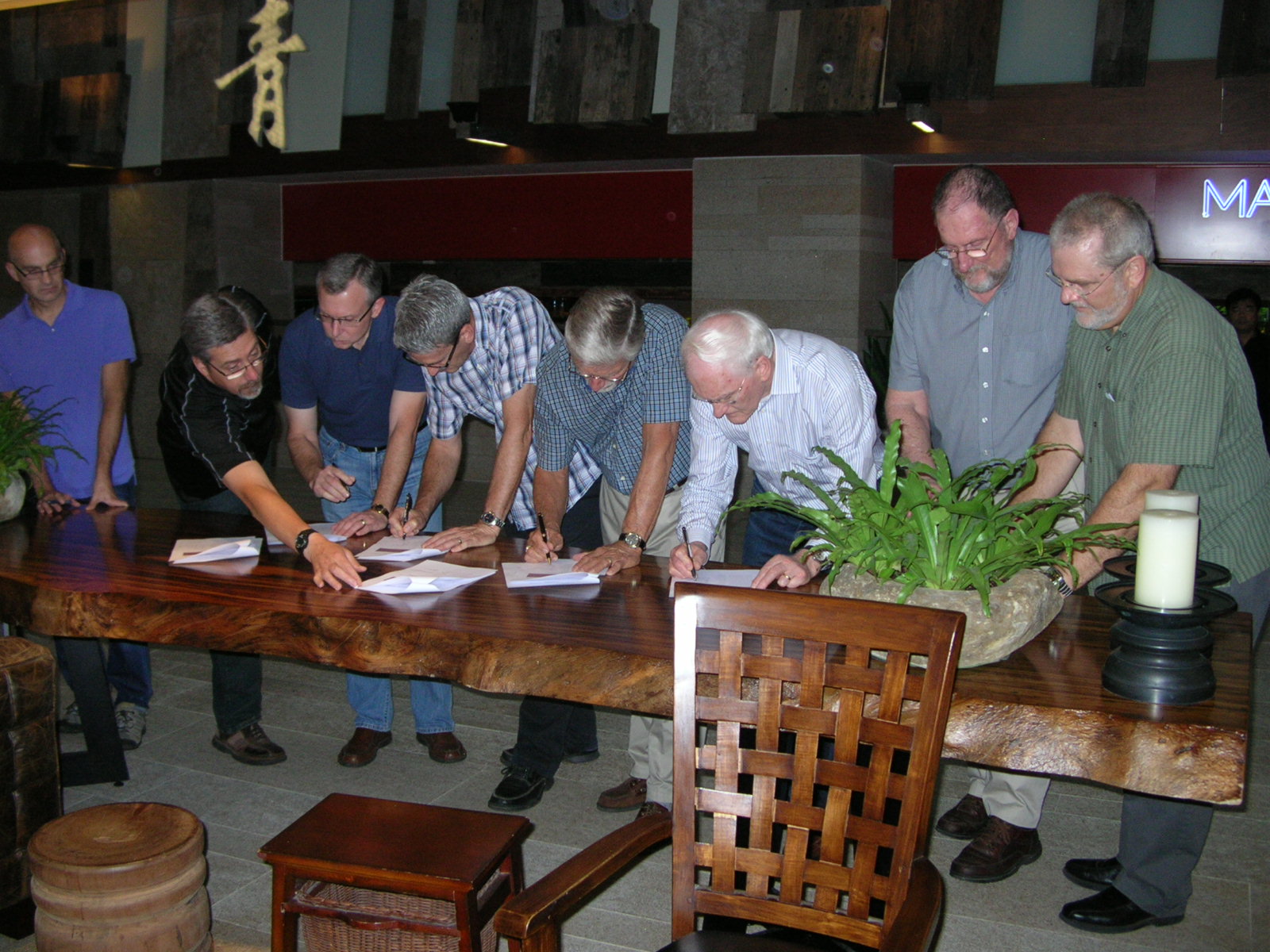
As a tangible sign of our desire to work together interdependently to fulfill our global vision and purpose, each member of the World Team Global Alliance signed the WTGA Covenant during our opening session.

I have posted a copy of the covenant to this blog post for your reading and for your prayers for the WT Global Alliance: WTGA Covenant

WTGA Launch


The newly establish World Team Global Alliance is the next giant leap forward in living out the implications of our organizational name: World Team. The Alliance is a guiding body that will shape the agency’s ministry expansion and hold accountable agency leadership and sending partners. The most notable advantage of the Alliance is the inclusion of a broad spectrum of voices at the top tier of agency decision-making and vision-casting. These global members will come from outside the World Team family and include men and women from different corners of the globe and the greater mission community.

The End

Today’s post comes from Sharon in Chile about chapter 17: The End

Have you ever been enveloped by darkness, total darkness? I have and it will be an experience I will never forget.  My brother Andrew and I once shut ourselves in a very small cupboard in a trailer.  We wanted to see if we could both fit and how long we could stay without passing out. Crazy right? Someone was driving the trailer so nobody knew what was going on and nobody could help us.  Apart from feeling claustrophobic I will never forget at how dark it was in there.  I could not see in front of me, I could not see my brother (although I could feel him) , I could not see the door…and as time went on our oxygen was running out…it was absolutely awful. I wanted to get out “now” but no, my brother wanted to see how long we could last…he wanted to break a record. After an eternity, (so it seemed), we pushed the door open and yes, we were free at last, free to move, free to breath, but most of all, free to see.

Keller writes about darkness, the darkness around Jesus’ death.  “All the critical events of Jesus’ death happened in the dark.”  As Jesus was dying from noon until 3:00pm there was absolute darkness. He explains that darkness in the Bible is a sign of “God’s displeasure and judgment.” Because of God’s amazing love for us, Jesus was forsaken by God.  Jesus was being judged for our sins. God turned His back on Him; the dance of the Trinity came to a halt, all because of us.

Experiencing physical darkness is terrifying, but we can also face spiritual darkness.  Keller talks about becoming disoriented.  If we turn away from God, the source of our light, and allow our lives to orbit around other things, people, or our job we are walking in the dark. We are walking away from truth and spiritual life. When we do these things we become disoriented. Keller says that, ‘If anything but God is more important to you, you have a problem with direction.’  You will lose perspective and will eventually isolate yourself from God and other people. As Keller puts it, ‘we are all on a trajectory toward a life of disintegration.’ Praise God we don’t have to walk in darkness, God broke that barrier; the curtain in the temple was broken for good.  The cross proves that He loves us and that He will never forsake us. Jesus suffered in our place; He was forsaken in our place. There is hope!!

Do you find yourself in a dark place right now, have you lost perspective, do you feel disoriented, is it so dark that you can’t even see a speck of light? Jesus definitely knows what you are going through.  You are not alone, you will never be abandoned, because Jesus already suffered that for you…don’t cloak yourself in dark unbelief, let the  ‘Light ’of His Presence envelop you. There is hope!!

“…..because the darkness is passing and the true light is already shining.”  I John 1.8b


What does it mean for usthat at the cross ‘the dance of the Trinity came to a halt, all because of us?  How can we allow the Gospel to go deep into our hearts so that it will change how we see ourselves?


Final installment of the King’s Cross blog post will be October 8th, looking at Ch 18 “the Beginning”


the Sword

Today’s post comes from Chris in France about chapter 16: The Sword

When it comes to robbing little old ladies, both my wife and I found we gave the “wrong” answer to Keller’s question.  That’s not to say we agree with robbing little old ladies.  Rather, the reason is honour.  Australian culture is very clear on the subject.  You don’t do it because it is dishonourable.  So, I would feel shame if I did it.  In my opinion, the argument about identification with the victim and her dependents is secondary not alternative.  I also feel that it is just as based on self-regard as the honour position.  I think that this position really translates to: I would feel bad because I know how bad she would feel.  I suspect this is a cross cultural misunderstanding related to the relative power of appeals to emotion.  Emotional arguments in my culture seem to be much less powerful than in north American culture.

Keller has prompted me to ask: “Is my culture self-regarding rather than other regarding?”  My culture esteems generosity and voluntary service and requires self-effacing modesty – I mean it seriously requires this.  Anyone who has an inflated (or even high) opinion of themselves is cut down mercilessly.  We are aggressively egalitarian and obvious self-regard is socially punishable.  But, self-sacrifice, particularly in conflict is perhaps our most revered virtue.  Unlike other countries which commemorate great victories, our national day of remembrance commemorates a military defeat.  Every year, we celebrate sacrifice but also contemplate the cost and frequent futility of conflict.  Is it self-regarding to take up arms, and sacrifice your life, particularly when the no victory was gained for your country or even any victory at all?  I think it is the ultimate in self-disregard, but it is definitely motivated by honour.

First Question: Do you agree that self-sacrifice is self-disregard, even if it is based on an honour code?

Keller then goes on to talk about two administrations – the world system and the Kingdom of God.  We are all familiar with the world system: “might is right” and “he who has the gold makes the rules”.  In my mind the world system is godless evolution.  The world believes in survival of the fittest and the fittest have very big swords.  The swords may be made of steel or writs or shares but you would do well to be cautious around the people who strut about wearing them.

The Kingdom of God however speaks about survival of the meek.  It is not based on might or gold but on love.  But this is also love with justice.  The miracle of the cross is that Love used justice and self-sacrifice to reverse the fate of sinners.  We may be weak but our God is mighty.  God and me, is an overwhelming force in any struggle.  When God wields the sword, empires fall.

In Romans 13 we see that the world administration has been given the right to use the sword to punish evil.  How much more will God, in the fullness of time, deal justice to those who said there is no Creator, we evolved – and acted accordingly.  The world system despises the meek, the Kingdom of God promises them the earth.

Second question: Evolution defines survival as fitness and non-survival as weakness.  Were all those martyrs weak?


Next installment of the King’s Cross blog post will be October , looking at Ch 17 “the End”


World Team Global Alliance (WTGA)

The first meeting of the new World Team Global Alliance will take place this week in Hong Kong. Several WT leaders and the WT-International board have been working diligently in preparation for this change. What will WT look like when WT-Hong Kong, WT-Philippines, and others eventually join as sending countries? How will we navigate the cultural, worldview and possibly even linguistic differences? Difficult questions, but necessary to answer if we are to truly become a global ministry with global perspective committed to a central focus and vision.

Recently the Toronto Star published an article about a petition that started in Bellingham, Washington, to have the local Costco store give specific shopping hours “for American citizens only”. There was much complaining about the number of Canadians crossing the border to shop at the local Costco, not leaving any parking spaces, or bargains for that matter, for Americans. Many international organizations and agencies are grappling with effects of a growing globalization. Becoming a “global” agency is not without some hiccups and bumps in the road.

As we move forward in developing as a global agency, country-of-origin issues will need to take a secondary role as we covenant together to move as one towards fulfilling our calling. Our unique cultural makeup will need to be exploited in a positive way that enables greater flexibility in recognizing and utilizing gifts and abilities, resources and experiences, which further our vision of multiplying communities of disciples among least evangelized people groups.  Learning from others will have a high value. We may do things differently than we did in the past and this is okay, even necessary.

Please be in prayer for several meetings in Hong Kong, September 18-26; Sending Country Directors meet Sept.19-20, WTGA launches Sept. 22-23,  Area Directors & Sending Country Directors meet Sept. 21-25.  Please pray specifically for three things:


1.     Pray for unity. Pray that each participant, regardless of country of origin or nationality, would see others as brothers and sisters in Christ, – family. 

2.     Pray for vision to see the road ahead. The World Team Global Alliance is a radically new way of doing missions and in leading. Pray for boldness to move forward and humbleness to seek God’s face at all times. 

3.     Pray for the “hiccups”. Remember, our enemy does not want unity, peace and mutual respect. Pray for God’s protection from our adversary and from our own selfishness.


The Cup

Today’s post comes from Mark in Hong Kong about chapter 15: The Cup

Well, here we go right into the stretch run of Keller’s book, the heart of Mark, and most importantly into the center of a crucial experience in the life of Jesus. This is the place in Mark’s Gospel where Jesus internalizes the full blow of what he will encounter in sacrificing his life for ours. “Something happened in the garden – Jesus saw, felt, sensed something – and it shocked the unshockable Son of God…now he is beginning to taste what he will experience on the cross.”

I am grateful for Keller’s choice of words. The words “saw,” “felt,” “sensed,” and most poignantly “taste” are instructive for us. These words illuminate the reality of who God is. As reflected in his Son Jesus, in the face of sin God is not stoic, staid, and steely.  God looks on the sin of his people and he is affected. He is moved to act, to intervene, and to rescue and that must mean that his Son whom he loves will suffer. And so in the intimacy of this prayer, the Father and the Son feel the import of what they are – mutually and together – to do for us. And it is not so much in what is said, but in what Jesus feels that tells us the cup will indeed not pass from him.

Keller uses the right word: taste. The cup, of course, always produces a taste. On many occasions Jesus has drank and reveled in the sweet taste of what his cup has produced. But not from this point forward. What he swallows is more than just a bad taste. It is the cup of death. And here in the garden, alone and fallen to the ground, he feels it.

Suffering has a feel. It’s palpable. For Jesus it produces feelings of being “deeply distressed and troubled…‘my soul is overwhelmed.’” And in his prayer he doesn’t repress or deny his emotion. Instead he channels it to God and allows his Father to transform his grief into gravely resolve. Jesus will go to the cross and die. But he will not do so in a cold and calculated tenor. Instead, he will invite his followers into his emotional landscape to show us that to be emotive is to be human and to lift up our feelings to the living God is to be like Christ.

Think about a season in your life when you have suffered. What did it feel like?

What do you do with the emotions of pain, grief, heartache, or sadness?

How do your prayers for yourself and for others who are suffering change because of what you have read in Mark 14.32-36?


Next installment of the King’s Cross blog post will be September 24th, looking at Ch 16 “the Sword”