
• Our hope-filled future is bound up in sharing the story of Jesus, in discipling others, in bringing those disciples together into communities of believers, and in developing and releasing those believers to create other communities... till Jesus the King comes again!

Anything New Under the Sun?

Winston Churchill once said, “Those that fail to learn from history, are doomed to repeat it.”  The Scriptures tell us: “there is nothing new under the sun.”

British historian, Ian Shaw, in his recent work, Churches, Revolutions and Empires, demonstrates the very truth of this statement.  Using extensive research, Shaw highlights critical issues faced by the Church in the 18th and 19th centuries.  The examples he chooses would make you think he was talking about our current global context.   Shaw writes: “Many believed that, with the changing social and religious geography of Britain, urgent and innovative responses were needed if the church was to remain relevant in a new context.”  Sound vaguely familiar?  Shaw goes on to say: “One influential experiment was played out in the years after 1815, when the brilliant young minister, Thomas Chalmers … developed an approach to urban mission, which he publicized and promoted through his writings.”  How interesting that in 1815 the idea of ‘urban ministry’ was already in play.imagesCAVNOKB2
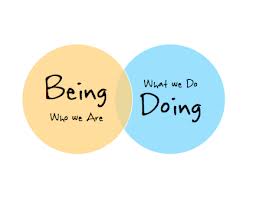
In our current day, we often juxtapose “being” and “doing”, or put another way, “character” and “competence”.  Time and again, one element of this combination is stressed to the exclusion of the other.  Many argue that what is most important is ‘being’ or our character.  God is not interested in numbers, but He is primarily interested in our heart.  Others counter by stating that the Bible is replete with instructions about stewardship and management of resources and that His ultimate desire is that we bear fruit in specific terms.

What’s interesting is that this same discussion has played out at many points in past centuries.  However, the debate waned at those times when people saw the two as being inseparable.  You cannot talk about “being” without it leading to “doing”.  You cannot speak about “character” without it implying the need for “competence”.

As we begin to move all our workers through the first core skills module on evangelism, our stance will be that spiritual intimacy with Christ will lead to sharing one’s story with another; and that sharing one’s story with another in a clear and contextual way will push us back to a deeper reliance upon and intimacy with God.  Both are equally essential in our ministries.


Core Skills

In his landmark work, Christian Mission in the Modern World, John Stott writes that evangelism is sharing the good news with others, no matter what the outcome. It is using words to describe the events of Jesus’ life, death, and resurrection for our sins “Our goal,” Stott concludes, “is to present Christ Jesus in the Power of The Holy Spirit that people may be persuaded to come to Him in penitence.”CS-masthead-logo

Last June I shared how engaging so many of you on your fields reinforced both your and my desire for ongoing training in the basic core CPM attitudes, skills and knowledge that all church planters employ.  Effective church planters are characterized by a learning mindset, always sharpening their ability to communicate meaningfully the story of Jesus.

The Roadmap Team, led by Joi, along with Daniel, Laura, Amy, Mike, Bob and Chuck, has developed our first online module, Evangelism: Abundantly Sowing the Seed.  Eight workers from Asia, Europe and Africa volunteered to help field test the module in September and October.  Their response was positive and helped the team improve the module in order to offer it to all WT workers throughout 2013.

One couple, working in Asia, was so challenged by the module that they are considering the possibility of serving as facilitators.  One section of the module that got them thinking was how to address barriers and bridges to the gospel, which led to further discussion with teammates.  Interaction with people from other fields also produced insightful discussion from various perspectives.

You will soon be receiving material which will tell you how you will be able to participate in this module.  It will be offered numerous times during 2013.

Mobilization discipleship

I had an interesting conversation yesterday with Simon here in Australia.  We were talking about mobilizing new workers when he ‘rephrased’ the task by saying: “People don’t want you to tell them what to do in the discovery process. They want you to journey with them as they discover, with you, what God is leading them into.”

It’s not necessarily about recruiting or convincing someone to join with us.  It’s about journeying with a person and discipling them on the journey as they discover more and more God’s passion for the world.  Call it: mobilization discipleship. 

Looking at the need for new workers in this light should change the way we go about the process.  First, our effort to mobilize new workers must be highly relational.  You cannot journey with a person if there is not regular, ongoing contact.  Second, the process can be messy as people journey in different ways and at different speeds.  And finally, we’ll need to take a more facilitative approach in the journey; listening more and asking questions that cause the other to reflect more deeply on how he/she wants to engage in God’s mission.

God calls us to pray more workers into His work force.  God also calls us to journey with those potential workers as they discern God’s call on their lives.


A start to an answer

Mark & I dialogued recently in the comment section of the post: “Should I really care about the WTGA?”  I thought his question and my attempt to answer could serve as another step in this ongoing conversation with the WT community. 

Mark wrote: “This post prompted two questions. The first is for me. In order to generously accommodate new friends from other cultures – to genuinely submit in partnership – how do I need to conduct myself in ministry? Attitudinally I certainly need humility but in practice I came up with two.

1. Learn how people from the incoming culture make decisions.

2. Learn how people from the incoming culture value relationships.

The second is: how will you know if we care? In other words, what is practiced on a day-by-day basis in our ministries that shows we care as much about the new global alliance as you do?”

I responded by saying: “Your question is not one easily answered.  The answer will be displayed more in our WT ethos than in specific steps that would be the same for all. Let me try one or two examples. First, when we are building a project for a new ministry outreach, we should look beyond our own team/field/Area, or to put it another way, beyond our own ‘silo’. Others in other places may have valuable insights that would help us in moving that project forward. This would be an outworking of what we mean be interdependence, consciously seeking ‘many voices’ to enter the discussion. A second example might be in how people approach ministry and particularly the issue of contextualization. Too often we will simply translate material from our home culture into the language in which we are working, not thinking about the cultural dissonance that might occur. I will know that people care about the Alliance when I see workers reaching out to others who are different from them for their ideas and input; when I see our growth in life and ministry being impacted by our interaction with those from other cultures and backgrounds.”

I know there is more to be said.  What do you think?

What we learned … again

Here are quotes from some of our posts on King’s Cross:

“What we may learn to give is a deeper commitment and call to follow Him, shedding our self focused way of living which may treat God only as a help in time of need and not a Redeemer needed every day.  What we may learn to get is a richer appreciation of His presence with us, of His love for us despite how we may feel or think.” (ch 6)

“When we try to depend on outside sources, we fall short and end up feeling disappointed, frustrated, depressed, unsatisfied and discontent. It is only a shadow and we will have to keep coming back again and again to feel a sense of true acceptance. Jesus says in Heb 10:10, “For God’s will was for us to be made holy by the sacrifice of the body of Jesus Christ, once for all time.”” (ch 7)

“What is amazing is that Jesus Himself, as He goes to the cross, will experience both the rejection felt by the Syrophoenician woman and the silence of the deaf and mute man.  He will take upon Himself the weight of the ravages of sin in this world and in our lives, so as to deliver us, free us from the power that sin seeks to exercise over our lives.” (ch 8)


One reader share this comment in response to King’s Cross and what he learned: “I’ve enjoyed the journey through this book, and look forward to the next book we will read together.  In a word, Cross. I feel the book addressed an attitude adjustment in my life: to follow Jesus is to bear my cross.  The followership He invites me to is not easy going, problem free, without struggle, evil and hardship.  To pick up my cross, daily, and follow Jesus is a real challenge when I simply don’t feel like it, or my heart is prone to wander, and/or I find it too darn hard!  Keller, and the interpretation of his work through my colleagues, helped me with this quite a bit.”


Should I really care about the WTGA?

The impact of the WT Global Alliance may not be seen or felt in the day-to-day life and ministry of many WT workers.  So, should you as a worker really care about the WTGA?

By all means, yes, and for two primary reasons.

First, because the Alliance will open the door for many more voices to enter the life and ministry of the mission.  One avenue will certainly be by global members from outside of the WT community joining the WT Global Alliance.  These members will bring different perspectives on issues and challenge our default way of pursuing ministry.  Another avenue will be the growing number of non North American workers who will join our teams and potentially lead our teams.  Each of us will need to be trained in greater cross cultural or multicultural communication and collaboration.

Second, because the Alliance will empower leaders and workers to expand ministries much more quickly.  With key resource players around the same table, the Alliance will have the ability to determine World Team’s response to ministry initiatives without having to poll individual resource centres or hubs.  The collaborative spirit of the Alliance will allow faster engagement and capacity to empower teams to move on new ministries and projects.

Certainly, all this is not for tomorrow.  The Alliance is in a building stage, but that is the future clearly before us, and we should care about it.


You are invited to share your comments and questions by posting them here on the Thoughts Along the Journey blog.  We are calling on the entire WT community to uphold this newly formed global alliance in prayer.  Pray especially for the invitation of new global members from outside the WT community.  We are praying for the laying of firm foundations that will serve future generations of workers well.