
• Our hope-filled future is bound up in sharing the story of Jesus, in discipling others, in bringing those disciples together into communities of believers, and in developing and releasing those believers to create other communities... till Jesus the King comes again!

Were You Moved? A Follow Up

follow up bisThere have been a lot of great comments shared about the post: “Were You Moved?”, but I just had to share this one because it shows the impact that can come from an individual and a team responding to the needs of workers wanting to enter into ministry. It’s also an example of how the 1+1 challenge is being met.

This is from one of the newest WT Spain members:

Hi Spain Team! I wanted to send some encouragement along to you as a representative of the mobilization team.

I just met up with a college age girl from my church. She has been passionate for missions in Japan for as long as I can remember. But currently, she is at a point where she just doesn’t know what to do next. She is in contact with missionaries in Japan but does not hear back from them much. I know she can (and will) do amazing things for God’s glory, but right now she doesn’t know where to start!

It made me think of how I was in a very similar spot a few years back until I got in contact with the Spain Team. From then on, I always had someone to contact and someone with whom I could discuss my next steps. It is great and SO IMPORTANT!

So, first of all, thanks to you all who were/are a part of this continuing journey, and second, be encouraged to reach out to someone you know who may be questioning their next steps. They could very potentially become our newest member of World Team Spain!”

Following up can mean engaging in others’ lives by contacting them, answering their questions or just praying for them.

Were You Moved?

We all know the verse which says: “The harvest is plentiful, but the laborers are few; therefore pray earnestly to the Lord of the harvest to send out laborers into his harvest” (Matthew 9.37-38). However, we can easily pray that verse without being moved emotionally and spiritually by it.moved

Last week, we as a World Team community set aside time to rejoice in what God has done in our midst and to pray that God would raise up more disciples and establish more communities of believers.  Prayer moves our hearts and in some mysterious way it “moves” the heart of God.

As I read through the list of appointees, that is, the people who desire to serve with our teams around the world, I was moved.

I was moved by the sheer number of people in the pipeline.  If you count the names on the last two pages of the WT Prayer Day guide (Feb 2013) and add those from other Support Centres, there are over seventy (70) workers waiting to go out.

I was moved by the diversity of locations to which these workers have been assigned.

I was struck by the simple fact that many of these workers cannot head to their ministry assignment because they lack the necessary funds.

God’s desire is that more workers enter His harvest.  I, like you, am moved by this desire and in light of what I read this past week as I prayed through the WT Day of Prayer Guide, I want to discover how I can best respond.

  • I might commit to pray for several people on this list; to pray that God would provide all their needs and to pray until God does so.
  • I might share a potential contact for support with one or more of these people.  Time and again, it has been shown that when your supporters choose to support other works or workers, they commit more funds to you.
  • I might visit with one or more of these people to encourage them in partnership development.

I’m just scratching the surface here and you may have better ideas.  However, when I see that list of appointees and know that there are others waiting to go out, my heart is moved to want to do something to help.

Why change is hard for us

change standChange is difficult for most of us.  To move from one place to another, one culture to another means we will walk through an adaptation process that is unfamiliar to us.  We will walk through “territory” that is unknown and must explore for the first time.

Most people say they don’t like change.  However, it’s not the ‘change event’ that is troublesome, it’s the transition process.  It’s the thought of learning new habits, building new friends, and establishing a life in a new location or a new ministry that is unfamiliar to you.  Change is hard because of the emotions surrounding that journey of transition.

Living as “immigrants” (1 Peter 2:11-12) in this world is part of our calling.  It means that our immigrant lifestyle, both as individuals and as a community, will entail change.  It means that we will need to “build a transition raft” that will help navigate the changes that will be part and parcel of this calling.

One critical element of change transition is a strong and vital community.  When changes arise, a community will provide us with the stability needed to walk through the unknown.  A community will drive us back to our power base, Jesus Christ, reminding us of His sovereign care and presence in all things.  A community does not keep us from change.  It resources us by helping us see God in the change and builds anew a prayerful and dependent spirit.

World Team is changing, and will change even more as we move into the future.  For that very reason, we need to be in community and grow in community so togetherwe can navigate well those changes .

Based on trust

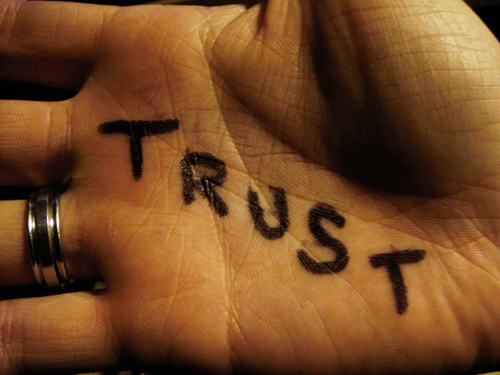
trustNowhere in the Bible do we find an exhortation to: “trust one another”.  We are told to “encourage one another (1 Thessalonians 5:11), “exhort one another” (Hebrews 3:13) and “love one another” (1 John 4:7).  We are told to put our trust in God (Proverbs 3:5-6).  However, “trust one another” does not make the list of ‘one another’ commands.

Why?

This is the question I asked myself.

Trust is placing confidence in another. It is giving another an open door into my life without having to order what that engagement should look like.  It is not an action like encouragement.  I encourage another when I tell them they did an excellent job in facilitating a gathering of the community, for example.  That’s a tangible outworking of that one another command; a very specific step that was taken.

Trusting another is difficult to describe in tangible steps because it requires relinquishing control, believing the other is “for me”. Trusting another is also a two-way street in that it moves us to desire to see another excel.

Now that’s the ideal, but it’s the ideal that we should be striving towards by the grace of God.  Sometimes, we determine our engagement with one another by a series of guidelines or by a “process”.  Though these are helpful at times, they may cause us to skirt around the issue of trust, and not push us to consider the level of trust that exists between us.

Trust is built over time, but trust is also granted.  Rather than always waiting to see if another merits our trust, maybe we should consider first what keeps us from trusting others.


Sharing stories

If it is true that “one of the reasons why ‘working together’ is not a descriptor that currently characterizes us is because we don’t know others in our community as well as we should,” then we need to create opportunities where we can talk and engage one another.

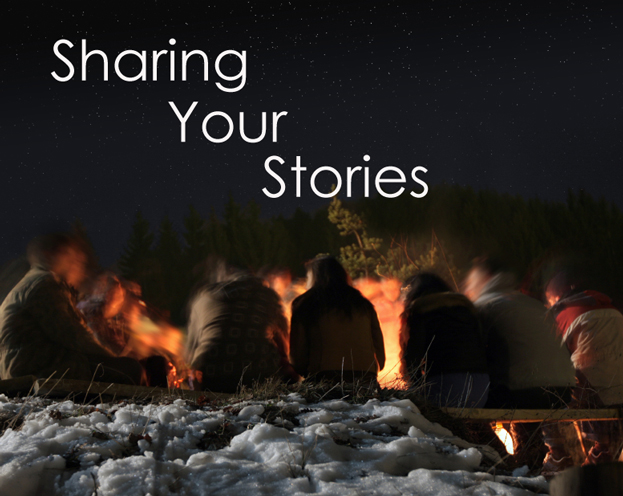
In the past, during the World Team Institute of Church Planting, there was a time when people would “share their histories” or “share their stories”.  It was a moment where people talked about their spiritual journey.  It wasn’t necessarily a long drawn out event, but in several minutes you gained an appreciation for how God had worked in another person’s life.  I believe that time of sharing built trust among those present as you recognized the hand of God in another’s journey.Sharing_your_stories_623

Though we may not be able to regularly reproduce that history sharing time, our digitoral or virtual age allows us to engage in this kind of conversation, even from a distance.  Scott Peck, a writer who has written extensively on the issue of community, said that community can be developed over a long period of time or a very short period.  It’s the energy and intentionality that we put into the time shared that will move it more quickly to community.

Because “working together” is a value to us, and since this value is nurtured by time spent together, let’s seize the opportunities we have through Skype, e-mail, Twitter or phone to share our stories with another.  Certainly, when we are together, we can go deeper in that conversation, but why not begin building that trust relationship now virtually.

We can start down this conversation road by asking a simple question next time we’re “on-line”: what has the Lord been doing in your life this week?

Maybe you have another question to suggest.


Working together

It’s right there in our purpose statement: “To glorify God by working together to establish reproducing churches focusing on the unreached peoples of the world.” Working together, being interdependent, is the foundation or platform on which we do our work.  Working together is not a strategy we use to carry out our purpose and mission.  It’s the way we choose to interact with one another in order to fulfill God’s calling.Working%20Together%20(Small)

We need one another.  This is not a solo effort.  The Bible affirms this value time and again when it talks about the teams or groups of workers that went out together to share the story of Jesus and establish His church.  We must intentionally seek others’ help, input and participation in order to multiply disciples and communities of believers.

Now I can say that I need others, and yet live and work without allowing any community to enter my world and lend a helping hand.  I could come up with a host of action steps to ensure that interdependence characterizes who I am as a member of the WT community. But, interdependence is first a relational stance towards another.  It’s not about a series of boxes that I can check off my To Do list, indicating that I got feedback from ‘x’ number of people or asked a specific number of people for their help.  It’s about who I’m talking with.  It’s about those whom I would go to because I know them and their heart.

One of the reasons why ‘working together’ is not a descriptor that currently characterizes us is because we don’t know others in our community as well as we should.  Trust is built by time and conversation.  Understanding and a desire to work together flows out of shared time that allows us to see the strengths and gifts of one another.

So, pick up the phone, “reach out to someone”, and take the time to talk with another.  ‘Working together’ would take on a whole different look.