• Our hope-filled future is bound up in sharing the story of Jesus, in discipling others, in bringing those disciples together into communities of believers, and in developing and releasing those believers to create other communities... till Jesus the King comes again!

the Feast

Today’s post comes from Jan in France about chapter 14: The Feast

Have you ever had a defining meal? This is one that commemorated or celebrated a defining moment in your life or that of someone special to you.  What comes to mind?  Most likely the reason, the person or people commemorated, the venue, the food.  You might even remember what you wore.  And sometimes it will be a quirky thing that occurred which will stand out, because it was so unlikely.  We could probably all share some great stories… ʽand then the Prime Minister turned up’… ʽand then the waiter gobbled the after dinner mints’ (both true).

Defining meals often have special food and drink.  The central feature of the original Passover meal for the Israelites was a whole unblemished male lamb which was to be eaten in haste.  By killing a lamb and using its blood to mark the doors as a sign of their faith and then taking the lamb into themselves during the meal, the plague of death passed over them.  Keller says that in every home that night there was either a dead child or a dead lamb, and the Israelites needed to accept the shelter of the substitute – this blood of the lamb.  Therefore, no mention was made of wine.
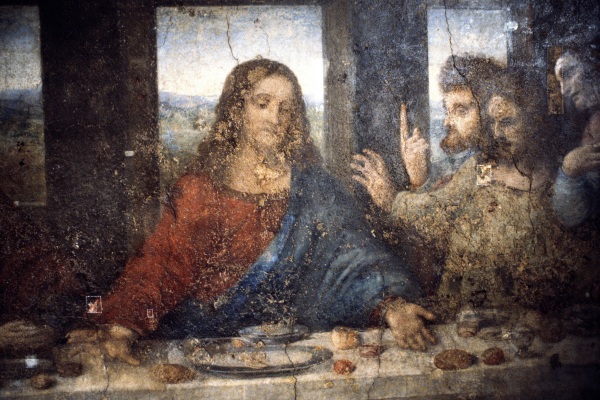
Coming forward to the time of Jesus, the final meal our Lord ate before he died was the Passover meal.  The Passover took a distinct form and included four cups of wine representing the four promises made by God in Exodus 6:6-7: rescue, freedom from slavery, redemption and a renewed relationship with God.  Jesus departed from the usual script, telling his disciples that the bread was His body.  “Take it,” He said, because it needed to be received actively and incorporated into themselves.  He planned to rescue them from the way of the world, free them from slavery to sin, redeem them fully, thus paving the way for a renewed relationship with God.

The cup of wine, from which they all drank, was the Lamb’s blood of the covenant – a new covenant of Jesus’ unconditional commitment to us, pointing us to the kingdom of God.  Keller says Jesus often compared God’s kingdom to sitting at a big feast and that this Passover meal makes the ultimate feast possible.

Isaiah 25:6 describes an endtime feast being prepared by the Lord of hosts:  a lavish banquet with refined aged wine and choice pieces with marrow.  This is when He swallows up death for all time (v.8).

However, in the gospel accounts of the Last Supper, there is no mention of eating meat.  Instead, the Lamb of God was at the table, and Keller says Jesus was the main course.

My question is:  What does “Jesus, the main course” mean for you?


Next installment of the King’s Cross blog post will be September 17th, looking at Ch 15 “the Cup”


the Ransom

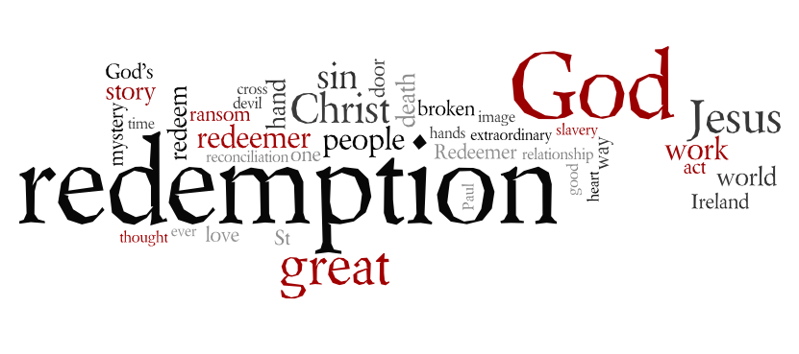
Today’s post comes from Lynette in Cambodia about chapter 12: The Ransom

Most of us seek out people who are “easy to love”. . . people who don’t have problems or issues. . . people who don’t require a lot from us. . . people who are just fun to be around.  Yet according to Jesus’ example and Keller’s summary, “all life-changing love is substitutionary sacrifice”.  I tried to think of some incidence, some person, something where that statement was not true.  Sadly, I could not.  To love someone, really love them, requires tremendous sacrifice on our part, maybe not initially, maybe not for a time;  but, there comes a time in every relationship where we face the question, “Am I willing to deny myself for the sake of the other person?” Or put another way, “Am I willing to love this person in a redemptive way?”

Looking at our life and ministry through the eyes of “redemptive love” shades what we do, why we do it, how we do it, and to whom we do it in a completely different light.  Redemptive love enables us to love the unlovely, to be lovely when we feel unlovely, and to seek ultimate good for those that the Lord allows to be in our circle of influence.  Keller brings out the passage, Jeremiah 29:7, which spoke to me specifically when my team moved to a new provincial location.  “Seek peace and prosperity of the city to which I have carried you into exile.  Pray to the Lord for it, . . .”  During our time in that province, that verse kept coming up in my heart as a basis for why I was there coupled with Matthew 5: 16, “Let your light shine before men in such a way that they may see your good works and glorify your Father who is in heaven.”

Jesus is our example of redemptive love through His life, ransom and resurrection.  So the first challenge I leave with you comes from Keller, “ Be so sacrificially loving  that the people around you, who don’t believe what you believe, will soon be unable to imagine the place without you.”  Does this characterize the place where the Lord has “carried you into exile”? 

The second is how would loving sacrificially (redemptively) change a relationship in which you are currently involved?


Next installment of the King’s Cross blog post will be September 3rd, looking at Ch 13 “the Temple”

Can’t Get Away From Going Slow

Today, I read the following quote from a blog I visit occasionally: “The urgency of slowing down – to find time and space to think – is nothing new, of course, and wiser souls have always reminded us that the more attention we pay to the moment, the less time and energy we have to place it in some larger context.  “Distraction is the only thing that consoles us for our miseries,” the French philosopher Blaise Pascal wrote in the 17th century, “and yet it is itself the greatest of our miseries.”  He also famously remarked that all of man’s problems come from his inability to sit quietly in a room alone.”

It seems I just can’t get away from this idea of ‘going slow’.  In the quote above, I am struck by how often ‘going slow’ is associated with an individual action or decision, and certainly in one sense it is.  We, as individuals, need to step back from the distractions that so easily amuse and satisfy us to take the time to more deeply reflect on the ultimate values we should be pursuing.

However, our individual driven lifestyle must also be addressed by connected relationships or community.  We suffer from “crowded loneliness”, as one writer put it.  We exist, we live, but unconnected, isolated from others and deep relationships.

We need others and they need us.  That’s why so much of the New Testament is about “one another-ing” each other.  Life in Christ is found and experienced in community.  Now we just need to ‘go slow’ to create that community and live out of it.


Jesus, the Only Saviour

It seems that my post from Monday struck a chord with a number of people.  Many could relate to the struggle of becoming a ‘saviour’ to those we are discipling and mentoring.  The trap is one we easily fall into because our hearts are warmed when others put such confidence in us.  However, our hearts need to be trained to warn us of “misplaced confidence” and to consistently point others to Jesus, the only Saviour.

Misplaced confidence is when others consider that they cannot move forward or continue in the Christian journey without us.  Oswald Chambers puts it this way when he speaks to those mentored by others: “But remember that the time will come when he must leave and will no longer be your guide and your leader, because God does not intend for him to stay. Even the thought of that causes you to say, “I cannot continue without my ’Elijah.’ ” Yet God says you must continue.”  Our confidence, as well as the trust that others express, must be in God; not in ourselves nor in one another (Psalm 20:7; Proverbs 3:26).  When we allow misplaced confidence to continue, though it may be a boost to our spiritual pride, it will spiritually cripple any follower.

To consistently point others to Jesus, the only Saviour requires that we develop the reflex to turn situations and questions into learning moments where we go back to Jesus together to find Him and all that He promises to give to His children such as wisdom, discernment, hope and the fruit of the Spirit.  It is so much easier to just answer a disciple’s queries than it is to push him/her back to Jesus and His Word.

Once again this is why we need the input of a community around us as we seek to learn how to direct others to know more deeply their need of a Saviour, and that it is not us.


Telling Stories

Joi wrote in response to my last post: “It seems that these principles enforce a certain ethos.  They describe a unique environment.  Could we find some stories that illustrate this?”  This is an excellent question.  Let me try to give an example or two, and hopefully this will encourage others to share.

Our first principle is to over communicate widely.  In launching the global mobilization project several years ago, we framed the plan from a ‘global’ perspective, thinking that all the resources could come from ‘global.’  What we quickly realized was that each ‘epicenter of mission’ needed to own the growing need for more workers and create the best processes for identifying, assessing, training and sending those workers to WT Global.  It was going to look different in each place, but each process could ultimately benefit everyone else and influence their process.  The breakthrough came when we launched the project through a month long prayer initiative with weekly biblical meditations written by workers from all over our WT community.

Our second principle is to have an open learning stance.  It may seem like an overly simplistic example, but we have for years talked about “strategic & tactical plans”, and then added in the idea of “project plans”.  These are terms that come from a US based approach to planning and there is nothing wrong with that.  When a worker joined my team from another cultural context, he found the terms confusing as they meant something completely different in his context.  He suggested that we start talking about three year plans (formerly ‘project plans’) and one year plans (formerly ‘strategic and tactical plans’).  It has been hard to change the vocabulary, but his suggestion has proved to be extremely helpful in approaching the planning process.

Our final principle is to seek to demonstrate humility.  It is always difficult to give an example of humility because the moment you do, it no longer is an example because you have now spotlighted the ‘humble’ person.  You know the person that comes to mind when you hear this principle.  Our desire is not to exalt this person, but to grasp anew how the Lord has worked out humility in their lives, and for us to then ask for the grace to live such a humble life.


Maybe you have some examples to share?  This would help all of us in this journey.

the Trap

Today’s post comes from Chris in France.

This chapter speaks to my own story.  I’m older than most of you and I spent a long time climbing the greasy pole towards career success.  I had some temporary wins but eventually someone added extra grease to the pole and I was out.  The euphemism is Voluntary Early Retirement, but I was no volunteer.  Despite my best efforts, or because of them, I was a failure.  Painful as all this was at the time, it has led to great blessing for me.  You see, I wasn’t very useful to God while I was busy succeeding.  While Keller focuses on money, I found success to be the greater trap.

It’s interesting that Jesus didn’t seem to have a problem with worldly success.  When Jesus met the rich young ruler, he didn’t say that he was a bad person because he was rich and powerful.  Jesus didn’t condemn the virtuous accumulation of wealth or power or influence.  When Jesus met the guy, he loved him – because he understood the terrible trap this young man had fallen into.  The young man wanted to be good and was having some success in this quest, but sensed in himself that he was missing something critical.  Jesus, in his tough love, immediately makes a terrible offer to the young man that goes to the heart of his problem.  Could he put aside success and his potential for much more of it, and trust his life to Jesus instead of to himself?  Jesus was asking for trust not just in the life to come, but in this life – right now.

It’s incredibly hard on self to lose in the struggle for worldly success.  I found my own fall desperately difficult.  I saw myself (for an agonising moment or century) as the rest of my world must have seen me – a middle aged loser.  How much harder it would be for a young man, with so much ahead of him, to choose such a fate voluntarily.  What would everyone think of him?  What would he think of himself for giving away so much?  And so, he went away sad, rich and powerful but still trapped.

Many of us also live our lives inside the success trap.  We live as if we and not God were the source of our jobs, talents, opportunities and eventual success.  So we find it hard to imagine that all we have earned – social position, educational qualifications, possessions, work achievements – are not only temporary but possibly undeserved gifts.  We are beggars spiritually who must ask for help to be saved.  But our self-respect has trouble handling beggar status when it comes to our worldly successes.  We find it hard to rely on the One who has already given us everything.

Tough times seem be coming again in Europe and North America (and perhaps even in Australia).  The jobs, investments, property and arrangements many of us trust for security might be threatened – even lost.  Suddenly, we might not be successful.  It will be humiliating but it could also be ultimately liberating.

My question; How would you cope if you lost all the success you’d worked for?  What would reliance upon Christ look like at that moment?


Next instalment of the King’s Cross blog post will be August 27th, looking at Ch 12 “the Ransom”