• Our hope-filled future is bound up in sharing the story of Jesus, in discipling others, in bringing those disciples together into communities of believers, and in developing and releasing those believers to create other communities... till Jesus the King comes again!

“Get in a prayer meeting”

I’m reading a book with colleagues entitled: Nothing is Impossible with God: Reflections on Weakness, Faith, and Power.  Today, I stumbled on this quote: “Be people of love. Be people of faith.  Be people of prayer.  Do you long to be changed?  To see people change?  To be part of God’s reclaiming the world for himself?  Get in a prayer meeting.  Go to the throne of grace andprayer-meeting-n bring others with you.”  I could have thought of a lot of other answers to those questions than prayer.  If you had asked me: “Do you want to be part of God’s reclaiming the world for himself?” I might have answered: “Then join World Team!”  The better answer is prayer!

Prayer not only places us in the centre of what God is doing in this world, but prayer reveals our moment by moment helplessness to do anything apart from God’s work in us and through us. It is why we need to pray for others and ask others to pray for us.

Meeting with others in prayer; praying with others when we are together for various reasons offers us regular opportunities to tie our weakness to His power.

O.Hallesby wrote: “The work of praying is prerequisite to all other work in the kingdom of God, for the simple reason that it is by prayer that we couple the powers of heaven to our helplessness, the powers which can turn water into wine and remove mountains in our own life and the lives of others, the powers which can awaken those who sleep in sin and raise up the dead, the powers which capture strongholds and make the impossible possible.”

Today and tomorrow are times we have set aside to pray with one another as a World Team global community. May today and tomorrow be a start to regularly pray with and for another another, and for the needs of this lost world in need of Christ.

Pray every day

When I was in Cameroon a few weeks back, the team got together in two groups to pray. One hour had been allocated for our prayer time together.  As we gathered in a circle, the leader quickly explained that we prayer bis biswould be sharing for 10 minutes and praying for 50 minutes. Each person in the group was going to have to share a meaningful request in less than 1 minute, and then we would go to prayer.

To be honest, I was a bit ‘skeptical’ about how we (this small group) were going to spend one hour in prayer. Yet, the time was so quickly filled with conversational prayer between us as a group and our God that before we knew it, the closing prayer was being offered.  What a delight to pray together in that way.

This week during our global leader meetings, I set aside a time of prayer with the same parameters. However, each group leader varied even those parameters from our prayer time in Cameroon.  The short sharing time was still maintained, but done in other ways. Yet, once again we spent the bulk of our time praying.

When we were all done, one leader said: “Every day, we discuss a series of critical topics. We have a wealth of topics we could pray for each night.  We could spend this same time in prayer every night.”  You know what?  He’s right.  We could spend that time each night in prayer

Prayer is one of our guiding principles; it directs how we do ministry. We do ministry first and foremost in prayer.  We don’t do it because we ‘have to’; we engage in prayer because our Father delights in hearing our prayers and our praises, and because we want to come and be with Him.

Thanks for your prayers for us as leaders this week! Know that, during our time here, we were praying for many of you as well as the people group among whom you serve!  Let us not grow weary in prayer (Luke 18:1).

Remember the promise, pray the promise

Some of us push our trucks through mud to reach our ministry location.  Some of us battle urban traffic to be able to attend a national church planter meeting. Some of us spend large portions of our day trying to master the language of our people group.  Some of us spend large portions of our day just talking with people from our people group, looking for openings for spiritual conversation.

All of us, though, have one and the same objective: to lead people into relationship with Christ, to grow them  in discipleship, and bring them into a community of believers.  That is our ‘central ministry focus’, if you will: reaching, investing, equipping and releasing.

God does not promise us that each one of neighbors or friends will come to Christ.  We pray, we share, and we work to that end.  However, we don’t know whose heart will be opened to message of Jesus’s death and resurrection.  We pray in faith that God will lead to Himself some of those to whom we minister.

Last Friday, Dave (WT Africa) shared at a field gathering that there is a promise that God will fulfill and to which He calls us to pray.  The Apostle John put it this way: “After this I looked, and behold, a great multitude that no one could number, from every nation, from all tribes and peoples and languages, standing before the throne and before the Lamb, clothed in white robes, with palm branches in their hands, and crying out with a loud voice, “Salvation belongs to our God who sits on the throne and to the Lamb!”” God promises that there will be someone from every people group standing and worshiping before the promisethrone of grace.  God will fulfill that promise and we can pray that promise to its fulfillment.

That assurance will get us up out of bed every day; remembering that God delights in the worship of His people, and that He is calling people from every tribe, tongue, and nation to that worshiping assembly.  We can pray that promise together as we work towards its fulfillment … to see some from among the Chom people, Italian urban dwellers, and the displaced Chinese of South America praising the Lamb before God’s throne.

Prayer is the work

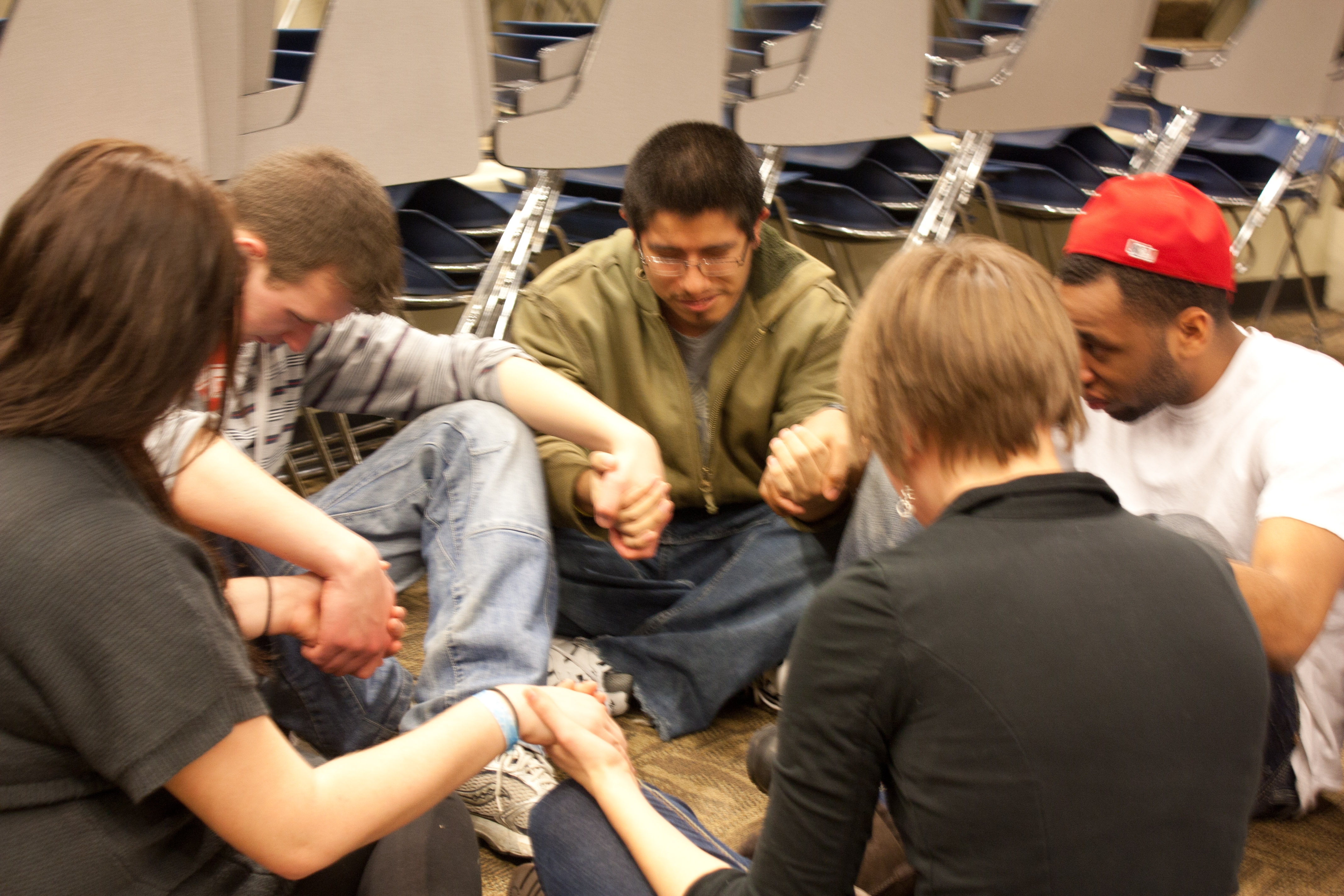
A good friend used to quote the statement, “It’s not that we should pray about the work; prayer is the work!”   I’m not sure who was at the origin of that statement, but its message certainly rings true.  Most of us are activists at heart and prayer can quickly become one of those ‘options’ or add-ons.  It’s important, just not that important, we think.cdop-smal-group-prayer

Then we read a verse like this one that Paul sent to Timothy, a fledging pastor and worker, and find ourselves challenged about the place of prayer in our life and ministry: “First of all, then, I urge that supplications, prayers, intercessions, and thanksgivings be made for all people, for kings and all who are in high positions, that we may lead a peaceful and quiet life, godly and dignified in every way.”  (1 Timothy 2:1).  This an exhortation of urgent importance which is quite inclusive in scope.  If nothing else, it puts prayer at the very top of our priority list and reminds us that no one is unworthy of our prayer focus.

What recently struck me is how often I have read this text in the singular, as addressed to Timothy (and by extension to me as an individual worker). However, over and again, Paul slips in the usage of the first person plural to remind us that the work to which he is calling Timothy is a work for the entire community.  In fact, he is inviting us to a ‘concert’ of prayer rather than just a solo.

I’m concerned that sometimes in our busyness, we forgot the importance of prayer, and particularly of prayer together with others. God calls us, through prayer, to influence our culture and touch the hearts of men and women lost without Christ.

Creative ways to make that happen, of joining more often in collective prayer with others, are certainly within our reach.

Laying hold of it

It seems self-evident that a movement such as ours would have to have the Gospel as a central driving value.  However, when we say that the Gospel is one of our guiding principles, what we actually mean can be less than clear and ‘interpreted’ differently by various workers.heart affection

The Gospel is certainly the message of the substitutionary atonement of Jesus which delivers us from the guilt, the power and the pollution of sin. When we say the Gospel is one of our central driving values, we mean more than just that definition.  We mean that we are ‘Gospel centred’.  We mean that more than anything else, Jesus is ‘the joy of our desiring’.  We mean that Jesus has displaced all other things that might capture our heart: our reputation, our ministry, or our success in ministry.

Thomas Chalmers in his message: “The Expulsive Power of a New Affection” put it this way: “Its [our heart] desire for one particular object may be conquered; but as to its desire for having some one object or other, this is unconquerable.  Its adhesion to that on which it has fastened the preference of its regards, cannot willingly be overcome by the rending away of a simple separation.  It can be done only by the application of something else, to which it may feel the adhesion of a still stronger and more powerful preference.”  What Chalmers was trying to express was the difficulty we have in being ‘Gospel centred’.  Our hearts resist the shedding of one affection, one desire, or one focus if there is not something more powerful, more important that will push out of the way what currently captures our heart.

We often talk about the reality of spiritual warfare in the task of bringing the Gospel to those without Christ.  Perhaps that same reality exists in our hearts when we allow other ‘affectations’ to capture our hearts rather than Christ.

To be as concrete as I can, living as a ‘Gospel centred’ worker would mean asking another worker to pray with me for Jesus to become again the ‘joy of my desiring’ as something else may have become much more important to me at this point in my life and ministry.

It’s a fight, it’s a struggle to live as Gospel centred workers.


The art of sacrifice in a region (Asia)

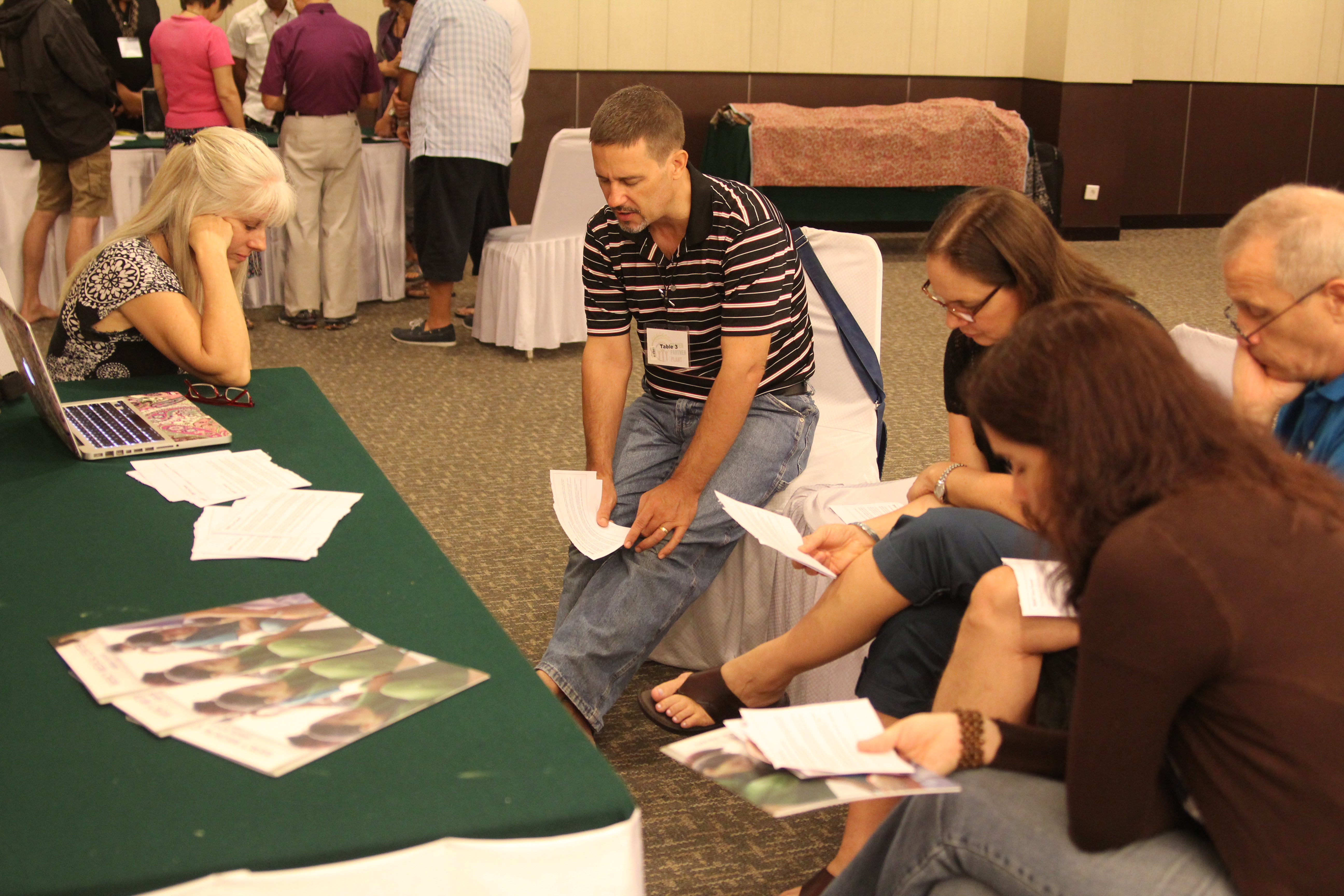
The Mission¹⁴: Vision Forward Asia conference was the third Area conference in 2014.  The conference focused on facilitative church planting with presentations by Tom (Biola University) along with several workshops by Area members.  One innovative highlight was the “prayer corners” offered on several mornings.  These “prayer corners” allowed workers to briefly share their ministry and then have a small group pray for the needs shared.  After a certain time, groups then shifted to other “prayer corners” and began the process again.Bali 2014 042

As I wrote in the previous post, “I shared a number of challenges with each region or Area.  The purpose was to affirm and celebrate what God has done through us over the past few years as well as to challenge Area members to “excel still more” in their work and ministry for Jesus.”

During the WT Asia conference, I shared the following challenges.

First challenge: allow others to speak into your life. Our natural tendency is to defend ourselves when others (from inside or outside our context) seek to share insights about our life and ministry. We do not receive well critical comments from others.  However, those comments often contain elements of truth and insight to help us further grow in our journey with Christ.  With our hearts centred in the truth that we are loved more than we dared imagine, we can hear and receive well what others would share with us.

Second challenge: choose facilitation. Choosing facilitation means that we will set aside our goal of self accomplishment in order to enter others into the ministry who can then join in the task which God has entrusted to us as a community.  It will call us to learn how to begin ‘doing less and leading more’.  By that, I mean that we will more quickly share, delegate and facilitate others; giving away ministry rather than holding it for ourselves.

Third challenge: live out our values.  As a World Team global community, we are committed to Gospel centred life and ministry, adoration, community, and building into others. Those values can often be just words on a page, aspirational values if you will. We must choose to live together out of these values as they form the bedrock of who we are and all we do.

Fourth challenge: excel still more.  WT Asia has seen significant growth in its ministry over the past number of years.  We should not rest on what has already happened, but continue to desire to do even more for Christ.  It calls us to ‘think outside of our current box’ and recognize that God is using a variety of modes and means to bring the Gospel to unreached peoples around the globe.  We must continue to grow, to change and to be ever passionate about our calling: to multiply disciples and communities of believers.

I share these challenges to the WT Asia workers with all of us both as a reminder of the challenges given, but also as a motivation to pray for one another as we seek to learn the further change and growth to which God is calling us.