
• Our hope-filled future is bound up in sharing the story of Jesus, in discipling others, in bringing those disciples together into communities of believers, and in developing and releasing those believers to create other communities... till Jesus the King comes again!

What difference does it make?

What difference does it make to be in the majority or the minority?hqdefault

Around the globe today, that’s a question on which a number of people are reflecting.  For some, it’s a financial question; for others, it’s a political question; and for still others, it’s a social structure question.

To be in the majority means that one’s way of seeing the world is the operating principle for the context in which one lives and works.  It’s a comfortable place to be.  To be in the minority means that one’s way of seeing the world is not the standard operating principle.  This can be an uncomfortable and awkward place to be.

Imagine that you have been invited to a dinner party where the host, and most of the guests, is an extrovert.  If you are an extrovert, you will feel very much at home at the dinner party and probably tell people later what a great time you had.  You are in the majority.  If you are an introvert, you will feel like the proverbial ‘fish out of water’ amongst all these extroverts.  The dinner party might be hard, uncomfortable, or awkward.  Rare would be the person at such a dinner party, from the majority group, who notices your uncomfortableness and tries to ‘bridge’ you into the conversation.

So, why am I writing all this?  In our World Team Ministry Framework, one of the elements of our organizational culture (our context) is community.  Community, Gospel community, calls us to address the differences, the disparities that may exist between us.  Gospel community calls us to think about others who may not be in our ‘majority’ in terms of language, culture, temperament or style of thinking; to think about others who may not be in our ‘majority’ and how they might feel. Gospel community calls us to turn away from ways that may isolate others, and move towards others to learn from their way of perceiving the world.

Have you ever wondered about when John writes: “And I heard, as it were, the voice of a great multitude and as the sound of many waters and as the sound of mighty peals of thunder, saying, “Hallelujah!  For the Lord our God, the Almighty, reigns. Let us rejoice and be glad and give the glory to Him, for the marriage supper of the Lamb has come and His bride has made herself ready””, what language will be spoken when we are all gathered together in that way?  And what cultural cues will we follow as we sit down to the marriage feast of the Lamb?

Community: is the experience of God’s people sharing in common their relationship with Christ, stimulating each other toward growth in maturity … this kind of community operates through voluntary transparency and through speaking and receiving the truth in love.


How will you respond?

vote-electionToday, people in one area of the world will be voting to elect the next leader of their country.  For the past number of weeks, the news here where I live has focused on this upcoming election.  Conversations at church, in the neighborhood, or over coffee have centred on the question: “So, who do you think is going to win the election?

It’s not my purpose to discuss the candidates themselves nor the content of the political debates surrounding this election.  And this is only one of a number of elections that have occurred or will occur this year.  My purpose is to talk about our response or our reaction to what happens; to what will be the outcome of this election.

In 1 Timothy 2, we read: “First of all, then, I urge that supplications, prayers, intercessions, and thanksgiving be made for all people, for kings and all who are in high positions, that we may lead a peaceful and quiet life, godly and dignified in every way.  This is good, and it is pleasing in the sight of God our Savior.

My first reaction, and perhaps yours as well, over the past few weeks has been to speak up and say what I think about the candidates and the issues in this election.  Paul exhorts us to first take our words to God and change them into prayers for the very leaders engaged in this electoral process.  However, Paul goes even further to challenge us to pray for these leaders so that they will allow a continued openness, in that culture and society, to living out one’s faith and sharing one’s faith with others.

I almost hesitated to write that last paragraph because it seemed so obvious.  However, it is very much ‘counter cultural’ for all of us to think first of prayer because passions can ‘fly’ in political discussions.  Without realizing it, our passion may demonstrate that we really believe it is the winner of an election who determines the future.

It is our God who is sovereign, and so our hearts and prayers need to turn to Him first in response.

Our God is in the heavens; he does all that he pleases.”  (Psalm 115:3)

Are you monocultural?

By our job description, we are ‘cross cultural workers’.  In other words, we have moved from living in one culture to adapting to life in another.  Our perspective has certainly changed.  Or our perspective should have changed.  I am sometimes surprised by how easily I can move back and forth between working as a cross cultural person and acting like a monocultural worker.

monoculturalNow when I say, ‘monocultural’, I’m thinking of the idea where we look at another culture only from the perspective of our culture of origin.

The way that this often works out is by those small criticisms (seemingly justified) of the current culture in which we live.  It happens in the smallest of situations. The ‘little man’ on the pedestrian crossing signal turns from green to red, and that local pedestrian steps right into the crosswalk without even a moment of hesitation.  In my mind, I feel like shouting out: “Did you see that the little man change from green to red?  It means stop and wait to cross!

What I am doing is monoculturally criticizing the behavior of others.  I’m not trying to assess why this happens or what element of another’s worldview moves them to act in this way, I’m just reacting from my cultural norms; cultural norms which I believe are right.

Without daily nurturing a ‘multicultural’ perspective, I will have trouble applying the Gospel appropriately and accurately to my life as well as to the lives of others.  I will end up ‘speaking’ a lot more than ‘listening’.   I will end up nitpicking rather than grappling with cultural issues that might become avenues for communicating the message of Jesus Christ to my heart and to the hearts of others.


Happy Reformation Day!

For some in our world, today, October 31st, will be a day for collecting candy from friends and neighbors.  For others, it will be a day of preparation for All Saints Day (Nov 1st) where families will spend time visiting the grave sites of family members.  martin-lutherHowever, many others will celebrate today the 500th anniversary of the Protestant Reformation, launched by Martin Luther nailing his 95 theses to the door of the Wittenberg church in Germany.

We are the ‘offspring’ of Luther’s call to return to the Living Word as our only source of forgiveness, justification and freedom.

The first of the 95 theses reads this way: “When our Lord and Master Jesus Christ said, “Repent” (Mt 4:17), he willed the entire life of believers to be one of repentance.”   Repentance is the turning away from our sin and turning back to God to receive His forgiveness and grace.  Our ‘entire life’ is to be characterized by this constant act of repentance and faith, repentance and faith, repentance and faith.

It’s easy for us to tell others of their need for repentance.  It is much harder to accept our need for daily repentance.  However, if the Gospel is not ‘good news’ for us, how can it be ‘good news’ for others?

See what kind of love the Father has given to us, that we should be called children of God; and so we are.”  (1 John 3:1)

Happy Reformation Day!

Offer one’s help to another

One of the strengths of the World Team Global community, in my mind, is our willingness to reach out and offer our help to others.  This notion of community is strong among us and I, like you, have many times experienced the blessing of such service.hands-reaching-out

However, the call to ‘fall on our face’ and ‘look up’ together causes us to ask a deeper question: what is our true heart motivation for offering one’s hand to help another? 

It could be that our motivation is one that flows out of a heart that has been mastered by the Gospel; where the Gospel of grace has ‘gone downtown’ in our hearts and brought about deep transformation, leading to a godly longing to serve others.  It could be that our motivation flows out of a heart that is less discerning and tends towards seeking the value or acceptance of the other as we serve them.

It’s not my work to ‘assess’ the motivation of others.  However, it is my work to ‘assess’ my own motivation.  To do that effectively, I need the Holy Spirit and others to help me.

And it is my work to build up others by thanking them for the ministry and service they have had in my life.

Look up together

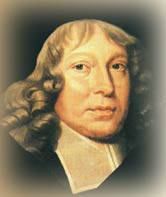
He may not have been the most photogenic (or portrait-genic) personality, but Samuel Rutherford spoke deeply to people’s souls in his day about the power of God’s love and the power of His mighty hand guiding and directing all we do.  He speaks as deeply to our souls as well today.  gl095_sm

The quote below is long, but worth the read:

How hard it is to be patient if we allow our thoughts to become stuck down among the confused rolling and wheels of second causes. By this I mean all the times we say, “If only I hadn’t been in the wrong place.  If only I had done it differently.  If only this hadn’t happened to me.”  I mean the subtle temptation to link together earthly causes and effects.  I need to fight against the temptation to accept the confused, grinding, second wheel of this logic.  The answer to this is “Look up.”  Look to the master-motion and the first wheel.  It is a petty view of our Father’s love, goodness, and wisdom that demands or expects an answer according to our desires apart from his wisdom.  We see hardly one inch of the narrow land of time. To our God eternity lies open as a meadow. It must seem strange to the heavenly people, who have reached the beautiful End, that we should ever question what Love allows to be, or that we even call prayer unanswered when it is not what we expect.”

When our hearts are tempted to focus on the here and now, on what we think we see and control in our lives and ministries; when we are tempted to consider all the “would have, could have and should have options” as if we could really make ministry work on our own, it’s time to look up.   It’s time to look up together and remember the true ‘first cause’ of all things, particularly of all things related to our ministries.

We often cite the verse, but may our hearts truly cry out that ‘without Him, we can do nothing’.

Let’s look up together:

https://www.youtube.com/watch?v=JuZptGxcook