• Our hope-filled future is bound up in sharing the story of Jesus, in discipling others, in bringing those disciples together into communities of believers, and in developing and releasing those believers to create other communities... till Jesus the King comes again!

Ask who?

I’m continuing to work my way through the book: Thanks for the Feedback: The Science and Art of Receiving Feedback Well.  I fell upon the following quote this morning:

The other surprisingly valuable players in the feedback game are the people you find most difficult … When we are under stress or in conflict we lose skills we normally have, impact others in ways we don’t see, are at a loss for positive strategies.  We need honest mirrors in these moments, and often that role is played best by those with whom we have the hardest time.   If that overseas client thinks you’re an idiot, then there’s something going on that you’re not “getting,” and without her help, you’re not going to get it.  It may be a cultural difference that you need to understand if you’re going to be effective in her market.  It may be that your tone and word choice are upsetting her in ways you don’t realize. That’s worth figuring out. And you’ll need her help to do it.  Want to fast-track your growth?  Go directly to the people you have the feedback questionshardest time with. Ask them what you’re doing that’s exacerbating the situation. They will surely tell you.”

My very first thought was, “Ask who?  You’re kidding, right?”

However, there is some nugget of truth in what these authors wrote.  That nugget might just be that there are insights that can be gained by expanding one’s feedback circle.

Most of us go to people who we know are ‘for us’ and we expect that their feedback will primarily be positive and encouraging.  In fact, the truth being said, our closest friends oftentimes hesitate to share honest feedback because they know what our reaction will be or they just don’t want to risk damaging the friendship.  I don’t mean to say that we won’t get good feedback from those closest to us.  However, we need more feedback from a larger circle in order to be able to grow further in our character and competency.

So, what would it look like to expand your feedback circle?  What’s a practical step you (and I) can take in the coming weeks?

Listening is just hard

Talking is fairly easy, even if one is shy or introverted.  It’s ‘easy’ because we work to convey what is on our mind, what is our opinion about a topic.  Listening, on the other hand, is just plain hard.  It’s hard because listening is not about us, but about othlistening bisers and understanding what is on their mind.


Listening calls for double duty.

For one, we must shut off our ‘answer’ default mode, that is, we must stop thinking about our every response to another’s comments.  The point of listening is to understand the process whereby the other arrived at his/her thoughts.

For another, we must focus on clarifying questions.  In order to understand what another is ‘working to convey’ to you, questions (thoughtful questions) will allow you to sound out another’s thought process.  The fruit of this kind of listening is that it helps the listener know better how to ‘intervene’ in the life of the other.  It will allow the one speaking to actually assess the import and soundness of his/her thoughts.

Listening is a skill. It is a competency that many of us must work on.

I had the benefit of a personal example of skill-full listening the other day.  Two close friends were over for a time of sharing and prayer together.  At one point, I ‘vented’ about some the frustrations I was experiencing.  I made some strong statements, some exaggerated statements.

Our friends did not immediately push back on me, trying to prove me wrong.  They asked numerous questions; at times rephrasing what I said to be sure they had heard what I was saying.  The questions were in no way contentious either.  They were carefully worded, and their impact was felt much later.  Yes, there were some responses on their part.  However, their questions caused me to re-examine what I had been saying and the ‘steps’ I had been considering to take.

I think our close friends had the harder work that night.  It was easy for me to talk.  I know it was hard for them to listen.  The result, however, was that their work of listening turned me back to the ‘everlasting way’ (Psalm 139:24).

Competency is not a bad word

We never stop learning.  It might be a new word, a new expression in the language in which we minister.  It might be another way to send our prayer letters out (such as Constant Contact, Mail Chimp or some other program).  There is a good deal of motivation in this kind of learning because we see its tangible benefit, the help it can provide to our life and ministry.competencies2

We should never stop learning.  However, we also need to pro-actively look for learning that may not have, at first glance, immediate tangible benefit to our life and ministry.  Constant learning is a means to increase our competency, our skills to live as Christ would desire and to minister in more and more fruitful ways.  Paul said, “I urge you to excel still more” (1 Thess 4:1).  Increasing one’s competency is an aspect of glorifying God, a concrete way of worshipping him as we recognize our dependence upon Him and the need for further, ongoing training.

The core skills modules are part of this process for all WT workers.  How grateful I am for the participation of so many in our first module and the feedback we have received.

However, we cannot stop there.  Each of us should prayerfully consider, in discussion with others, our next steps in growth and development (competency), outlining a  quarterly or monthly desired growth goal.

Competency is not a bad word.  It should become an energizing word for us, calling us to never stop learning.

Balancing Act

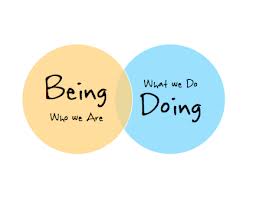
The other day we opened up the topic of the relationship between ‘being’ and ‘doing’.  Basically, we recognized that these two elements are inseparable.  One response was: “When I understand the great, free gift God has given me through Christ, then I cannot help but to share it out of the overflow of joy from my inner being. And the more we share the Good News, the more we realize just how reliant we are on Christ. Round and round we go.”  In many ways, it’s a careful balancing act to always allow one element to move us around to the other.air-conditioning-balancing-act

What I’m most interested in thinking about today in this post is: how does it all happen?  What does it practically look like when I ‘go to work’ as a church planter?

Let me suggest several ideas for us to chew on:

First, ask people close to us to participate in an honest assessment of our character and competencies.  We can easily overlook the weaknesses we have in our own character or work. We can excuse deficiencies in ourselves more quickly than we can in others.  All of this, points to our need to have others speak into our life and give feedback on character issues and core competency skills that need work.  By involving others in the assessment phase, we open the door, as well, to their potential coaching in helping us to grow in both character and competency.

Next, set a plan to grow in an area, but pray like mad that any effort would be inspired and driven by God.  All of us need to grow more in critical core skills related to our ministries.  However, that does not happen by osmosis.  We need to put effort to it.  That effort, though, cannot be separated from the ultimate power source, namely Jesus.  Round and round we go again.

Finally, remember that our model is our most powerful influence.  If we encourage others to be more in prayer, then we need to set the example.  If we complain to other workers about the fact that there are not more disciples or that the work is slow, we need to respond by re-engaging  ourselves in initiating spiritual conversations (see Core Skills module on evangelism, starting in January 2013) or in participating in developing and releasing others into ministry.  Our greatest help to new believers is actually engaging in ministry with them.  It will also be our greatest joy.

I’m sure there are others and I welcome hearing from you about them.  Let’s challenge each other more round and round the circle of character and competency.

More on Core Skills

We all recognize that evangelism is an integral part of church planting.  But does it stand alone?  Or is it the first step towards discipling people to become committed followers of Jesus who will in turn make other disciples?  We call this reproduction and multiplication.  One focus of this on-line core skills module (Evangelism: Abundantly Sowing the Seed) is to think and do evangelism with the end in mind, that is, to share the Gospel in such a way that churches multiply. CS-masthead-logo

The course speaks to our motivation for sharing Christ (something we admit we all wrestle with at times) and exploring how we evangelize in a way that sows the seeds of multiplication.  Other topics include: the role of prayer in sharing our faith, evangelism as a means of ‘discipling the lost’ and what it means to find a person of peace.

Another topic looks at contextualization in the book of Acts and what the Scriptures teach us about contextualizing the unchanging message of the gospel today.  We also look at how ‘spiritual conversations’ can be used when interacting with neighbors and others, as a bridge to sharing Jesus with them.  Contextualization looks very different in our many ministry settings.

Trained WT facilitators will be leading this initiative.  I will be encouraging all Area Directors to send dates and sign-up information to field directors and all field workers for offering the module in 2013.

Anything New Under the Sun?

Winston Churchill once said, “Those that fail to learn from history, are doomed to repeat it.”  The Scriptures tell us: “there is nothing new under the sun.”

British historian, Ian Shaw, in his recent work, Churches, Revolutions and Empires, demonstrates the very truth of this statement.  Using extensive research, Shaw highlights critical issues faced by the Church in the 18th and 19th centuries.  The examples he chooses would make you think he was talking about our current global context.   Shaw writes: “Many believed that, with the changing social and religious geography of Britain, urgent and innovative responses were needed if the church was to remain relevant in a new context.”  Sound vaguely familiar?  Shaw goes on to say: “One influential experiment was played out in the years after 1815, when the brilliant young minister, Thomas Chalmers … developed an approach to urban mission, which he publicized and promoted through his writings.”  How interesting that in 1815 the idea of ‘urban ministry’ was already in play.imagesCAVNOKB2

In our current day, we often juxtapose “being” and “doing”, or put another way, “character” and “competence”.  Time and again, one element of this combination is stressed to the exclusion of the other.  Many argue that what is most important is ‘being’ or our character.  God is not interested in numbers, but He is primarily interested in our heart.  Others counter by stating that the Bible is replete with instructions about stewardship and management of resources and that His ultimate desire is that we bear fruit in specific terms.

What’s interesting is that this same discussion has played out at many points in past centuries.  However, the debate waned at those times when people saw the two as being inseparable.  You cannot talk about “being” without it leading to “doing”.  You cannot speak about “character” without it implying the need for “competence”.

As we begin to move all our workers through the first core skills module on evangelism, our stance will be that spiritual intimacy with Christ will lead to sharing one’s story with another; and that sharing one’s story with another in a clear and contextual way will push us back to a deeper reliance upon and intimacy with God.  Both are equally essential in our ministries.