• Our hope-filled future is bound up in sharing the story of Jesus, in discipling others, in bringing those disciples together into communities of believers, and in developing and releasing those believers to create other communities... till Jesus the King comes again!

Sharing stories

If it is true that “one of the reasons why ‘working together’ is not a descriptor that currently characterizes us is because we don’t know others in our community as well as we should,” then we need to create opportunities where we can talk and engage one another.

In the past, during the World Team Institute of Church Planting, there was a time when people would “share their histories” or “share their stories”.  It was a moment where people talked about their spiritual journey.  It wasn’t necessarily a long drawn out event, but in several minutes you gained an appreciation for how God had worked in another person’s life.  I believe that time of sharing built trust among those present as you recognized the hand of God in another’s journey.Sharing_your_stories_623
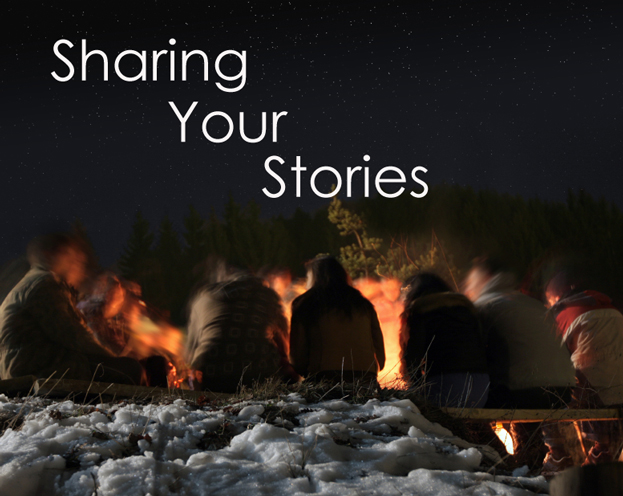
Though we may not be able to regularly reproduce that history sharing time, our digitoral or virtual age allows us to engage in this kind of conversation, even from a distance.  Scott Peck, a writer who has written extensively on the issue of community, said that community can be developed over a long period of time or a very short period.  It’s the energy and intentionality that we put into the time shared that will move it more quickly to community.

Because “working together” is a value to us, and since this value is nurtured by time spent together, let’s seize the opportunities we have through Skype, e-mail, Twitter or phone to share our stories with another.  Certainly, when we are together, we can go deeper in that conversation, but why not begin building that trust relationship now virtually.

We can start down this conversation road by asking a simple question next time we’re “on-line”: what has the Lord been doing in your life this week?

Maybe you have another question to suggest.


Working together

It’s right there in our purpose statement: “To glorify God by working together to establish reproducing churches focusing on the unreached peoples of the world.” Working together, being interdependent, is the foundation or platform on which we do our work.  Working together is not a strategy we use to carry out our purpose and mission.  It’s the way we choose to interact with one another in order to fulfill God’s calling.Working%20Together%20(Small)

We need one another.  This is not a solo effort.  The Bible affirms this value time and again when it talks about the teams or groups of workers that went out together to share the story of Jesus and establish His church.  We must intentionally seek others’ help, input and participation in order to multiply disciples and communities of believers.

Now I can say that I need others, and yet live and work without allowing any community to enter my world and lend a helping hand.  I could come up with a host of action steps to ensure that interdependence characterizes who I am as a member of the WT community. But, interdependence is first a relational stance towards another.  It’s not about a series of boxes that I can check off my To Do list, indicating that I got feedback from ‘x’ number of people or asked a specific number of people for their help.  It’s about who I’m talking with.  It’s about those whom I would go to because I know them and their heart.

One of the reasons why ‘working together’ is not a descriptor that currently characterizes us is because we don’t know others in our community as well as we should.  Trust is built by time and conversation.  Understanding and a desire to work together flows out of shared time that allows us to see the strengths and gifts of one another.

So, pick up the phone, “reach out to someone”, and take the time to talk with another.  ‘Working together’ would take on a whole different look.

“Independent Subcontractors”

So have we really drifted into becoming more like “independent contractors” than a “bonded fellowship”?   Why would this be case?  How did this come about?

One reason would be that certain concerns take precedence over others.  For the most part, those concerns are right in front of us: just to live and to work.  Those concerns, though certainly legitimate, can push us away from others who are not right here with us.  A common definition of an independent subcontractor is “a person or business which has a contract to provide some portion of the work or services on a project agreed to by a contractor.”  A subcontractor sets his/her own hours and work schedule.  A subcontractor has his/her own small team and doesn’t necessarily work in tandem with other workers outside of his/her local context.  Their chief concern is to make sure they get paid for the work they do.

Another reason would be that we only apply the value at a local level.  WT has a strong aspirational value for community, though its application can be limited.  We have done a good job building local communities, but struggle to have any sense of connection to the larger WT community

A final reason would be the lack of trust that quickly sets in between people.  I have heard one writer say that it takes ten positive comments to offset one critical one.  Could it be that we too quickly find ourselves thinking less of a member within the WT community because of one misplaced comment?  The longer that comment is not dealt with, the harder it is to maintain a bonded fellowship.

The WT community is a unique group of cross cultural workers, passionate about one thing: the multiplication of disciples and communities of believers around the globe.  Many communities of workers work towards this end.  Maybe I’m not seeing things correctly, but it seems like we act more like a group of “independent subcontractors” sometimes than a community pulling together with and for one another.


One little phrase

Sometimes when you’re reading an article, one little phrase seems to jump off the page at you. Such was the case when I read this little phrase recently in the International Bulletin of Missionary Research (Vol. 28, No. 3):  “I realized how few “traditional missionaries” are sent there by mission “agencies” (a horrible word, representing the disastrous shift from a closely bonded fellowship of fund-sharing teams to groups of independently-funded individuals for whom “agencies” are merely temporary flags of convenience.””  I felt the ‘sting’ of that comment and that criticism.

However, every criticism has elements of truth in it; otherwise it wouldn’t hurt so much.  That’s when I began to wonder how we as workers may have drifted from that ‘closely bonded fellowship’ to ‘independent subcontractors’, if you will.  In other words, have we become less of a ‘network of like-minded individuals’ and more of ‘convenient groups’ of workers who enjoy being with each other from time to time?

Kind of sobering to think that we may drifted more than we realize.  Let’s talk more in the coming days about why this might be the case, how it may have come about, and what we might do to restore an attitude of ‘bonded fellowship’.


Can’t Get Away From Going Slow

Today, I read the following quote from a blog I visit occasionally: “The urgency of slowing down – to find time and space to think – is nothing new, of course, and wiser souls have always reminded us that the more attention we pay to the moment, the less time and energy we have to place it in some larger context.  “Distraction is the only thing that consoles us for our miseries,” the French philosopher Blaise Pascal wrote in the 17th century, “and yet it is itself the greatest of our miseries.”  He also famously remarked that all of man’s problems come from his inability to sit quietly in a room alone.”

It seems I just can’t get away from this idea of ‘going slow’.  In the quote above, I am struck by how often ‘going slow’ is associated with an individual action or decision, and certainly in one sense it is.  We, as individuals, need to step back from the distractions that so easily amuse and satisfy us to take the time to more deeply reflect on the ultimate values we should be pursuing.

However, our individual driven lifestyle must also be addressed by connected relationships or community.  We suffer from “crowded loneliness”, as one writer put it.  We exist, we live, but unconnected, isolated from others and deep relationships.

We need others and they need us.  That’s why so much of the New Testament is about “one another-ing” each other.  Life in Christ is found and experienced in community.  Now we just need to ‘go slow’ to create that community and live out of it.


Jesus, the Only Saviour

It seems that my post from Monday struck a chord with a number of people.  Many could relate to the struggle of becoming a ‘saviour’ to those we are discipling and mentoring.  The trap is one we easily fall into because our hearts are warmed when others put such confidence in us.  However, our hearts need to be trained to warn us of “misplaced confidence” and to consistently point others to Jesus, the only Saviour.

Misplaced confidence is when others consider that they cannot move forward or continue in the Christian journey without us.  Oswald Chambers puts it this way when he speaks to those mentored by others: “But remember that the time will come when he must leave and will no longer be your guide and your leader, because God does not intend for him to stay. Even the thought of that causes you to say, “I cannot continue without my ’Elijah.’ ” Yet God says you must continue.”  Our confidence, as well as the trust that others express, must be in God; not in ourselves nor in one another (Psalm 20:7; Proverbs 3:26).  When we allow misplaced confidence to continue, though it may be a boost to our spiritual pride, it will spiritually cripple any follower.

To consistently point others to Jesus, the only Saviour requires that we develop the reflex to turn situations and questions into learning moments where we go back to Jesus together to find Him and all that He promises to give to His children such as wisdom, discernment, hope and the fruit of the Spirit.  It is so much easier to just answer a disciple’s queries than it is to push him/her back to Jesus and His Word.

Once again this is why we need the input of a community around us as we seek to learn how to direct others to know more deeply their need of a Saviour, and that it is not us.