• Our hope-filled future is bound up in sharing the story of Jesus, in discipling others, in bringing those disciples together into communities of believers, and in developing and releasing those believers to create other communities... till Jesus the King comes again!

Everyone needs …

Someone passed along an article to me last week titled: “7 Things I Wish I Had Known Before I Started Ministry”.  Some of the seven things listed by the writer were self-evident, but one stood out for me from the rest.  It simply read: Mentors aren’t optional.mentoring

Here’s what the author wrote: “There has always been something in me that says “you can figure this out by yourself”. I wish I had fought that voice earlier.  Ministry (and life) are complex enough that I wish someone had told me that mentors aren’t optional. I am fortunate to have more than a few great mentors in my life these days. I just wish I had started earlier.”

Mentoring can mean many things to different people. However, mentoring is at the very least about asking someone with solid character and competency to guide you in your own personal growth steps. One’s mentor may have expertise in the area where you need growth the most. Or they may simply be a good listener who has a heart to keep you accountable for where you believe God is asking you to grow.  The overall objective of a mentor is to journey with you in your growth in Christ.

I can honestly say that have profited in many ways from mentors over the past number of years. Yet, the author’s comments at the very end remain a challenge to all of us: “I just wish I had started earlier.”  I wish someone had challenged me earlier in my Christian walk about the need for mentors. None of us likes to ask for help. Mentoring will drive us deeper in Gospel humility and enlarge our view of how God uses others to grow us up more in Him.

Each of us needs a mentor. Each of us ‘needs to take the plunge’ and ask someone to mentor us for a specified time frame and towards a concrete objective. The first step would be to prayerfully seek out a mentor and ask them to help you with growth steps in one area of your life and ministry.

If you would like more help on what mentoring might look like, drop me a note (international.director@worldteam.org) and I will send you some brief notes from Steve Moore about mentoring.

No one is an island

That expression, in part, comes from John Donne’s (1572-1631) well known poem which begins in this way: “No man is an island, entire of itself, every man is a piece of the continent, a part of the main.” Each one of us is ‘connected’ to others. To talk about life from a singular viewpoint denies the very nature of what is means to be human.  In other words, as God’s creation, we are relational beings.desert-island

That all may sound heady and somewhat theological, but the practical implications of this truth are far reaching.

For one, it means I should resist talking about ‘my’ ministry. If no one of us is an ‘island’, then all ministry is done in the context of community.  It’s ‘our’ ministry, or better yet, it’s the ministry God has given to us.  As a result, I (we) will find ways to find out more about what is happening elsewhere in my community and how I can support it by my prayers, resources and presence.  I (we) will seek to know more of what is happening in Suriname as well as in East Asia.  There’s time investment involved.

For another, it means I could consider moving laterally within the agency to help another part of the community. If we believe this is a community ministry, then we will be open to God’s leading to move from one ministry location to another (maybe even outside of our current geographical location) to come alongside and help another part of our larger team.

Finally, it means that when I enter a people group or culture, I will recognize God’s hand already at work in that people group or culture. This is His ministry and working from that truth, I will more easily share ministry with others within that culture; I will see myself more as a facilitator of those on that ‘continent’ with me.

No one of us is an island. We truly do need each other.  So, how do I reach out and offer the ‘hand of fellowship’ to other members of our community?

Prayer is the work

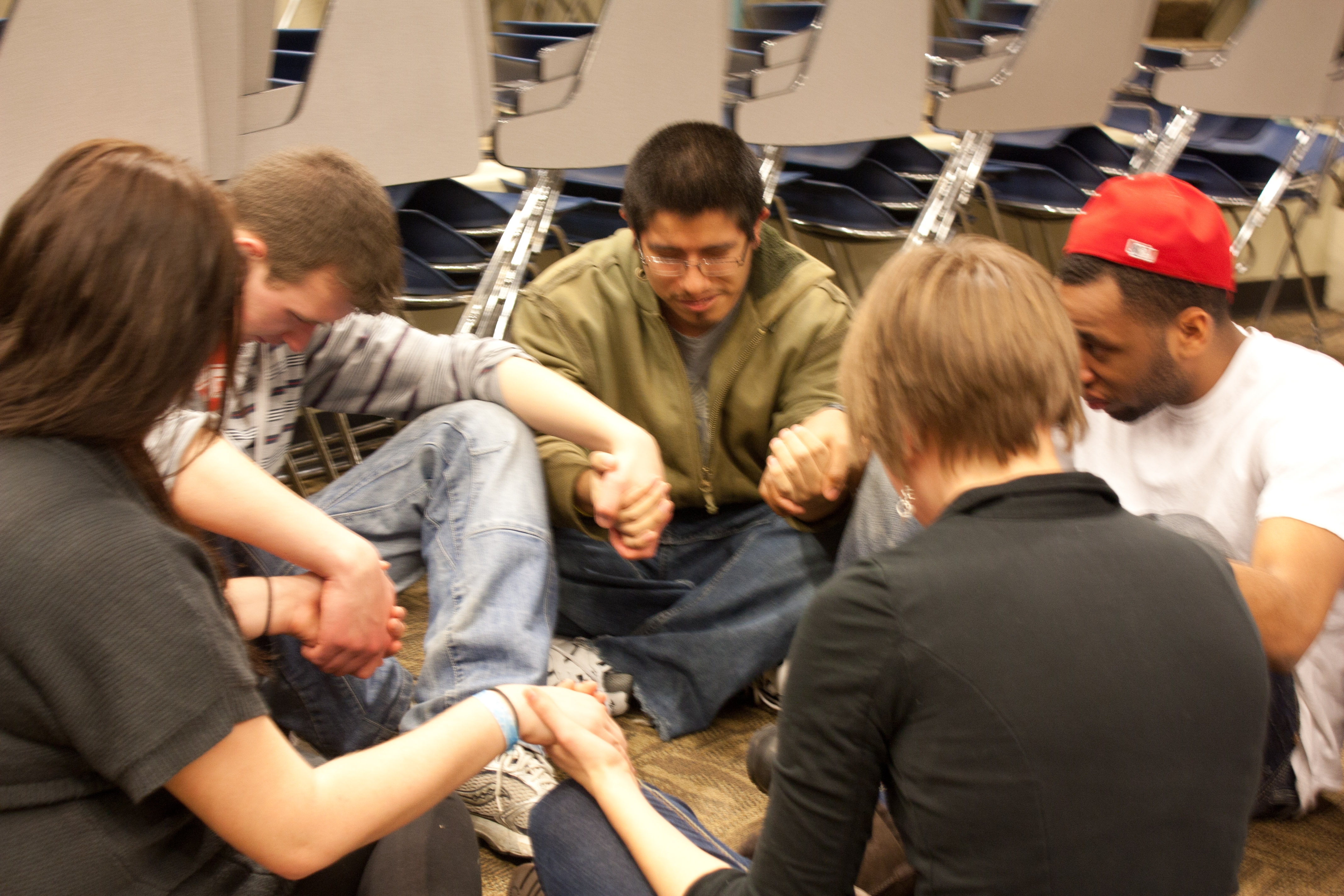
A good friend used to quote the statement, “It’s not that we should pray about the work; prayer is the work!”   I’m not sure who was at the origin of that statement, but its message certainly rings true.  Most of us are activists at heart and prayer can quickly become one of those ‘options’ or add-ons.  It’s important, just not that important, we think.cdop-smal-group-prayer

Then we read a verse like this one that Paul sent to Timothy, a fledging pastor and worker, and find ourselves challenged about the place of prayer in our life and ministry: “First of all, then, I urge that supplications, prayers, intercessions, and thanksgivings be made for all people, for kings and all who are in high positions, that we may lead a peaceful and quiet life, godly and dignified in every way.”  (1 Timothy 2:1).  This an exhortation of urgent importance which is quite inclusive in scope.  If nothing else, it puts prayer at the very top of our priority list and reminds us that no one is unworthy of our prayer focus.

What recently struck me is how often I have read this text in the singular, as addressed to Timothy (and by extension to me as an individual worker). However, over and again, Paul slips in the usage of the first person plural to remind us that the work to which he is calling Timothy is a work for the entire community.  In fact, he is inviting us to a ‘concert’ of prayer rather than just a solo.

I’m concerned that sometimes in our busyness, we forgot the importance of prayer, and particularly of prayer together with others. God calls us, through prayer, to influence our culture and touch the hearts of men and women lost without Christ.

Creative ways to make that happen, of joining more often in collective prayer with others, are certainly within our reach.

Do you ever feel like throwing in the towel?

It’s an idiomatic expression that gets translated in different ways in different languages. In French we say, “Throwing (in) the sponge” Why a sponge?  Taken from the world of boxing, throwing the sponge into the ring was a signal that the boxer from that corner was giving up and giving the win to the other fighter.towel

In cross cultural living and ministry, such ‘sponges’ can be thrown quite often.  Sometimes, it comes about because we don’t have the energy to try and navigate the administrative hurdles of living in a particular region of the world. Sometimes, it happens when one more person asks that question that we dislike: “You must not be from here. Your accent gives you away.  Where do you come from?”  Or sometimes, it comes from the lack of observable fruit in the ministry in which we have been engaged for a good deal of time.

Granted, we can talk ourselves out of truly ‘throwing in the towel’, but before we know it the feeling can return because of another event or misplaced word.

Throwing in the sponge’ is an indicator that our hold on God, our calling, and our friends is at best weak.  Three steps we might think about. First, fix in your mind the journey that led you to put your faith and trust in God.  Remember how He opened your heart to hear His voice, and the effort He went to in bringing you to Himself. Second, speak back to yourself those words that marked the beginning of your ‘call’ by God to serve Him.  This is not our work or just our adventure. This is first God’s work. Reminding ourselves of how He brought us here, gives us renewed confidence to move out again into our world.   Third, make it a habit to call a friend and check in with another as to how you are doing.  It’s the words of a friend that are a blessing to the soul, and can be used by God to direct our ways.

Rather than ‘throwing in the towel’, it would be better to throw up (or lift) our hands to God.

That is not the way we learned

But that is not the way you learned Christ! – assuming that you have heard about him and were taught in him, as the truth is in Jesus.”  (Ephesians 4:20-21)

Our encounter with Jesus has not only taken away our shame and restored the honor God placed upon us, but it powerfully changes how we see others and how we treat them. We may have used our words to cause damage and hurt in others’ lives in the past. Now, in Christ, our motivation and desire is different. That is simply because we have learned a new way of living and loving.what-we-learned-rukkle-620X4002

However, what I find disheartening is that Christians are often among the least likely to demonstrate this kind of love toward one another, and particularly when they are called to work together in teams or towards a common vision. Terms like manipulation, rancor, or self-centeredness are sadly among some of the attitudes I have seen.

We who have been given the privilege of sharing the Gospel with others can be among those most needy for the Gospel. Could it be that our actions are a counter testimony to the ‘way we learned Christ’?

Commenting on this text, Jack Miller once said: “Putting on the new self means going to Jesus more and more to get a life of truth without secrets, and to abandon manipulating others. As you do this, you begin to see the people around you as individuals who are worth a great deal to God, and you are able to treat them with kindness, forgiveness, thoughtfulness, and love.”

How do others ‘experience’ you in day-to-day life and ministry? That’s a question to start with and which might provide greater self-awareness.

We need each other to lift up the mirror of God’s perfect law, that we might see how we fall short. We need each other to take us back again (and again) to Jesus where we receive mercy again (and again).

The impact of words

We can say that we know the impact that words can have on others, but our actual practice of speaking to one another often reveals how much we underestimate that influence. Words are powerful conveyors not only of important messages, but also of honor, value and worth. Most of the examples that might come to mind are of the hurt or pain that words can cause.  Yet, there are other examples of how words build up, value or challenge another for the good. Power-of-words-front1

Paul in his letter to his spiritual son, Timothy, wrote this: “Timothy, my son, I give you this instruction in keeping with the prophecies once made about you, so that by following them you may fight the good fight.”  (1 Timothy1:18)  Those ‘prophecies’ or ‘prophetic words’ refer to divinely charged words or statements shared with another. They are often the fruit of prayerful meditation and time taken before speaking.

I’m sure that many of us can remember, even state, the words spoken that influenced us towards ministry, and towards cross cultural ministry. Reflecting on those times when others spoke those ‘divinely charged words’ into our lives, emboldens us to have that same approach or attitude towards others.

A fellow co-worker shared this quote with me one time: “I have been trying to evolve an ecology of speech, a way with words that is hospitable to life. This includes learning to talk and to be silent at the right times and places, being careful to remember the capacity of words to have an afterlife once they have fallen into the soil of our own or other people’s lives.  Do they create a fertile, balanced humus in which new life can germinate and flourish?

We may not readily identify with the image or metaphor, but that statement about ‘remembering the capacity of words to have an afterlife’ should resonate in our spiritual ears.  What words do we want to have ‘linger’ in the minds of others?  What do we want to leave with a colleague after a difficult conversation?  What do we want an interested future worker to remember who shares their heart for a particular people group?

Remembering what others have ‘said to us’, may help us reflect more deeply and prayerfully on what we should say to others.