• Our hope-filled future is bound up in sharing the story of Jesus, in discipling others, in bringing those disciples together into communities of believers, and in developing and releasing those believers to create other communities... till Jesus the King comes again!

Poly what?

I’m sure if you are like me, when you heard the expression: “polycentric mission”, you said to yourself: “poly what?”  I mean, what idea or thought is this expression meant to convey?

Polycentric simply means, “having more than one centre”. In other words, in our global missions context there are now many poles or centres from which mission is being launched. In the 20th century, mission was primarily from the Western world. However, in the 21st century, mission is being launched from Ethiopia Chile, Brazil and Indonesia. This is what is called the Global South.

There are several practical implications or effects from this shift. In this blog post, let’s focus on just two of the many implications. 

For one, responsibility for the task of global missions is now a shared work.  This is always easy to say, but difficult to practice.  For many of us, we are used to directing, leading, or running global mission outreach from our perspective, our centre of gravity.  This shift causes us to recognize the importance of active listening to others, as well as gospel humility, by which we will understand more and more our need for others more than their need us perhaps. This shared work of global missions may take more “time” and “energy” than in the past. However, joining hands in this shared task is a tangible mark of God’s universal church.

Another practical effect or outcome is seeing the need of cross-cultural intelligence.  It will be difficult to effectively work with others from the Global South if we from the West do not seek to understand the cultural background, cues and dynamics at play with those who share the global missions task with us. For cultures that thrive in getting things done fast, there will be the need for patience and a willingness to “slow down a bit” in the process. For those cultures where time and planning are not priorities, there will need to be more “fluid organisation” allowing all partners to know their part in the task. And the only way all this will happen will be through His grace, through a deepening understanding of the Gospel, and by adding new cross-cultural skills to our toolbox.

Poly-centric, in other words, means learning to play as a team with a whole new group of players who may be different from one another.

Gospel calls forth commitment

D.A. Carson, in his work Basics for Believers, wrote: “The heart of true fellowship is self-sacrificing conformity to a shared vision … Christian fellowship, then, is self-sacrificing conformity to the gospel … the heart of the matter is this shared vision of what is of transcendent importance, a vision that calls forth our commitment.”

The vision that D.A. Carson was talking about finds expression in this Advent season. From before the foundation of the world, God set forth His plan to bring a people to Himself. Despite the many struggles and failures of His creation, He continued to prepare the way of salvation and by His prophets announced the coming of the “One who would save us from our sins”.  Jesus came into the world that He had created in order to offer Himself as a sacrifice to deliver us from this present evil age (Galatians 1:4)

The vision that we share is not based on our collective wisdom, but on God’s amazing grace demonstrated to us in the life, death and resurrection of Jesus Christ. And our fellowship is centred around a call to each and everyone one of us to conform our hearts and lives to the wonder of the gospel: that we should be called children of the most High God.

That “self-sacrificing conformity to the gospel” will free us to …

  • Be quicker to admit our failures and the pain we may have caused others
  • Be quicker to ask for and offer forgiveness
  • Remind one another more regularly of the truth that the steadfast love of the Lord endures forever
  • Take one another’s hand to work together to see our vision become reality: that disciples and communities of believers would be multiplied among the lost peoples of this world!

May your celebration of Jesus’ coming into this world be a filled with joy and wonder at His boundless love for His people!

Reset 2025

If we were to take a quick glance at what is happening in global missions, we would have to observe the growing presence of many more players, coming from everywhere and desiring to serve anywhere in the world.  

Rather than resources, initiatives, and missional ingenuity coming primarily from only one sector of the world, we can now identify numerous majority world and non-majority world agencies and organisations seeking to multiply disciples and communities of believers.

Lausanne 2024 organisers call this dynamic: a polycentric focus.

So, we would do well to push the ”reset’ button concerning our approach and engagement in what God is doing in the world.

Perhaps we might say that as a tangible demonstration of this polycentric focus, we (the WT community wherever we might be serving around the globe) pledge to serve as a “collective”.

In other words, we would commit ourselves to sharing more widely to learn of what God is doing in different places around the globe through multiple possible partners; to communicating more deeply the “we” of our community rather than the “me” so as to express the unity of Christ; to cooperating and collaborating more with one another and like-minded partners for greater expansion; and working together to provide all the resources needed around each initiative we would jointly hold as a collective.

That is our challenge for 2025! 

Starting Again

It’s that time of year when you are either in the rush of a new academic and ministry year (Northern hemisphere) or moving to the end of your school & ministry year. Either way, it’s a time to step back and remember how God has shown grace to you as His child and how He has used you in His greater missional plan for this world.

Again and again, the Bible calls us to remember: “I will remember the deeds of the Lord; yes, I will remember your wonder of old. I will ponder all your work, and meditate on your mighty deeds.”  (Psalm 77:11-12). The work of remembering has an active rather than a passive sense.  In the Hebrew Bible, the word is: zakar. It means to call to mind, to recall or to recount. It speaks of bringing something to the forefront of one’s mind. One writer put it this way: “to zakar is to employ your hands and feet and lips to engage in whatever action that remembrance requires.”

When we think of the good news that we share, it is so important to remember how this good news is good news for us. We need to “recount” it again to ourselves (and others) today and each day.

This new start or end to our year is also a time to refocus our hearts and minds on what is our calling, our dream as mission community: to multiply disciples and communities of believers among the lost.

It’s easy for us to lose sight of that larger dream and vision in the rush of the new year or at the end of that year. However, we need to remind one another of our calling as a community.

Multiplying” is not something that occurs in a moment. It is an investment in others. It calls for time spent sharing, talking, training, and platforming others. However, the result is that multiplying disciples (and leaders) and communities of believers bears fruit exponentially. Exponentially in the sense that there are more and more and more workers engaging in God’s project to bring the message of Jesus to this world which is in such great need.

Both remembering and multiplying require energy and investment. But the fruit is well worth the energy and investment.

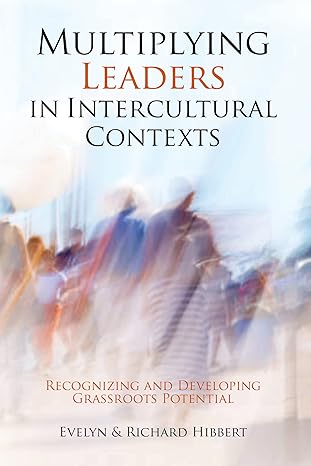
If interested, I recently wrote a book review of the book: Multiplying Leaders in Intercultural Contexts for the journal SEEDBED: https://www.seedbedjournal.com/. The book will give you some tools as to how to remember and invest in others.

Gospel Growth — Take 2

The Gospel speaks deeply to our hearts because it daily reminds us of the free grace, forgiveness and honour that is bestowed upon us.  However, the Gospel can often feel “distant” from our day to day existence. We need to see and learn its relevance to our lives and ministry.

The WT Ministry Framework puts it this way: “The Gospel is how any and all spiritual change happens in the lives of individuals, groups, and institutions of people. Therefore, it informs every ministry and is our most fundamental point of reference and principle in every action, plan, and strategy. This principle, before all others, guides us in the decisions we make, the solutions we embrace, the way we conduct our ministries and our relationships with others.”

Over the next few weeks, we’re going to let several WT workers share how the Gospel is changing them, transforming their hearts in different ways and in different contexts.  Here’s a another story from a WT worker’s journey:

One special moment happened when I finally put my new understanding of God’s grace into a quote that I now often use, “The proportion to which you understand your depravity is the proportion to which you understand grace.” I had never deeply understood how only Jesus’ sacrifice was able to take away my sins and I could do nothing to please Him or have Him love me more.  It was already done. 

Another way to put it is: “Little depravity demands little grace.”  That was one of my most powerful discoveries: that I was totally depraved and without hope!  But the grace of Christ covers all my depravity/lacking/sin, etc.  I think I came to understand very clearly that without the blood of Christ to cover me I am hopelessly lost and condemned.  I think I felt I was okay most of the time because I was doing pretty good.  But I had to scrape every bit of my self-effort as having any value for God to accept me.  That was freedom.” 

A question to consider: What quote might best summarize your current understanding of grace and the Gospel?

Join us on the journey by sharing your story about the Gospel: https://forms.office.com/pages/responsepage.aspx?id=E4rd-dxEeUymdtc3N8hETz_lXY4QRJ5ClTCIuVdURgFUQzFHUDI5U0w4SUFOQjY3QzQ3NUtXQjI0WS4u

Gospel growth

The Gospel speaks deeply to our hearts because it daily reminds us of the free grace, forgiveness and honour that is bestowed upon us.  However, the Gospel can often feel “distant” from our day to day existence. We need to see and learn its relevance to our lives and ministry.

The WT Ministry Framework puts it this way: “The Gospel is how any and all spiritual change happens in the lives of individuals, groups, and institutions of people. Therefore, it informs every ministry and is our most fundamental point of reference and principle in every action, plan, and strategy. This principle, before all others, guides us in the decisions we make, the solutions we embrace, the way we conduct our ministries and our relationships with others.”

Over the next few weeks, we’re going to let several WT workers share how the Gospel is changing them, transforming their hearts in different ways and in different contexts.  Here’s the first story of one WT worker’s journey:

One day K. invited us to his grandmother’s birthday party. We would be the only non-family members there but that didn’t matter because we would be treated as one of them. I drove to the local grocery store, grabbed a gift for his grandmother and drove back to our apartment to pick up my wife and child. Then crash! To my horror, in my rushing, I crashed into a column in the parking garage. I was guilty. I was negligent in my driving. I ran upstairs and began to cry. I was ashamed. How was I going to show my face at the party? How was I going to tell my friend that I had damaged his beautiful, new car?

By now the party had started. I got the courage and called my friend. “I am so ashamed”, I started with, “I crashed your car.”  Beautifully and gracefully my friend refused to shame or guilt me. He told me that it was his car, and he would take care of it. He refused to let me pay, knowing that I did not have the means, and forgave me the debt I now owed him. And then he began to plead, “Just come to the party. We want you here.” I deserved shame, and he gave me honor. In that moment I was reminded of the gospel.  

A question on which to reflect: What hope do we have in the Gospel that frees us to admit our wrongs?

Join us on the journey by sharing your story about the Gospel: https://forms.office.com/pages/responsepage.aspx?id=E4rd-dxEeUymdtc3N8hETz_lXY4QRJ5ClTCIuVdURgFUQzFHUDI5U0w4SUFOQjY3QzQ3NUtXQjI0WS4u