
• Our hope-filled future is bound up in sharing the story of Jesus, in discipling others, in bringing those disciples together into communities of believers, and in developing and releasing those believers to create other communities... till Jesus the King comes again!

Happy Reformation Day!

For some in our world, today, October 31st, will be a day for collecting candy from friends and neighbors.  For others, it will be a day of preparation for All Saints Day (Nov 1st) where families will spend time visiting the grave sites of family members.  martin-lutherHowever, many others will celebrate today the 500th anniversary of the Protestant Reformation, launched by Martin Luther nailing his 95 theses to the door of the Wittenberg church in Germany.
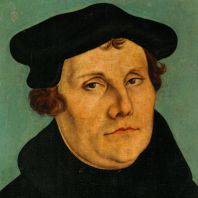
We are the ‘offspring’ of Luther’s call to return to the Living Word as our only source of forgiveness, justification and freedom.

The first of the 95 theses reads this way: “When our Lord and Master Jesus Christ said, “Repent” (Mt 4:17), he willed the entire life of believers to be one of repentance.”   Repentance is the turning away from our sin and turning back to God to receive His forgiveness and grace.  Our ‘entire life’ is to be characterized by this constant act of repentance and faith, repentance and faith, repentance and faith.

It’s easy for us to tell others of their need for repentance.  It is much harder to accept our need for daily repentance.  However, if the Gospel is not ‘good news’ for us, how can it be ‘good news’ for others?

See what kind of love the Father has given to us, that we should be called children of God; and so we are.”  (1 John 3:1)

Happy Reformation Day!

Influencing one another

I really do like the World Team Ministry Framework. It captures the essentials of who we are and what we do.  However, at times, I can look at the World Team Ministry Framework as a collection of individual elements or pieces to which I need to give attention.  I do not always look at it as an ‘interactive highway’ of fundamentals that are constantly influencing each other.interactive highway

For example, how does the Gospel influence our call to ‘reach’ and ‘invest’ in people each day? Or how does our growth in collaboration influence our call to act more ‘holistically’ in our ministries?  Or how do facilitation and our work in teams impact releasing others into ministry?

There are obviously a host of combinations to consider, but all that to say that we have so much more to learn from each other about how the World Team Ministry Framework works itself out in our lives and ministries.

So, this is my invitation to you to explore together how some of these ‘combinations’ work themselves out and influence our lives and ministries.

Let’s ‘talk’ about the first combination I suggested: How does the Gospel influence our call to ‘reach’ and ‘invest’ in people each day? 

Post your comments to this post and I’ll try to summarize what we ‘discover’ together in a future post.

Forgetting the essentials

Each day when I wake up, I mentally go through the list of ‘things’ I need to do. Some of those activities may be important; some not so important.  In the rush of life though, the tyranny of the urgent can drastically change the order of that list of ‘things’ to do.  You can actually end up doing plenty of things that are urgent, but not necessarily the most important or essentialessential.

So what’s really ‘essential’? What’s really essential in our line of work or ministry?  For one, the Gospel. The Gospel speaks to us of the honor that Christ places upon us by calling us His brothers and sisters; that is a gift we could never have imagined receiving.  The Gospel brings freedom through casting all our sins, our worries and our cares upon Him. The Gospel brings hope that God will still use us, ‘wrecks that we are’, in His mission in the world.

What is also essential is sharing that great news with others. The Gospel truth cannot stay locked up in our own hearts. It must go somewhere.  An essential element of our calling as a believer is to share that Good News with others; to lead others to Christ, so that they might experience a personal relationship with Him.

Thinking through all this at the beginning of this week, I stumbled on this quote from Roland Allen in his seminal work: Missionary Methods: St. Paul’s or Ours?: “St. Paul did not go about as a missionary preacher merely to convert individuals: he went to establish Churches from which the light might radiate throughout the whole country around.”  I realized that I might be ‘forgetting’ another element of those essentials I need to remember each day.  What is also essential in our line of work is to demonstrate and declare the necessity and need for community in order that every one of us might grow as a believer and might offer together our praise to our God.

I could summarize these thoughts in this way: Experience the Gospel, live the Gospel, share the Gospel, and call one another to live the Gospel in community!

Pray every day

When I was in Cameroon a few weeks back, the team got together in two groups to pray. One hour had been allocated for our prayer time together.  As we gathered in a circle, the leader quickly explained that we prayer bis biswould be sharing for 10 minutes and praying for 50 minutes. Each person in the group was going to have to share a meaningful request in less than 1 minute, and then we would go to prayer.


To be honest, I was a bit ‘skeptical’ about how we (this small group) were going to spend one hour in prayer. Yet, the time was so quickly filled with conversational prayer between us as a group and our God that before we knew it, the closing prayer was being offered.  What a delight to pray together in that way.

This week during our global leader meetings, I set aside a time of prayer with the same parameters. However, each group leader varied even those parameters from our prayer time in Cameroon.  The short sharing time was still maintained, but done in other ways. Yet, once again we spent the bulk of our time praying.

When we were all done, one leader said: “Every day, we discuss a series of critical topics. We have a wealth of topics we could pray for each night.  We could spend this same time in prayer every night.”  You know what?  He’s right.  We could spend that time each night in prayer

Prayer is one of our guiding principles; it directs how we do ministry. We do ministry first and foremost in prayer.  We don’t do it because we ‘have to’; we engage in prayer because our Father delights in hearing our prayers and our praises, and because we want to come and be with Him.

Thanks for your prayers for us as leaders this week! Know that, during our time here, we were praying for many of you as well as the people group among whom you serve!  Let us not grow weary in prayer (Luke 18:1).

Robust dialogue

Meeting with leaders this week, I have been struck by the capacity of our leaders to engage in ‘robust dialogue’. Robust dialogue is where people discuss or debate a topic in a very open and honest way that allows for better decisions to be made.  Robust dialogue though can be uncomfortable at times because pushback may be strong and ideas or supporting arguments are not readily accepted.  However, it is rich, wild, tense and exhilarating.robust dialogue

Robust dialogue is not yelling at one another.  One writer described robust dialogue this way: “It is the ability to address any issue in the team or organization as long as there are not hidden agendas or personal attacks.” So a team has to have an ethos or a ministry framework that allows this kind of dialogue, conversation and hearty discussion to occur.

Robust dialogue will only happen, though, when two elements are in place.  First, a strong hold on one’s personal value in Christ. The deep assurance of Christ’s love and righteousness drive out our natural tendency ‘to seek to be right’ in all our conversations and discussions.  It’s the ‘expulsive power of a new affection’ that restructures the way we talk to and discuss with others. Second, a willingness to listen well.  James exhorts us to be quick to listen, slow to speak, slow to anger (James 1:19).  Most of us are more ‘quick to speak and slow to listen’.  Our hearts need to be re-trained to count it as more important to hear a person out, seeking to understand their point and argument first.  We can learn so much from others and engage them well when our hearts are settled in Christ and our ears are open to listening to others well.

Pray for us as we continue in robust dialogue this week!

What do we want to see?

Imagine that you were starting once again in a new area among a new people group to ‘multiply disciples and communities of believers.’ What would you and your team want to see after three years of ministry together?Newton-cradle_0_80_600_320

One scenario might be (and one that I often hear) what we would call: the start up. In many of our minds, not much really happens in those initial years. It’s a building process. “Besides,” we say, “church plants take a long time to get off the ground.” True enough. However, might we be underestimating what God desires to do among this people group?

A second scenario might be what we would call: the leader dilemma. People are coming to Christ and disciples are being raised up. However, there is an apparent lack of leaders; an absence of people that we could call on to take the work further. Once again, this is often the case. However, might we be preventing local leaders from standing up to serve by our very presence and example? Perhaps they feel the task is too far above them as they watch us and don’t see the empowerment for the task coming from Christ alone?

A third scenario might be what we would call: empowerment. After three years, we as a team would be moving into the background; taking a more facilitative stance so as to allow the local believers to grow the community of believers further. This scenario is more difficult as it calls for much humility and the willingness to turn over ministry to others and ‘platform’ them into that work.


Three years is a very short time. However, our stance from the outset, the scenario we envision obviously will influence how we carry out that ministry. If one of our guiding principles is facilitation and empowering others, then we need to set our efforts toward that end. Not an easy task, but it’s another reason why we need a team alongside of us. So that we can keep that focus on moving others into ministry.