• Our hope-filled future is bound up in sharing the story of Jesus, in discipling others, in bringing those disciples together into communities of believers, and in developing and releasing those believers to create other communities... till Jesus the King comes again!

Global Leader Gathering Recap

Earlier this month, we held Global Leader Gatherings to assess our current ministry progress and discuss global ministry priorities for the coming year.  These meetings were held virtually, and as a result were able to invite a number of others to join in our discussions. We are grateful for all of those who took the time to participate, make presentations and join in discussion together.
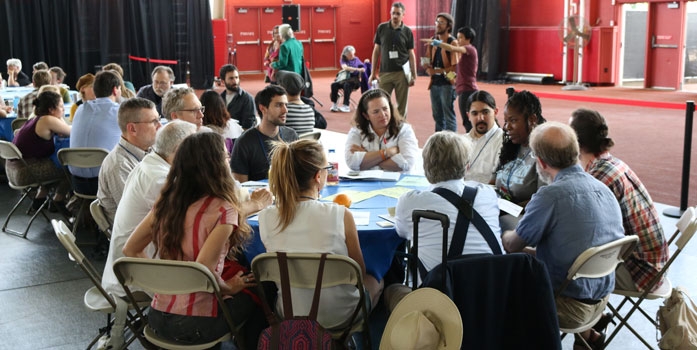
Let me highlight four main “take-aways” from this time. [If you would like more information and detail, I would encourage you to connect directly with your Area Director.]

First take-away: the WT Ministry Framework is “one of the best things we have going in WT”.  This was the thought that one of the participants shared.  The Framework summarizes well, and in one graphic, who we are and what we do.  Pat (WT Asia) led us through a “WT Framework Assessment” where we considered how we could use the Framework to assess ministry progress, our relationships, our team culture, and even how we might use the Framework to mobilise others to cross cultural ministry.

Second take-away: our critical areas for growth are setting priorities and mobilisation.  It is never easy to prioritise, but without prioritization our efforts will become greatly dispersed and have limited fruit.  Time was spent identifying our global ministry priorities for the coming years.  “500 in 5” was the mobilisation challenge we launched several years ago to respond to our people resource needs for several new global ministry projects.  Our goal was clearly not reached.  The question we were left with (and which we will be asking many of you in the coming days) was: What could we do together in the future to discover the people resources we need to launch these new global ministry projects?

Third take-away: life-long learning is more than just a nice sounding phrase.  We spent the final day of our Global Leader Gatherings in two different workshops.  One on design thinking and the other on situational leadership.  Each of us needs regular retooling in ministry skills and further growth in character. If you would like more information on either of these workshops, contact myself, your AD or one of the people from your Area that participated in these meetings.  We would be happy to share with you the material presented.

Fourth take-away: we have an incredible group of people working with us.  I was amazed by the quality of the presentations, the depth of the discussions, and the gospel attitude of wanting to serve the larger community in any way one could. 

Scott, Jeanne, Sam, Meagan, Tom, Chris, Dan, Ryan … and I know there were many other ‘new faces’ … thank youThank you for participating and serving your team, your Area and the larger WT Global community in this way.

A huge thanks to many of you who prayed with us during these days!

Pray every day

When I was in Cameroon a few weeks back, the team got together in two groups to pray. One hour had been allocated for our prayer time together.  As we gathered in a circle, the leader quickly explained that we prayer bis biswould be sharing for 10 minutes and praying for 50 minutes. Each person in the group was going to have to share a meaningful request in less than 1 minute, and then we would go to prayer.



To be honest, I was a bit ‘skeptical’ about how we (this small group) were going to spend one hour in prayer. Yet, the time was so quickly filled with conversational prayer between us as a group and our God that before we knew it, the closing prayer was being offered.  What a delight to pray together in that way.

This week during our global leader meetings, I set aside a time of prayer with the same parameters. However, each group leader varied even those parameters from our prayer time in Cameroon.  The short sharing time was still maintained, but done in other ways. Yet, once again we spent the bulk of our time praying.

When we were all done, one leader said: “Every day, we discuss a series of critical topics. We have a wealth of topics we could pray for each night.  We could spend this same time in prayer every night.”  You know what?  He’s right.  We could spend that time each night in prayer

Prayer is one of our guiding principles; it directs how we do ministry. We do ministry first and foremost in prayer.  We don’t do it because we ‘have to’; we engage in prayer because our Father delights in hearing our prayers and our praises, and because we want to come and be with Him.

Thanks for your prayers for us as leaders this week! Know that, during our time here, we were praying for many of you as well as the people group among whom you serve!  Let us not grow weary in prayer (Luke 18:1).

I never said it would be easy

never easyIn response to my last post, many responded about the difficulty of actually choosing to focus on one or two core priorities.  I never said it would be easy.  The tyranny of the urgent is one of the main obstacles we face.  Such pressure can rob us from giving ourselves to what ought to be prioritized most.

Jesus called His disciples to an unwavering attention on what is most important: “But seek first [or ‘continually seek’] His kingdom and His righteousness; and all these things shall be added unto you.” To have such a focus requires a courage that we do not have within ourselves. We need to look outside of ourselves for help in this journey. I never said it would be easy.

Even the task of setting priorities is another step in the journey from independence to dependence.  What does ‘seeking His kingdom and righteousness’ look like today in my life?  In what tasks, what actions does God want me to engage?  Where does He want me to say ‘no’ in order to say ‘yes’ to His will, His priorities for my life this week?

Listening to God forms a major part of the answer to that question.  However, we are ‘trained’ to more quickly listen to our own wisdom than to be silent before Him in order to know the wisdom that comes down from above.

Community, fellow co-laborers are also a part of the answer to that question.  We can easily be blinded by our own reasoning and need others to bring godly perspective; to help us see more clearly where the focus of our energies should go.

I never said it would be easy.  However, focusing on one or two core priorities is a work worthy of our efforts.


A Simple Deck of Cards

card deckAndy sat across from me at a café and then placed a simple deck of cards in front of me.  Each card represented a critical element that a leader might choose to prioritize in his/her work.  The task was straightforward: make three piles by arranging the cards according to high importance, medium importance, and low importance.

When I was finished, my “high importance” pile was clearly the pile with the most cards.  Then Andy created a fourth category: medium/high importance.  After shifting a number of cards into this pile, I now stood with a “high importance” pile of 6 or 7 cards.

Andy pushed further, “Now take away one more card from the high importance pile.”  I couldn’t.  Everything that was in that pile was of vital importance for my work, or so I thought.  I don’t think I will ever forget Andy’s response: “I didn’t ask you if you could or couldn’t, I told you must take one more card way from that pile.”  He put me face to face with the struggle of prioritization.

Most of us as workers have more priorities than we can actually accomplish in a day, in a month or in a lifetime.  Yes, God wants us to dream BIG, but He tells us to ‘sit down and count the cost’ before we head off into a project, to see if we have the capacity and resources to complete the project.

Setting priorities means not only choosing to focus on one or two key pieces, but it also means learning to say ‘no’ to one thing in order to be able to do another.

Not an easy task.  Maybe you would like to share some ways that God has led you to navigate priorities in a healthy way.

Why plans are helpful, why they are not

Planning usually brings out the best and the worst in people.  Some of us enjoy planning because our natural bent is more towards organizing material and our time.  Others of us see planning as a chore, busy work that doesn’t seem to provide any real help to us.  In many ways, both of these responses represent a misunderstanding of planning outcomes.Business people planing

Plans are helpful when they focus our energies on those priorities God has laid on our hearts.  Putting together a plan should facilitate us being able to say ‘no’ to a certain number of activities that will detour us from our main focus.  Planning brings focus in a context that is flexible enough for us to work out that focus in a number of different ways.

Plans are not helpful when they fill our time with loads of secondary tasks.  Some plans I have seen are pages and pages long.  This can give the impression of a strong and solid plan.  However, most often, the heart of the plan is lost in the flurry of tasks that most have difficulty accomplishing because there are simply too many tasks.  All these tasks may keep us busy, but not fruitful.

Chris (WT Global) has put together some helpful tools for writing plans.  In one of his presentations, he wrote this: “The old adage of “first things first” is quite misleading.  There is a big difference between choosing what task to do first and knowing what are the most important tasks.”

As I wrote in the post the other day, this is why we need God and a strong community around us.  Through prayer, study and interaction with other believers we can have the insight we need to “know what are the most important tasks”.


Help! I’m feeling overwhelmed

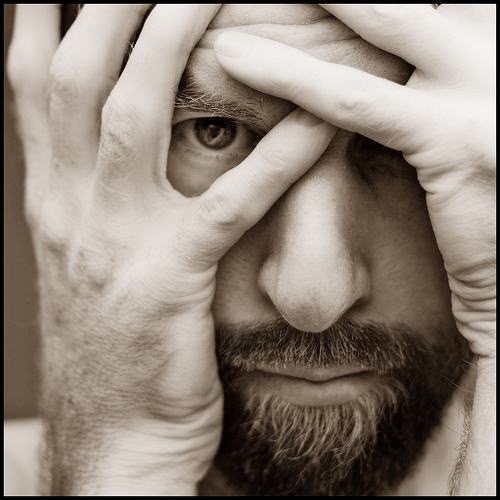
It’s the kind of feeling that creeps up on you.  You may be unaware it is coming until it hits you.  It’s that sensation of being overwhelmed; that there is more work and ministry than time permits.overwhelmed

The disciples knew the feeling: “And Jesus said to them, “Come away by yourselves to a lonely place and rest a while.”  (For there were many people coming and going, and they did not even have time to eat.)”  (Mark 4:31)  There was so much work, so many people to whom they had to minister that they did not even have time to stop for a meal.  Everything was a priority except the basic need of life to eat.

Once this feeling hits we begin to drag, ministry goes into a slow motion pace.  We start voicing our “tiredness” more often to others.   Our focus shrinks from everything else to just ourselves.  We start to lose perspective and grow out of touch with the heart of the Gospel.

This is the very moment when we need to step back and take a deep breath. 

Stepping back is the action of pulling oneself out of our self focused world and gaining focus by asking others for help.  Selecting and following our critical priorities will occur as we, first of all, learn to say ‘no’ to priorities that are good, but not critical.  We all know this to be true, but it is so hard to practice it and to actually say ‘no’ to a priority or task.  Part of our unwillingness may stem from our people pleasing bent, not wanting to disappoint anyone.  This is where community can serve us well. People that know us and know the work in which we are engaged can enter our world and help us establish those critical priorities.

Taking a deep breath is physically getting up from where you are and going somewhere else.  It’s the effort to temporarily change locations to help clear one’s mind.  It may be a short walk, a run, a swim or just sitting in the grass.  It’s an activity that helps take one’s mind off of all that has been weighing on us.

Feeling overwhelmed like many of us?  Start by seeking the counsel and prayers of a strong community of friends and colleagues and taking some time outside the office or house.