• Our hope-filled future is bound up in sharing the story of Jesus, in discipling others, in bringing those disciples together into communities of believers, and in developing and releasing those believers to create other communities... till Jesus the King comes again!

Not a mixture

We are a movement.  Those who participate in this movement seek to live out the truth that every member is important. In fact, we believe that we need one another to accomplish the task.

As a movement, we are committed to the same mission, vision, and guiding principles (WT Ministry Framework).  Our framework for ministry is not a mixture or conglomeration of each individual’s mission, vision and what one may believe is important. 

This is another reason why we need one another: to ensure that we are all pulling and working together to go in the same direction.  When one rower begins rowing against the work of the others, the boat pulls to the left or to the right.  The other rowers must help this rower to bring his/her work (rowing) back into alignment with the overall direction.

This is where difficulties often arise.  When someone begins pulling a team in a direction that is counter to the overall direction of the movement, several responses can happen:

  • None of the other team members say anything.  Team members are afraid of hurting the lone team member if they say something; or believe that the “pull” in a counter direction will simply go away over time.
  • One (or more) of the team members take the person to task in an overly critical way, lacking grace and empathy.  This is the offensive approach and often is at the start of larger team conflict.
  • Team members ignore and stop listening to this person.  We might call this the ‘silent’ treatment where the member who seems to be pulling the team in another direction is paid no attention.  The team misses an opportunity to learn together from such a crucial conversation.

None of these responses are helpful to the growth and re-alignment of the team; nor do they help the team pull back around the larger mission and vision of the movement.

Perhaps Galatians 6:1-2, though not speaking specifically to this situation, might give us some help and principles to guide our efforts to keep rowing together in the same direction: “Brothers & sisters, if anyone is caught in any transgression, you who are spiritual should restore him/her in a spirit of gentleness.  Keep watch on yourself, lest you too be tempted.  Bear one another’s burdens, and so fulfill the law of Christ.”

How can we best, with much wisdom, keep one another aligned with the larger mission and vision to which God has called us?

An old word, but a vitally important one

We are a movement

We are a group of committed believers who focus on advancing and facilitating a multiplying expression of disciples and communities of believers.

Being part of a movement implies that the work (the ministry) of the movement is done collaboratively, collectively, and not individually. Resources (people, prayer, finances, gifts, etc.) are leveraged together for the growth and development of the movement. Its energy and activity is focused on the ministry that the group has been called of God to accomplish.

We who participate in this movement seek to live out the truth that every member is important. In fact, we believe that we need one another in order to accomplish the task; that every member brings knowledge and experience to the community, to the movement.

However, the key is that ownership by all movement members, of this way of working, is based on trust and understanding.

It’s an old word, but a vitally important one in the current context in which we live and work.  Spread out across several continents, with meetings often held via Zoom, it’s easy for trust to be undermined or simply not granted to others within the network.

Core behaviours need to be fueling and nurturing trust on a regular basis.

I often fail in this task. As I’m sure many others do as well.  However, here are a few ways we can seek to fuel and nurture trust among us in this New Year 2023:

  • Seek to over-communicate with others in the movement.  Think about what would be helpful for you to know about what is going on, and then work to share what is happening in your part of the world with others for their input and help (a tangible way of demonstrating that we need one another in order to accomplish the task).
  • Ask more questions rather than answer questions.  This means putting others first in any given conversation, to better understand their perspective and ideas.
  • Reflect with others on the text in 1 Corinthians 13:7. How might this biblical text work out in practical ways in our relationships with others in the movement?

Working together to envision tomorrow.  That’s our objective for the Global 3C Conference this coming July.  To get there, we will need to fuel and nurture trust and understanding over the coming seven (7) months.

Moving mountains

We as a global community of cross-cultural workers are committed to facilitating movements of disciples and churches among those who are lost.  As many writers have observed, church planting or church multiplication movements do not come about as a result of our efforts. They are first and foremost the work of God’s Spirit among a people group.

So, one of the primary means by which CP movements arise is by prayer – fervent, perseverant, and informed prayer on behalf of a people group where the number of believers is extremely minimal. 

It is prayer that is at the top of everyone’s list of CP movement characteristics.  However, two obstacles may keep us from this kind of movement prayer. 

The first obstacle is our desire to “do something”.  Prayer seems like such a passive activity in our minds. We want to be able to engage in some tangible work that would, in our minds, lead to a demonstration of God’s work among a people group.  And yet God calls us again and again to pray.

The second obstacle is a misplaced faith.  Jesus in Mark 11:22-24 says: “Whatever you ask in prayer, believe that you have received it, and it will be yours.”  Alistair Begg comments on this verse this way: “In this bold command, Jesus reminded His followers to trust God, because it is actually faith’s foundation in God that gives that faith significance.  We should not have faith in faith or faith in ourselves, but faith in God alone.”

Once again, we can be tripped up by our own desire to “do something” first, rather than putting our faith in God alone and letting Him direct our actions as He builds a movement among people groups.

Begg goes on to write: “When God is the object of our faith, we can have an audacious faith – a faith that believes the impossible to be possible with Him.  We can know that we are speaking to someone who is able to do far more than we can even imagine (Ephesians 3:20-210. Jesus essentially says to us, I want you to pray in a way that says you actually believe in a God who is too wise to make mistakes, who is too kind to be cruel, and who is too powerful to be subdued by the normal forces of the universe.”

As we look forward to 2023, let us ask God to give us this kind of audacious faith as we pray for CP movements among people groups across this world.

I joined a movement

I often say that I am part of a mission. And that is completely true.

I also say that I belong to a grouping of churches which ‘sent out’ my family and I to serve Christ in another place, in another culture.  And that is true as well.

Recently though I am beginning to say that I am part of a movement.

Saying that is more than just an exercise in semantics. There is depth and commitment behind the truth that I belong to a movement.

A movement in simplest terms is a grouping of individuals or organisations who work together to advance their shared idea, activity, or ministry objective. Being part of a movement means we work collaboratively and collectively, and leverage all our resources together for the growth and development of the movement.

There is fluidity and flexibility to a movement in its outworking in different contexts.  There is loads of room for creativity and innovation.

Yet, something ties the movement members together.  There is alignment in mission and direction.  There is a willingness to lead, and there is a willingness to follow.

What ties the movement members together though is the desired outcome.  For us as WT movement members, it’s seeing multiplying groups of disciples and communities of believers among the lost

But the hardest step in staying in step with the movement is learning yield; to humbly give up what we may want or think is the (our) right way to do things, to serve the larger desire and outcome of the movement.

There is a BIG difference between a network and a movement

Sometimes when I talk, I can use words interchangeably that do not really mean the same thing.  For example, when I talk about networks and movements, I can make it sound like they are one and the same thing.  In reality, there is a BIG difference between networks and movements.

A network can be defined as: “An association of individuals or organisations having a common interest, formed to foster cooperation, provide mutual assistance, share helpful information, and attain a heightened awareness of the activities of the entities represented in the network.”  To put it in more down to earth language, a network is composed of people who choose to blend their forces together in a cooperative effort, all the while maintaining their own autonomy, identity, and ministry.

A movement however “is formed when individuals, groups or organizations unite into a single group with a common purpose, mission, values and strategic priorities.”  A movement involves bringing together diverse people and teams to work as one.  A movement creates a context or culture where everyone chooses to serve and work together in a united way towards the larger vision.paper boat

Why is it so important to make such a distinction?  Primarily because of ‘drift’.

‘Drift’ is where the original dream or vision of a group is slowly lost.  ‘Drift’ is where the call that brought each of us into this ministry movement has been muted.  ‘Drift’ is where life and ministry loses its passion because of being ‘self-comfortable’.

Whether you are in your 30s, 40s, 50s or 60s, one of the first ways to again ‘fan the flame’ of the movement is to sit and listen to a new worker making one of their first presentations to supporters.  It warms one’s heart to hear how God called them to work among these people, with this team, to fulfill this common vision.

Community prayer snapshot

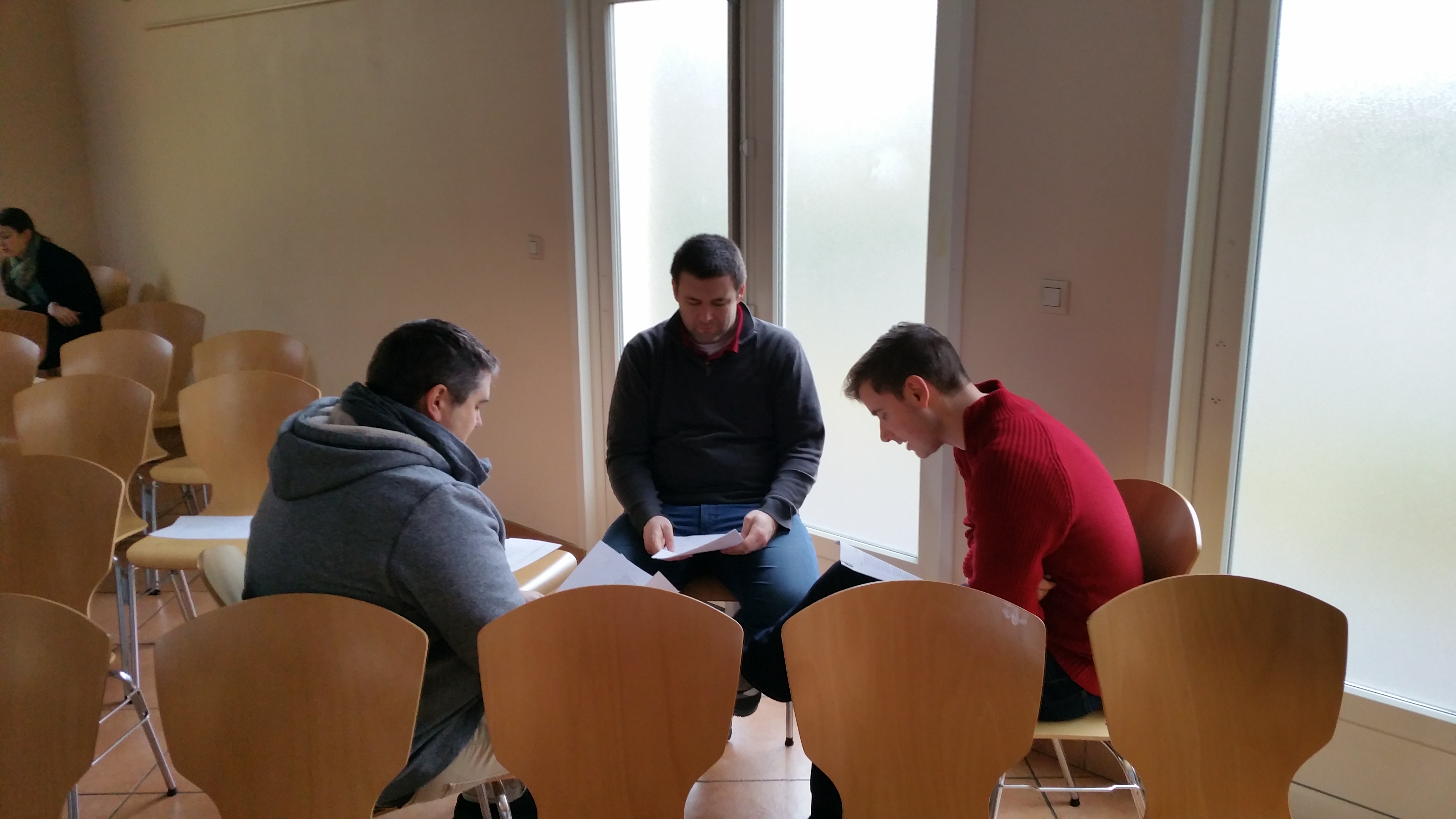
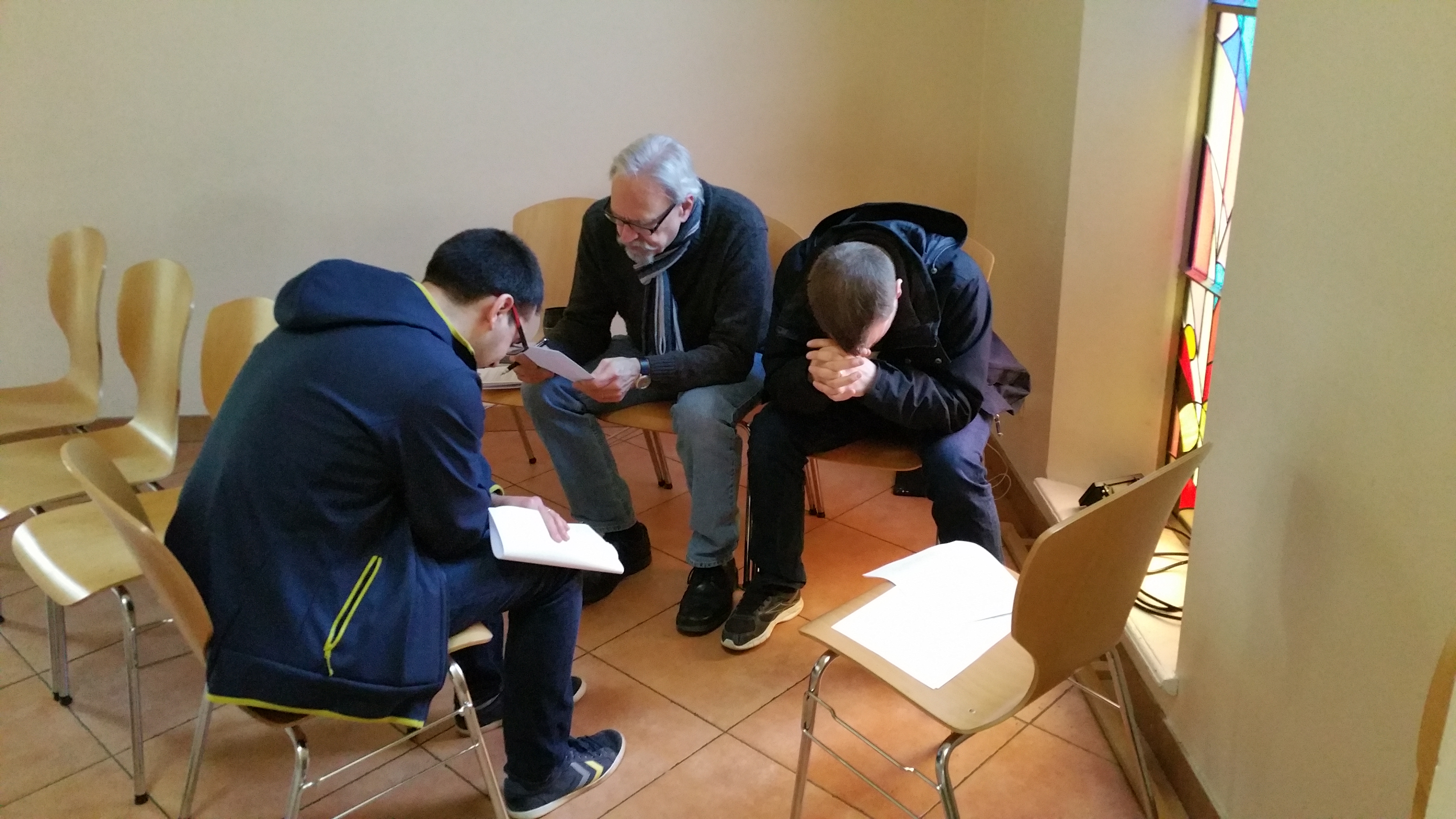
I don’t know what you did today, but I spent the morning praying for Asia with the France team.

The room was divided into seven (7) stations.  At each station, we prayed for 15-20 minutes, in small groups, for the prayer points at that station.  We ‘moved around’ the room throughout the morning and prayed with different groups of different people.  At two stations, the group watched a short video from two of our teams in Asia.  Prayers were offered in French. Prayers were offered in English.  Prayers may have been offered in other languages.20170209_105127

One person commented as we were leaving, “I’m really glad I came this morning. It was so encouraging.”  Another said how good it was to be praying for and learning about another area of the world which he had never visited.

We would love h20170209_105153ear about your ‘community prayer snapshot’. Feel free to post those in the comment section.

Prayer leads us to “see the world as God does, to recognize more and more the depth of His grace towards us, and allow our hearts to ‘overflow’ with joy, with passion, with the unstoppable desire to grab that rope cord and join together in a movement.”