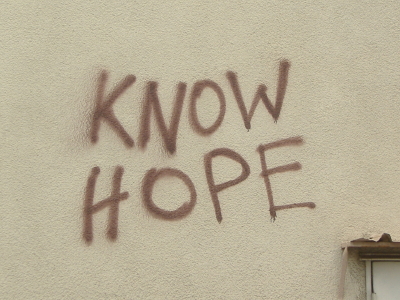
• Our hope-filled future is bound up in sharing the story of Jesus, in discipling others, in bringing those disciples together into communities of believers, and in developing and releasing those believers to create other communities... till Jesus the King comes again!

Why the future is clear

The question that seems to fuel most conversations these days is: when?

When will we be able to travel again (by plane, train or automobile)?  When will restaurants and cafes be open again?  When will life return to some semblance of normalcy?  When will we no longer have to wear a face mask?  When will we be able to hug loved ones again?

You get the idea.  “When?” is an important question and one with a multitude of possible applications to our daily lives.

However, the “when?” question can also be quite debilitating because it tends to leave us in a kind of limbo situation.  For example, not knowing when trains will start running again, we can’t make any plans to visit friends in the south of France or Italy.  All our plans are in an ‘up in the air’ phase.

The future simply seems unclear.

Then the disciple Peter reminds us that this is not the case:  “According to his great mercy, he has caused us to be born again to a living hope through the resurrection of Jesus Christ from the dead to an inheritance that is imperishable, undefiled, and unfading, kept in heaven for you, who by God’s power are being guarded through faith for a salvation ready to be revealed in the last time.  In this you greatly rejoice, though now for a little while, if necessary, you have been grieved by various trials …” (1 Peter 3-6)

The limbo and the uncertainty can be faced by telling ourselves again of the hope (defined as that settled and sure confidence in God’s promise) we have in Christ.  Our hope is one that is alive, that has been reserved for us, and whose assurance grows day by day as we think on it. 

None of us know when we will be able to meet again for corporate worship, visit family living far away or gather with other World Team workers from around the world.  However, the when of the ‘new normal’ is not what should define us.

Rather, it is Jesus, the centre of all of life.  Focusing on Him (and the hope He gives and has reserved for us) will give us the patience, the joy, and the courage to face the constant when question without letting it ultimately define us and our hope.

What are we expecting?

For the first time in a number of years, our local French church held a New YComposite image of hands showing expectationsear’s Eve service.  One of our elders shared a brief meditation on the text: Haggai 2:6-9.  Not
exactly the text that many of us would have chosen for such an occasion.  However, his main point struck home and came in the form of a question: what are we expecting of the Lord in 2017?

In my mind, I came up with a number of ‘expectations’ for this coming year: more disciples, more workers, more communities of believers and the simple joy of seeing a number of French people confess Christ and be baptized.  All good expectations, but the point of our elder’s meditation was that our expectations should centre around God’s glory; on God receiving the glory, the credit.

And I will shake all nations, so that the treasures of all nations shall come in, and I will fill this house with glory, says the Lord of hosts.”  (Haggai 2:7)

If all my expectations centre on me and what I can accomplish, I am actually more dependent on myself than God.  This runs counter to our very ‘raison d’être’ which is: to glorify God by working together to establish reproducing churches.

By asking the question: what are we expecting of the Lord in 2017? I (and we) can assess the true motivation of my heart in 2017.  Yes, I want to see more disciples, more workers, more communities and many French people coming to Christ.  However, I want that to happen in the context of an ever deepening reliance on God.

That is my prayer; that the Holy Spirit would search my heart (Psalm 139), put His light of truth on those places where my motivations are not pure, and drive me back to the Cross to experience anew His forgiveness and to receive the honour of being one of His children so that I might bring glory to Him first and foremost.

There is real life in the midst of dying

hopelessness bis bisAs I sit here writing this post, there is a nonstop ritual chanting and singing in the background. It started this morning at 5h15. It’s now the late afternoon. Though the funeral where this entire activity is taking place is several blocks away, the huge speaker system “brings” everyone to the service. It has been the chanting and singing of hopelessness for hours.

James explained to those of us gathered here that this is part of the effort of the local people to carry the dead into the next part of the journey, hoping that their efforts and the merit achieved by the deceased will be accepted and help the deceased avoid too much pain. Is there no hope? Is there no assurance of comfort?

Even when the darkness seems at its greatest strength, real life shines in its midst and dispels its shadows.

James shared with us the story of another funeral, one of a local believer. At one point during the day of the funeral, the believers were carrying the body, rejoicing in the hope of 1 Thessalonians, while being followed by a chanting and singing crowd, seeking to add their merit to aid the deceased. What a contrast that picture must have been.

Here’s what James wrote to me about the outcome of that day: “The funeral ceremony yesterday was awesome! The flow of the service was a perfect mix of prayer, songs, testimonies, and the Word. The church leaders and our apostolic leader did a great job. Members from six house churches attended and showed their love for the family. I saw God’s love on display in each of the Christian’s face. It is not common for locals to cry……especially those outside of the immediate family but there was not a dry eye in the house. Everyone was feeling the loss of a dear friend and sister. This was the first Christian death within the house church movement so it was not only a time of mourning but a time for firming up the faith and modeling.

The two sons of this deceased believer shared that they would like to learn more about Jesus and the husband said he would come to Church. This is a big praise and we hope that their verbal commitments will not be hindered by the enemy. The daughter who is a believer stood at the end and said in tears that she missed her mom but was glad to know that she is in heaven with Jesus. Wow! God clearly worked mightily and all praise is due His name.”

That is a powerful image of real life proclaiming its reality in the midst of the darkness!

Some of us live in cultures where such demonstrations of grief and hopelessness are shown in such clear ways. Others of us live in places where those demonstrations are ‘masked’. Nevertheless, they are there and present.

I don’t want to be lulled to sleep, thinking that people around me are not experiencing this hopelessness at every moment of their life journey. I want to be awake to live out real life among others, so that Christ will work powerfully in their lives and bring the hope that will carry them into eternity.

Mission11 Europe Update[3]

The Mission11 Europe conference closed out this morning with time around God’s Word and God’s table.

Kevin from the US Support Center talked from Genesis 40:23-41:1 about the “white spaces” in our lives. There was “white space” in Joseph’s life where a great deal of change must have occurred in his character as he waited those two years for God to deliver him out of his situation (41:1).  He challenged each of us about returning to our normal life where it can appear that God sometimes may have forgotten us.

Kevin put it this way:

While experiencing the white spaces of life: (i) We must not expect others to meet our needs; (ii) we can experience the love and faithfulness of God; and we can learn to wait on God and experience his goodness in our lives.”

That was the kind of encouragement we all needed as we head back into our everyday lives and ministries after this time away.

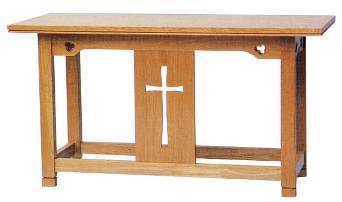
Jerry followed with a time of communion, and I think what was interesting was the way he introduced this time.  He asked about the symbol common to all believers.  Most of us responded by saying, “the cross”, which is correct he said.  However, another symbol that the Lord gave us was “a table”, for it was around the table that the disciples gathered for the Last Supper.  Around that table, the Lord reminded His disciples about what he was about to do and the promise of life with Him that His death and resurrection would provide.  The table is a place of rest, of hope, and of promise.

Thanks WT Europe for the time together of prayer, talking about vision, and living community together!


Hope And Prayer

Thanks to Mark for today’s post:

“At a recent gathering of workers from the part of the world in which I serve I opened the sessions with a prayer for the group that we would experience community, joy, and hope. Hope, the great center point of the Gospel, is a reality of our pilgrimage with the Master Jesus, but is amazingly one of the least considered elements of prayer we Christians pause to consider.

When you think about it, hope is why we pray. At a minimum it will be difficult to pray if we do not believe, by hope, that God not only hears us (which is only the start of hope), but that he also responds to the cries of his people (the middle of hope), and finally draws together all our yearnings for him in the grand finale of our eternal life to come (in a sense the end of hope, for we will no longer need hope, since all will be revealed in the new heavens and the new earth). But to pray without hope is worse than difficult, it is impossible.

In chapter 24 of his book A Praying Life author Paul E. Miller reflects on hope in the context of family life and he strikes this same chord on the relationship between hope and prayer. “As we wait and pray, God weaves his story and creates a wonder. Instead of drifting between comedy (denial) and tragedy (reality), we have a relationship with the living God…”

Together with you and with our literary companion Paul Miller I want to say “yes!” The dynamic of the relationship between the Lord Almighty and us provides the terrain for hope to grow wild in our bodies, souls, minds, and spirits. And with hope we come again and again, daily, in our prayers to our God and we affirm: our hope is built on nothing less than you, Oh God!”