• Our hope-filled future is bound up in sharing the story of Jesus, in discipling others, in bringing those disciples together into communities of believers, and in developing and releasing those believers to create other communities... till Jesus the King comes again!

Cross training developmentally

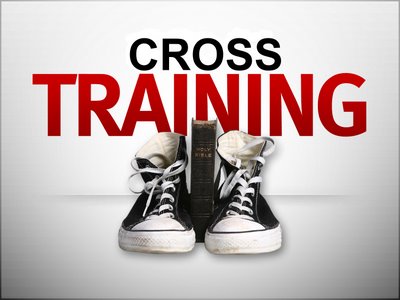
One of the tried and true rules in sports is the importance of cross training.  Cross training means that when preparing for a distance bike ride or some other demanding sporting event, we include some kind of training in other sporting activities.  So, if you are preparing for that distance bike ride, you add in a swimming session or a 5 km run.  The effect is that the primary sporting activity is enhanced or bettered when the skills are transferred and integrated with other sports.cross training
Such is the case for our own development as believers.  A writer I recently came across wrote: “Forming a Christian mind is interdisciplinary.  In order to apply the Bible to a particular area of life – or to understand how another discipline interfaces with our faith – we have to know that area well. How can you expect to understand a biblical approach to, say, the economy, without a certain level of economic literacy?

Now, I’m not advocating that we all go out and get an MBA degree.  However, our growth as believers and as workers in His mission would be enhanced if we engaged in further training in problem solving, team dynamics and priority budgeting, for example.

Cross training can occur in other ways as well.  It might mean reading works outside our theological spectrum.  It might mean changing my habit of spiritual disciplines to investigate other ways of encountering God.  It might mean reaching across an Area to mine the insights of others in World Team.

I’m not saying it’s easy.  I love to run, but I’m not excited about swimming laps.  I just have to push myself sometimes to do what doesn’t come naturally.


Competency is not a bad word

We never stop learning.  It might be a new word, a new expression in the language in which we minister.  It might be another way to send our prayer letters out (such as Constant Contact, Mail Chimp or some other program).  There is a good deal of motivation in this kind of learning because we see its tangible benefit, the help it can provide to our life and ministry.competencies2

We should never stop learning.  However, we also need to pro-actively look for learning that may not have, at first glance, immediate tangible benefit to our life and ministry.  Constant learning is a means to increase our competency, our skills to live as Christ would desire and to minister in more and more fruitful ways.  Paul said, “I urge you to excel still more” (1 Thess 4:1).  Increasing one’s competency is an aspect of glorifying God, a concrete way of worshipping him as we recognize our dependence upon Him and the need for further, ongoing training.

The core skills modules are part of this process for all WT workers.  How grateful I am for the participation of so many in our first module and the feedback we have received.

However, we cannot stop there.  Each of us should prayerfully consider, in discussion with others, our next steps in growth and development (competency), outlining a  quarterly or monthly desired growth goal.

Competency is not a bad word.  It should become an energizing word for us, calling us to never stop learning.

Anything New Under the Sun?

Winston Churchill once said, “Those that fail to learn from history, are doomed to repeat it.”  The Scriptures tell us: “there is nothing new under the sun.”

British historian, Ian Shaw, in his recent work, Churches, Revolutions and Empires, demonstrates the very truth of this statement.  Using extensive research, Shaw highlights critical issues faced by the Church in the 18th and 19th centuries.  The examples he chooses would make you think he was talking about our current global context.   Shaw writes: “Many believed that, with the changing social and religious geography of Britain, urgent and innovative responses were needed if the church was to remain relevant in a new context.”  Sound vaguely familiar?  Shaw goes on to say: “One influential experiment was played out in the years after 1815, when the brilliant young minister, Thomas Chalmers … developed an approach to urban mission, which he publicized and promoted through his writings.”  How interesting that in 1815 the idea of ‘urban ministry’ was already in play.imagesCAVNOKB2

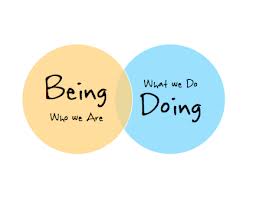
In our current day, we often juxtapose “being” and “doing”, or put another way, “character” and “competence”.  Time and again, one element of this combination is stressed to the exclusion of the other.  Many argue that what is most important is ‘being’ or our character.  God is not interested in numbers, but He is primarily interested in our heart.  Others counter by stating that the Bible is replete with instructions about stewardship and management of resources and that His ultimate desire is that we bear fruit in specific terms.

What’s interesting is that this same discussion has played out at many points in past centuries.  However, the debate waned at those times when people saw the two as being inseparable.  You cannot talk about “being” without it leading to “doing”.  You cannot speak about “character” without it implying the need for “competence”.

As we begin to move all our workers through the first core skills module on evangelism, our stance will be that spiritual intimacy with Christ will lead to sharing one’s story with another; and that sharing one’s story with another in a clear and contextual way will push us back to a deeper reliance upon and intimacy with God.  Both are equally essential in our ministries.


Core Skills

In his landmark work, Christian Mission in the Modern World, John Stott writes that evangelism is sharing the good news with others, no matter what the outcome. It is using words to describe the events of Jesus’ life, death, and resurrection for our sins “Our goal,” Stott concludes, “is to present Christ Jesus in the Power of The Holy Spirit that people may be persuaded to come to Him in penitence.”CS-masthead-logo

Last June I shared how engaging so many of you on your fields reinforced both your and my desire for ongoing training in the basic core CPM attitudes, skills and knowledge that all church planters employ.  Effective church planters are characterized by a learning mindset, always sharpening their ability to communicate meaningfully the story of Jesus.

The Roadmap Team, led by Joi, along with Daniel, Laura, Amy, Mike, Bob and Chuck, has developed our first online module, Evangelism: Abundantly Sowing the Seed.  Eight workers from Asia, Europe and Africa volunteered to help field test the module in September and October.  Their response was positive and helped the team improve the module in order to offer it to all WT workers throughout 2013.

One couple, working in Asia, was so challenged by the module that they are considering the possibility of serving as facilitators.  One section of the module that got them thinking was how to address barriers and bridges to the gospel, which led to further discussion with teammates.  Interaction with people from other fields also produced insightful discussion from various perspectives.

You will soon be receiving material which will tell you how you will be able to participate in this module.  It will be offered numerous times during 2013.

Core Skills and LL3

Each worker/leader partnering with World Team Global will be able to give voice to ‘who we are’ and ‘what we do’

This is one of our global priorities which we will be working towards in the coming months.

Several steps will move us in this direction.  First, we will draft the “WT Core”, a common covenant that will delineate who we are as members of the WT community and what we do.  All workers will be asked to affirm this covenant, giving voice to what unites us together as a WT community.

Next, we will select 4-5 key skills of the CPM Roadmap in which every worker within WT will be trained.  Some may feel that they have already grasped these skills, but in order to build a common body of knowledge and skills everyone must go through the same training.  Sharing the story of the Gospel will be the first key skill we will address.

Finally, every worker will assess their competency needs on an annual basis and will be asked to further develop themselves over the course of that coming year.  Training, mentoring, online courses and other delivery options will be offered to assist each one to grow in their competencies.  We will call this “LL3” or lifelong learning.  This cannot be optional as all of us need to grow further in our skills and abilities.

None of this is to the neglect of character development.  However, I am sure that if you stepped onto a plane and the pilot announced that he was a person of moral integrity and fiber, but knew nothing about flying airplanes, you would quickly step off that plane.  Yes, a balance is needed.  Let us apply as great an energy to our competency development as we do to our character development.

Next post: So what about character development?

Raising our level of competence

Many of us simply do not know how to respond to workers who do not have the necessary knowledge, skills and abilities to do their ministry. When this kind of situation is allowed to go on, the agency suffers and often responds by working around the inadequately trained worker, the worker who lacks the needed competencies.

This is what is called the “frustration approach”.  We become annoyed with the inability of the worker to do their ministry, and choose not to address their developmental needs.  We work around them by carrying out their work or having others carry out their work.

There is another approach though.  We could call it the “redemptive approach”.  Our ministry focus becomes the development of the worker needing competency training.  In this approach, we come alongside the worker and choose to honestly address their competency needs and bring the resources to them which would raise their level of competency.  Rather than working around them, we work with them.  If the worker does not demonstrate the skills needed to carry out the ministry task after this training, then we need to look at other ministry options which might be better suited for their current gifts and skills.

Raising our level of competency means allowing the community to honestly assess our knowledge, skills and abilities and bring training to us that will cause us to grow in our ability to more fruitfully carry out our task.

Next post: Core skills and LL3.