• Our hope-filled future is bound up in sharing the story of Jesus, in discipling others, in bringing those disciples together into communities of believers, and in developing and releasing those believers to create other communities... till Jesus the King comes again!

Mission11 Europe Update[3]

The Mission11 Europe conference closed out this morning with time around God’s Word and God’s table.

Kevin from the US Support Center talked from Genesis 40:23-41:1 about the “white spaces” in our lives. There was “white space” in Joseph’s life where a great deal of change must have occurred in his character as he waited those two years for God to deliver him out of his situation (41:1).  He challenged each of us about returning to our normal life where it can appear that God sometimes may have forgotten us.

Kevin put it this way:

While experiencing the white spaces of life: (i) We must not expect others to meet our needs; (ii) we can experience the love and faithfulness of God; and we can learn to wait on God and experience his goodness in our lives.”

That was the kind of encouragement we all needed as we head back into our everyday lives and ministries after this time away.
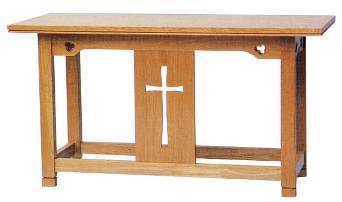
Jerry followed with a time of communion, and I think what was interesting was the way he introduced this time.  He asked about the symbol common to all believers.  Most of us responded by saying, “the cross”, which is correct he said.  However, another symbol that the Lord gave us was “a table”, for it was around the table that the disciples gathered for the Last Supper.  Around that table, the Lord reminded His disciples about what he was about to do and the promise of life with Him that His death and resurrection would provide.  The table is a place of rest, of hope, and of promise.

Thanks WT Europe for the time together of prayer, talking about vision, and living community together!


Mission11 Europe Update[2]

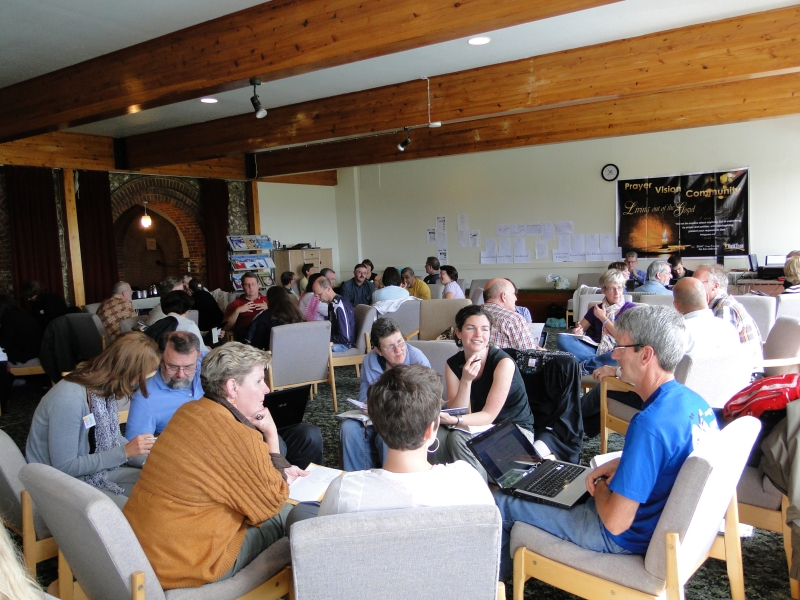
Sometimes the noise is so loud that it can cause you to have trouble hearing your own voice or the others in your group.  But, what a good noise it is!  Spread out around the room, there are groups of four to five people praying at the same time for teams and workers in Spain, Moldova or elsewhere.

Over the past few evenings, the WT Europe community has given significant time to hear about what God has been doing in and through our teams and workers, and praying for the prayer points shared.

It has been a rich experience.

Dick, the main speaker, has been talking to the group about “transformational communities.”  This morning, he said: “One of the main products of the Gospel has to be community.”

If that is true, then what we have been experiencing in these evening prayer times is one small glimpse of such a transformational community as we lead one another back to the Father, sharing our heart cries for the needs of our brothers and sisters working together with us throughout Europe.

Pray with us!


More later …


Mission11 Europe Update[1]

The conference started yesterday.  Here are just a few short impressions of the time together so far:

  • Sixty participants including our US Sending Country Director and board members from WT International and WT UK.
  • Each day begins with a significant time of prayer for one of the other Areas of World Team.  Today, the workers here prayed for the Americas.
  • Joi walked participants through the CPM Roadmap, giving them opportunity to consider implications of parts of the Roadmap for their teams.
  • Dick, the main speaker, began talking about “Discipleship that leads to transformation.”  He stressed how “transformation always occurs through community,” and the need for people to have others involved and
    investing in their lives.  You can check out some of his writings at: http://www.dickscoggins.com/


More later …


Talk with me

Sometimes when I look at our WT community, I see a multicultural network of workers driven by the same purpose and vision.  Sometimes though, when I look at our WT community, I see an innumerable series of silos or towers that are all located on the same paddock, but have no connectedness one to another.

Living and ministering out of a silo mentality can foster all sorts of troubles, not the least of which is a critical spirit.  When you can see nothing but what surrounds your own silo, it is quite easy to question or criticize what others are doing, even when they belong to the same community as you.

Verses such as Ephesians 4:29 can become lost to practical application when we choose to live disconnected from the larger community: “Let no corrupting talk come out of your mouths, but only such as is good for building up, as fits the occasion, that it may give grace to those who hear.”

Phrases such as “Well, he just decided that without asking us,” or “There’s no use sharing what I think because she doesn’t listen to me anyway” are nothing less than gossip, the evidence of a critical spirit.  True heart change will require more than just a renewed emphasis on community. Something will have to ‘displace’ that critical spirit.

Several hundred years ago, Jonathan Edwards wrote this: “For as long as a man or woman is not emptied of himself/herself and of his/her own righteousness and goodness, he/she will have a legal spirit.”  The only remedy is if God and His amazing grace and free righteousness ‘displace’ me out of the center of my life.  Only then can I truly begin to live as part of an interconnected community.

Maybe you need to ‘pick up the phone’ and talk with the Father about your heart, and as a natural outflow, pick up the phone and talk with someone with whom you are struggling with, or of whom you have spoken poorly.


Needing Others

When God chooses to bring us to Himself (Ephesians 1:4), He brings us into community.  We are not brought into relationship with Him to simply remain alone in our own room to live out our faith by ourselves.    We are called to be part of a community; the people of God who belong to Him.  Our life in Him is understood and lived out in community with others.” This is my free translation of quote from an article by Paul Wells, professor of systematic theology at a seminary in southern France.

A worker needs to constantly have a learning posture.  We never reach the end of what we need to know or learn as it relates to our life and our work.  Over the past month, I found myself submerged by a host of details and activities that I needed to do. A good friend was gracious enough to point out that I was failing to delegate to others work that they could share and accomplish in more fruitful and timely ways.  I was not living out my life in Him in community.

Delegation means we entrust someone else with work that we believe we should do.  Yet delegation is a means to develop others and further the resources available to carry out God’s mission.  Delegation is not ‘just getting stuff off of one’s plate.’  Delegation is an expression of living out one’s life in God in community, and includes several elements:

  • Define the task – Confirm in your own mind that the task is suitable to be delegated.
  • Select the individual or team – What are your reasons for delegating to this person or team? What are they going to get out of it? What are you going to get out of it?
  • Assess ability and training needs – Is the other person or team of people capable of doing the task? Do they understand what needs to be done.
  • State required results – What must be achieved? Clarify understanding by getting feedback from the other person.
  • Support and communicate
  • Feedback on results – It is essential to let the person know how they are doing, and whether they have achieved their
    aims.

Even as he chose us in him before the
foundation of the world, that we should be holy and blameless before him
.”

(Ephesians 1:4)

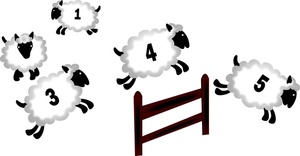
Counting Sheep

Whenever one talks about assessment, it evokes a response.  Not many of us enjoy being assessed or evaluated.  There is a certain fear of “not measuring up” that can rise up in our hearts when we are asked to take a closer look at our activities and work.  Yet, a good assessment process can provide us with much needed input for further development and growth.

Any assessment, though, “requires a shared definition of mission”.  We as a community have this shared definition in our global vision to see “innovative teams multiplying disciples and communities of believers, bringing the Gospel within reach of lost people everywhere we go.” We recognize that any assessment of our work and ministry in light of our vision must take into consideration elements of ‘quality’ and ‘quantity’.   We do not want to see more disciples just so we can add “more sheep to our numbers.”   We long to see disciples who multiply themselves in others.  We are looking for quality, for depth, and for growth.  Nevertheless, we are looking for and praying for a ‘number’ of disciples.

A good assessment process would seek input in at least three ways.  One, it would ask for feedback from the larger community.  Input from other workers and partners (both expat and national) would give a fuller picture of how the work has progressed.  Second, it would take a ‘long view’ of the work.  It would look at how the work is helping establish reproducible and sustainable growth in people’s lives, and in the life of the community of believers.  Finally, it would listen for stories; stories of what God has been doing in us and through us as workers.  These stories would frame the work in the larger context of the mission and vision to which God has called us.

‘Counting sheep’ is a lot more than numbers.