• Our hope-filled future is bound up in sharing the story of Jesus, in discipling others, in bringing those disciples together into communities of believers, and in developing and releasing those believers to create other communities... till Jesus the King comes again!

Assess one another

When we start talking about metrics or providing indicators that allow us to assess God given progress towards a vision or goal, many of us immediately assume some hidden motive behind the request.  For example, we might think:

  • Our work is going to be judged on insufficient criteria (just numerical indicators);
  • Our leaders are looking for a way to justify closing down our ministry; or
  • We as an agency are being overly influenced by business tactics

 

assessment-center1Rather than taking the perspective that others will be ‘judging us’, perhaps we could look at indicators as a healthy way to ‘assess one another’ and ‘help one another’; to work together as a global community to fulfill our purpose and vision in greater ways.

Indicators (quantity and quality) might show that there has been limited fruit in a particular ministry over the past few years.  A healthy assessment would engage dialogue over a number of questions.  The answers to those questions might reveal a limited prayer network for the ministry and a significant lack of people resources.

Do we fold the ministry?  No. We as a global community bring the resources that are lacking to this ministry, or we network the existing team to needed resources.  Any assessment reveals how a ministry is doing and what we might learn from them or how we might come alongside them with help.

Assessing quality, counting quantity

We exist to glorify God.  We as a World Team community exist to glorify God by establishing and facilitating communities of believers that give birth to other communities.  We work together to explore new ways to share the message of Christ in a contextualized manner, to build disciples and communities that will multiply themselves exponentially among those least reached with the Gospel.

The purpose, the vision,the focus is quite clear.  How will we know if we are actually fulfilling this vision?  Do we just ‘hope for the best’ spiritually speaking?  Or are there any indicators that allow us to assess God given progress?

quality_or_quantity-resized-600Each year, Rebecca and I sit down and decide what we will plant in our garden.  We have rented a plot about 5 kilometers from our house and we want to use the space well.  One crop we plant every year is potatoes. Two things are important with potatoes: the quality of the potatoes.  Not all potatoes store well nor can be used for a variety of cooking purposes.  And second, the quantity of potatoes.  If we’re going to take the time and energy to plant a particular variety of potato, we want to make sure there is a good return.  We will count the approximate number of potatoes harvested at the end of season.  We do this because we want to discover if there are some things we might need to change the following year to have a better harvest.  For example, different soil composition, more consistent watering, or being better on top of parasites that attack our plants could create a greater harvest.  Some things we have no control over, such as the weather, and we simply will do the best with the conditions we face.  Quality and quantity are both concerns.

There are surely a number of parallels between gardening and disciplemaking.  Any ideas?  We can share more about all this in another blog.

Other seeds fell on good soil and produced grain, some a hundredfold, some sixty, some thirty … As for what was sown on good soil, this is the one who hears the word and understands it.  He indeed bears fruit and yields, in one case a hundredfold, in another sixty, and in another thirty.”  Matthew 13:8, 23

What are we going to do next year?

build trustThis is the time of the year that many of us will reflect on the impact of Gospel in our lives: how Jesus as the “God among us” stirs and transforms our life and work.  It is also the time when many of us will “remember” what God has done over this past year in us and through us.  The goal of that reflection or assessment is to consider what God longs for us to do in the year to come.

I’m not talking about setting New Year’s resolutions, but about establishing one’s heart direction for the coming year.  In other words, thinking how that heart direction might express itself in one’s life and work.  Paraphrasing Galatians 5:6, we could put the question this way: what will faith expressing itself through love look like this year?

As I thought about World Team and what we might do in the coming year, what God longs to do in and through us, a host of words and ideas came to mind.  For example: transformational communities; church multiplication; greater accountability and follow through; delegation; facilitating others in ministry; and deepening relationships between workers.

However, when I asked the question, what will faith expressing itself through love look like, one word, one heart direction rose quickly to the top of the pile.  That word was: trust.

If there is one heart direction that God desires to characterize us in the coming year, towards which we should strive with all our heart, it should be trust.

I recognize that trust can be easily broken, but I often wonder if we prefer to keep people in a low trust or no trust category because it keeps us from the hurt, pain and struggle of engaging that fellow worker again and looking to Christ for the strength and courage to learn to love well and work together more deeply.

Trust may not be easy, but it begins by each of us offering that trust again to one another.

Ever learning more

The “rentrée” is just about upon us.  The “rentrée” is the French equivalent of the start up of the new academic or business year.  I realize that this is a predominantly northern hemisphere phenomenon, but bear with me as there are principles all of us can take away.  The “rentrée” is that time when everyone looks back on the past few months and then begins to anticipate what is ahead.

In most people’s minds, they savor all that they were able to do, but look forward (both excitedly and nervously) to all there is still to learn and experience.

We as workers need to step back and once again prepare our “rentrée”, whether that occurs for you in September or in February.  Sometimes we get so stuck in always looking back, living on what we have learned and experienced already, that we never take the time to assess and anticipate what we ought to learn in the days, weeks and months ahead.

My challenge to each of us is this:

  • Choose one growth area, one area for improvement in your personal, family, spiritual or ministry life;
  • Write a description of the end result you will strive towards and specific activities that will move you towards that end result;
  • Ask someone to be a growth coach or partner with you, praying and encouraging you in this growth area.

The reason we should still learn more is so that “whether we eat or drink or whatever we do, we do all to the glory of God.”  (1 Corinthians 10:31)


What do we do if ministry has become an idol?

Several of you shared the struggle that can easily arise as we let ministry become an ‘end all’ in our lives.  What do we do, though, when we become aware that we have “inflated something to function as a substitute for God”?  When something other than Jesus Christ has become our ‘savior’?

We should “turn and rush”. “For they themselves report concerning us the kind of reception we had among you, and how you turned to God from idols to serve the living and true God, and to wait for his Son from heaven, whom he raised from the dead, Jesus who delivers us from the wrath to come.” (1 Thessalonians 1:9-10)

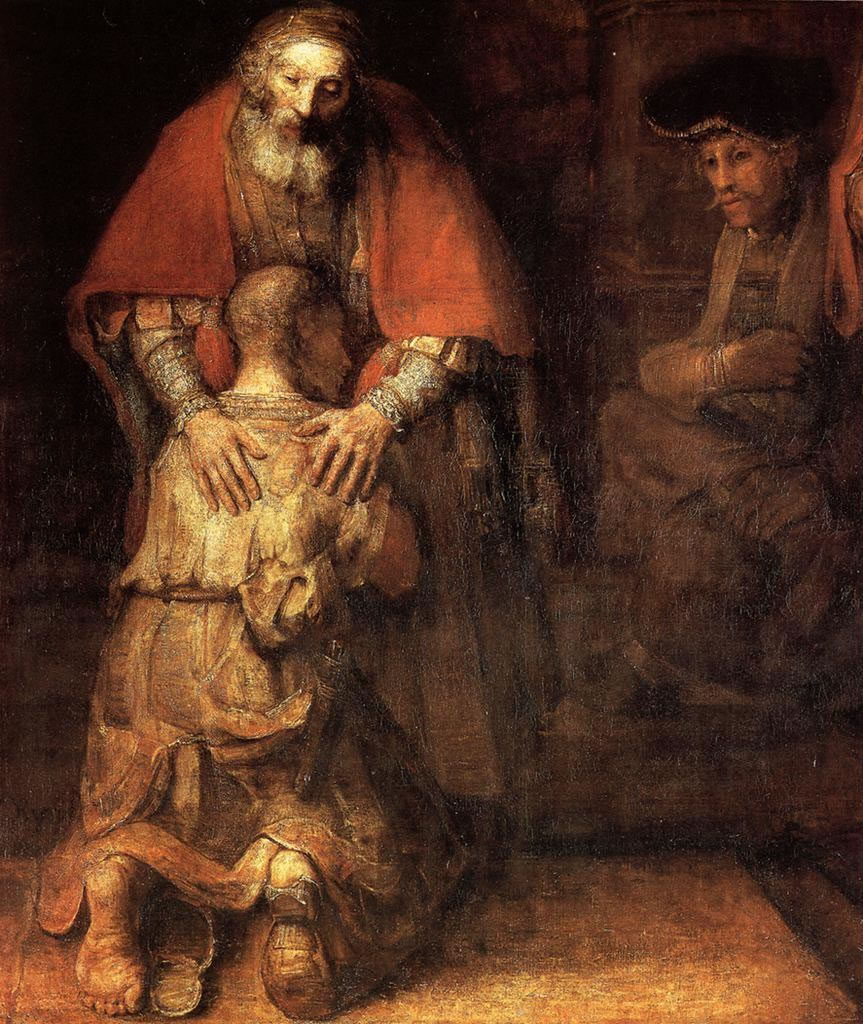
We should “turn”, that is, we should acknowledge our sin, own it and turn from it.  We call this repentance.  We should also “rush” back into the arms of Jesus, the One who saved us from the mess of sin.  We call this faith.   

Sounds straightforward in some respects, but we are all susceptible to the wiles of the evil one and our own sinful tendency towards excuses that keep us from acknowledging the depth of our sin and our great need of His love and forgiveness.  One writer has written: “Satan’s main temptation is to convince us that we are half the sinner we actually are and that we have half of Christ’s acceptance as we actually do.”  [Charles Spurgeon has a wonderful message which describes this response of turning from idols and rushing into His arms: http://www.spurgeon.org/sermons/2236.htm]

This is why the community around us is so important.  We need others who can help us to ask those hard questions that dig deep to search out the roots of sin and idolatry in our lives.  We need others to remind us again and again and again of His unfailing love, forgiveness and righteousness.  This is the kind of community we should be building and nurturing around us.


Can ministry become an idol?

That’s a hard one to answer.  In one sense, it’s difficult to believe that ministry can become an idol when the very nature of ministry is to help people “turn to God from idols to serve the living and true God” (1 Thessalonians 1:9).  It’s a spiritual work.  It certainly is not true that ministry has become an idol when we are saddened or upset when someone or something frustrates the spiritual work in which we are engaged.

Yet, in another sense, many of us may have become functional idolaters without realizing it.  One writer describes idols this way: “[They] are objects or persons to which we give inordinate attention.  Idols are things that we glorify other than God.  An idol is anything that gets more glory, more weight, more importance in our eyes than God does.”

What do you lead with in conversations?  That question alone can reveal the core direction of our heart.  Is our conversation sprinkled with what we do (ministry) or who we serve (God)?

When there are difficulties in ministry, how do we respond?  Are we devastated, do we blow up at others, or do we turn away in self-pity?

Idolatry, Os Guiness says, is to “inflate something to function as a substitute for God.”  Ministry can become our god; it can function as a substitute for God when our lives revolve around the work in which we are engaged, rather than the God who called us to that calling.

We need to keep asking questions like the ones above to help us expose the roots of idolatry of ministry and in our ministries.