• Our hope-filled future is bound up in sharing the story of Jesus, in discipling others, in bringing those disciples together into communities of believers, and in developing and releasing those believers to create other communities... till Jesus the King comes again!

Vaccinated, not infected

I subscribe to qideas.org and receive regular notes about articles or talks posted to their website. One the other day caught my attention: “The Gospel as a Virus”.  I, like you, have often heard it said that many have been “vaccinated against the Gospel, against the real thing”.  It’s a way we use to describe the difficulty of the cultural context in which we work in some places in the world.Pupil receiving vaccination from school nurse

However, I had not really thought about making the application to me or us as a Christian community.  Richard makes a number of powerful statements in this talk, but one that kind of stuck with me was the fact that the Gospel is: “a call to show the world a different way to live as forgiven people; reconciled to God and reconciled to one another.”

The Gospel is first of all about teaching me how to live a different life.  The Gospel focuses on having me experience forgiveness and reconciliation in my relationship with God and with others.  How can I share this message, this virus, with others if it has not first “infected” my life?

There’s the interesting piece.  Living out of the Gospel, “preaching the Gospel” to myself on a daily basis is first of all not a series of tasks or steps.  It’s about living.  It’s about praying [and asking others for help] to see God work the Gospel deeper into my life through the experiences and conversations I have throughout the day.

Many times, the faith I show to others communicates the message that Christianity straightens out the mess of one’s life and gives one a system to better live by.  I probably need to spend more time on experiencing the Gospel “virus” in my own life, so that what I share with others will be “life to life”


I’m accepted, I value

Valued_Partner_Program_ND_SatComThe Gospel is front and center in our core values.  It is in many ways, the core value from which all the other values stem.  The Gospel means that our lives are not directed by needing to do something in order to be accepted, but that everything has been done for us already in the Cross so that we might be fully accepted.  Because I am accepted, I cherish and live out the values that characterize us as believers and as a community.

One writer talks about core values in this way: “The core values of an organization are those values we hold which form the foundation on which we perform work and conduct ourselves.  Core values are not the descriptions of the work we do or the strategies we employ to accomplish our mission.”  It is a kind of internal compass or GPS in that provides the drive to our work and activities.

The world in which we serve is changing at an amazing speed.  Our values are the bedrock from which we serve as an organization.  WT core values, our ethos, should direct our hearts and actions and guide our life and ministry in this changing world.

Here’s the thing I’m discovering though with core values: many people enjoy discussing them, trying to put just the right words to express them well, but struggle to work them out.  The real test of our commitment to core values is how they are actually worked out in our lives and ministries.  Aspirational values are not the same as actualized values.

So here’s a quick test that Karry suggested recently: without looking, can you name our core values as a WT global community?  I’ve already helped you with one.

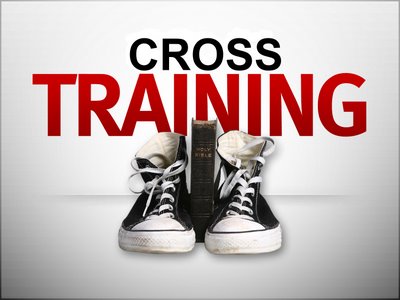
Cross training developmentally

One of the tried and true rules in sports is the importance of cross training.  Cross training means that when preparing for a distance bike ride or some other demanding sporting event, we include some kind of training in other sporting activities.  So, if you are preparing for that distance bike ride, you add in a swimming session or a 5 km run.  The effect is that the primary sporting activity is enhanced or bettered when the skills are transferred and integrated with other sports.cross training

Such is the case for our own development as believers.  A writer I recently came across wrote: “Forming a Christian mind is interdisciplinary.  In order to apply the Bible to a particular area of life – or to understand how another discipline interfaces with our faith – we have to know that area well. How can you expect to understand a biblical approach to, say, the economy, without a certain level of economic literacy?

Now, I’m not advocating that we all go out and get an MBA degree.  However, our growth as believers and as workers in His mission would be enhanced if we engaged in further training in problem solving, team dynamics and priority budgeting, for example.

Cross training can occur in other ways as well.  It might mean reading works outside our theological spectrum.  It might mean changing my habit of spiritual disciplines to investigate other ways of encountering God.  It might mean reaching across an Area to mine the insights of others in World Team.

I’m not saying it’s easy.  I love to run, but I’m not excited about swimming laps.  I just have to push myself sometimes to do what doesn’t come naturally.


Gateway or bottleneck

I was recently reading through a number of articles that I had placed in a file when I ran across this quote in one of those articles:

Young leaders want and need a place at the table. I know of one church where the leader (who is himself in his thirties) meets weekly with the church’s key emerging leaders. They read books on church leadership to discuss, they engage in spiritual and theological reflection. But they don’t stop there. He regularly offers them opportunities and assignments to do critical ministry projects and innovations. In some cases these have led to whole new ministry organizations being started, with young leaders at the helm. It happened because his leadership became a gateway and not a bottleneck.Bottleneck

Several things struck me.  First, this leader had a “developmental mindset”. In other words, when new workers came into his ministry, he viewed them from the perspective of how they could be developed and trained to grow in ministry.  He saw their need for ongoing learning and training from the day they walked in the door (see my post from 13.05.2013).  Next, he gave away or delegated ministry opportunity.  He gave people a chance to test out their gifts and abilities in a context where he could give feedback and counsel.  He did not micromanage what they did.  He followed what they did: praying, giving feedback and cheering them on.  Finally, this leader was a young guy (in his thirties) who was building and releasing a growing number of workers and leaders.

World Team workers have an average of eighteen years of experience in cross cultural ministry.  We have an “experience capital” that is significant.

Imagine what could happen, by God’s grace, if that “experience capital” were used to create “gateways” for younger workers and leaders.

Competency is not a bad word

We never stop learning.  It might be a new word, a new expression in the language in which we minister.  It might be another way to send our prayer letters out (such as Constant Contact, Mail Chimp or some other program).  There is a good deal of motivation in this kind of learning because we see its tangible benefit, the help it can provide to our life and ministry.competencies2

We should never stop learning.  However, we also need to pro-actively look for learning that may not have, at first glance, immediate tangible benefit to our life and ministry.  Constant learning is a means to increase our competency, our skills to live as Christ would desire and to minister in more and more fruitful ways.  Paul said, “I urge you to excel still more” (1 Thess 4:1).  Increasing one’s competency is an aspect of glorifying God, a concrete way of worshipping him as we recognize our dependence upon Him and the need for further, ongoing training.

The core skills modules are part of this process for all WT workers.  How grateful I am for the participation of so many in our first module and the feedback we have received.

However, we cannot stop there.  Each of us should prayerfully consider, in discussion with others, our next steps in growth and development (competency), outlining a  quarterly or monthly desired growth goal.

Competency is not a bad word.  It should become an energizing word for us, calling us to never stop learning.

Why plans are helpful, why they are not

Planning usually brings out the best and the worst in people.  Some of us enjoy planning because our natural bent is more towards organizing material and our time.  Others of us see planning as a chore, busy work that doesn’t seem to provide any real help to us.  In many ways, both of these responses represent a misunderstanding of planning outcomes.Business people planing

Plans are helpful when they focus our energies on those priorities God has laid on our hearts.  Putting together a plan should facilitate us being able to say ‘no’ to a certain number of activities that will detour us from our main focus.  Planning brings focus in a context that is flexible enough for us to work out that focus in a number of different ways.

Plans are not helpful when they fill our time with loads of secondary tasks.  Some plans I have seen are pages and pages long.  This can give the impression of a strong and solid plan.  However, most often, the heart of the plan is lost in the flurry of tasks that most have difficulty accomplishing because there are simply too many tasks.  All these tasks may keep us busy, but not fruitful.

Chris (WT Global) has put together some helpful tools for writing plans.  In one of his presentations, he wrote this: “The old adage of “first things first” is quite misleading.  There is a big difference between choosing what task to do first and knowing what are the most important tasks.”

As I wrote in the post the other day, this is why we need God and a strong community around us.  Through prayer, study and interaction with other believers we can have the insight we need to “know what are the most important tasks”.