• Our hope-filled future is bound up in sharing the story of Jesus, in discipling others, in bringing those disciples together into communities of believers, and in developing and releasing those believers to create other communities... till Jesus the King comes again!

We know what to do

I remember well one of our first groups of interns serving at the Paris Prayer Conference. They were given several days to ‘figure out’ the Paris metro system before taking a group of participants to different sites each day for prayer.  On day one of the conference, they brought all the participants from their hotel to our mparis3ain meeting place.  When they arrived, I ‘tested’ them by asking what metro line they had taken to get to the meeting place.  “You took line 6, right?” Their reply caught me by surprise: “No, we took line 3It looked like a shorter route.”  I had always taken line 6 to get to the meeting place.  I knew what to do to get to the meeting place.  Where in the world did they come up with the idea of taking line 3?

How I felt then, was how I felt today when Rebecca & I read this comment in the devotional, Saving Grace, by Jack Miller: “Depend on the Holy Spirit.  He is the sovereign one.  If you want to know how to exercise your gifts with love, ask the Father to give you the Spirit with his control, presence, and guidance.  Ask him to humble your heart, to make you depend on him, to help you to listen to him with sensitivity, and to give you an obedient heart.  It is often the case that we don’t listen to the Spirit because we’ve made up our minds that we already know what we should do.”

God does want us to make plans, but those plans should involve daily listening to the Spirit to see if He is moving us in a different direction; to work in a different way or to just do something differently than the way we always did it before.

It’s not a daily ‘throwing out’ of our plans and direction.  It’s a daily re-submitting of our hearts and plans into His hands.

It starts by asking the Father for the Spirit, and listening collectively to His voice.

Making decisions

decisions1

Making decisions is not an easy task.  Sure, some will say that they have no problem making decisions.  However, ‘decision quickness’ can have a dark side when it doesn’t consider a decision’s impact on others.  Others will say that decisions just take time. By that they mean, there are so many factors to consider, as well as prayer to offer, that a decision just cannot be made rapidly.

We as cross cultural workers are, in particular, subject to a certain inertia when faced with decisions, small or large.  We can ‘rush’ to a decision without seeking prayer and needed counsel. Or we can take such a long time to think about a decision that our ‘no decision’ becomes a decision. The time it takes to decide can cause the event or the God-given opportunity to pass us by because we waited so long to decide.

Granted, cross cultural ministry decisions involve both subjective and objectives elements. We see what is in front of us, but we also know that we rely on the Spirit of God to give us the wisdom and insight we need to discern the direction in which we should go.  However, I wonder if the roots of our inertia are really more a lack of skill, and a strong desire to want to look good before others.  To put it another way, we look to avoid the shame of having to take responsibility for our decisions.

Further skill training in decision making would be a good review for all of us; learning again how to prayerfully assess a situation and then create a process by which we can come to a decision.  However, we must not forget the desire that strives within us to gain the acceptance of others. Our decision making process touches more on our character and heart than anything else.

A strong dose of a firm confidence in our faithful God and Father that no creature shall separate us from his love would be  the start of a ‘treatment’ towards healing our hearts. This assurance would remind us that our honour is found in Him first, not in how others judge us based on our decisions.

As we move towards the start of 2017, I would challenge us as individuals, teams and a global community to learn how to better make decisions and how to speak the Gospel to one another in such a way that it actually has an effect on our daily lives.


How will you respond?

vote-electionToday, people in one area of the world will be voting to elect the next leader of their country.  For the past number of weeks, the news here where I live has focused on this upcoming election.  Conversations at church, in the neighborhood, or over coffee have centred on the question: “So, who do you think is going to win the election?

It’s not my purpose to discuss the candidates themselves nor the content of the political debates surrounding this election.  And this is only one of a number of elections that have occurred or will occur this year.  My purpose is to talk about our response or our reaction to what happens; to what will be the outcome of this election.

In 1 Timothy 2, we read: “First of all, then, I urge that supplications, prayers, intercessions, and thanksgiving be made for all people, for kings and all who are in high positions, that we may lead a peaceful and quiet life, godly and dignified in every way.  This is good, and it is pleasing in the sight of God our Savior.

My first reaction, and perhaps yours as well, over the past few weeks has been to speak up and say what I think about the candidates and the issues in this election.  Paul exhorts us to first take our words to God and change them into prayers for the very leaders engaged in this electoral process.  However, Paul goes even further to challenge us to pray for these leaders so that they will allow a continued openness, in that culture and society, to living out one’s faith and sharing one’s faith with others.

I almost hesitated to write that last paragraph because it seemed so obvious.  However, it is very much ‘counter cultural’ for all of us to think first of prayer because passions can ‘fly’ in political discussions.  Without realizing it, our passion may demonstrate that we really believe it is the winner of an election who determines the future.

It is our God who is sovereign, and so our hearts and prayers need to turn to Him first in response.

Our God is in the heavens; he does all that he pleases.”  (Psalm 115:3)

Look up together

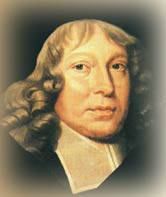
He may not have been the most photogenic (or portrait-genic) personality, but Samuel Rutherford spoke deeply to people’s souls in his day about the power of God’s love and the power of His mighty hand guiding and directing all we do.  He speaks as deeply to our souls as well today.  gl095_sm

The quote below is long, but worth the read:

How hard it is to be patient if we allow our thoughts to become stuck down among the confused rolling and wheels of second causes. By this I mean all the times we say, “If only I hadn’t been in the wrong place.  If only I had done it differently.  If only this hadn’t happened to me.”  I mean the subtle temptation to link together earthly causes and effects.  I need to fight against the temptation to accept the confused, grinding, second wheel of this logic.  The answer to this is “Look up.”  Look to the master-motion and the first wheel.  It is a petty view of our Father’s love, goodness, and wisdom that demands or expects an answer according to our desires apart from his wisdom.  We see hardly one inch of the narrow land of time. To our God eternity lies open as a meadow. It must seem strange to the heavenly people, who have reached the beautiful End, that we should ever question what Love allows to be, or that we even call prayer unanswered when it is not what we expect.”

When our hearts are tempted to focus on the here and now, on what we think we see and control in our lives and ministries; when we are tempted to consider all the “would have, could have and should have options” as if we could really make ministry work on our own, it’s time to look up.   It’s time to look up together and remember the true ‘first cause’ of all things, particularly of all things related to our ministries.

We often cite the verse, but may our hearts truly cry out that ‘without Him, we can do nothing’.

Let’s look up together:

https://www.youtube.com/watch?v=JuZptGxcook

Fall on our faces before the Lord

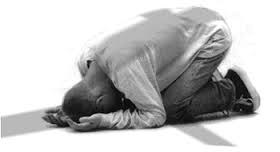
I’ve always been struck by the image in the Old Testament of one ‘falling on one’s face before the Lord’.  One passage in particular that comes to mind is Ezekiel 1 where we read: “Such was the appearance of the likeness of the glory of the Lord. And when I saw it, I fell on my face, and I heard the voice of one speaking.”  (1:28).fall-on-one-face

I often associate such a stance of prostration before the Lord as one of fear.  Certainly, a godly fear or respect is present.  However, the act of falling on one’s face before the Lord is an ultimate sign of submission, humility and total dependence.

One blog commentator had this to say about Ezekiel’s stance before the Lord: “I wonder how our lives would be different if we began to grasp the majesty and holiness of God. I wonder how our churches would be different if, even for a moment, we glimpsed the glory of God as did Ezekiel. Not only might we fall on our faces before the Lord, but we might also be empowered afresh to serve him in every facet of our lives.”

Our mission statement states that we exist ‘to glorify God by working together to establish reproducing churches’.  We exist, we live to glorify God; to fall on our face in recognition of our total need for Him to do anything in life and ministry. That ‘falling on our face’ before Him should then thrust us out into service.

As cross cultural workers, this is our ‘clarion call’.  However, our actions often times communicate something very different.  Our actions sometimes state that we are more about building our own kingdom and value than we are about God’s kingdom.  Our actions sometimes get the message across that ministry is more about us than it is about Jesus.  Our actions sometimes are telling people that we are looking for their praise, rather than encouraging them to give praise to the God of glory!

Falling on one’s face is a picture of submission, humility and dependence.  Falling on one’s face before the Lord is also a picture of the daily repentance needed to lay aside all that in our lives takes away from His glory; it is a repentance that opens the way to receive again all He has for us in Jesus.

And then there were three

three people prayingYesterday, I offered for anyone from the team here to come and pray with me for the World Team Day of Prayer. It was kind of last minute, but I was pleasantly surprised by the number of people who called and said they would have come if they had known sooner.

In the end, we were three. Three may not seem like a lot, but we prayed. We prayed along with many of you around the world, lifting up the needs of World Team and rejoicing in what God has done over the past number of months in our midst.

We prayed. It’s such a simple statement, but it has a lot to say about what is important to us as a mission, as an organization.  I won’t say it wasn’t hard to keep praying when there were only three of us, but the value we hold to ‘pushed us on’ in prayer and at the end, I can say, we were glad we spent that time together.

In October 2016, I’m hoping our ‘small group’ will multiply and there will be six or more people joining for prayer here at the WT Global office. I should probably start thinking about picking up a few more chairs for that day.