• Our hope-filled future is bound up in sharing the story of Jesus, in discipling others, in bringing those disciples together into communities of believers, and in developing and releasing those believers to create other communities... till Jesus the King comes again!

What we learned … again

Here are quotes from some of our posts on King’s Cross:

“What we may learn to give is a deeper commitment and call to follow Him, shedding our self focused way of living which may treat God only as a help in time of need and not a Redeemer needed every day.  What we may learn to get is a richer appreciation of His presence with us, of His love for us despite how we may feel or think.” (ch 6)

“When we try to depend on outside sources, we fall short and end up feeling disappointed, frustrated, depressed, unsatisfied and discontent. It is only a shadow and we will have to keep coming back again and again to feel a sense of true acceptance. Jesus says in Heb 10:10, “For God’s will was for us to be made holy by the sacrifice of the body of Jesus Christ, once for all time.”” (ch 7)

“What is amazing is that Jesus Himself, as He goes to the cross, will experience both the rejection felt by the Syrophoenician woman and the silence of the deaf and mute man.  He will take upon Himself the weight of the ravages of sin in this world and in our lives, so as to deliver us, free us from the power that sin seeks to exercise over our lives.” (ch 8)


One reader share this comment in response to King’s Cross and what he learned: “I’ve enjoyed the journey through this book, and look forward to the next book we will read together.  In a word, Cross. I feel the book addressed an attitude adjustment in my life: to follow Jesus is to bear my cross.  The followership He invites me to is not easy going, problem free, without struggle, evil and hardship.  To pick up my cross, daily, and follow Jesus is a real challenge when I simply don’t feel like it, or my heart is prone to wander, and/or I find it too darn hard!  Keller, and the interpretation of his work through my colleagues, helped me with this quite a bit.”


What we learned

Here are some quotes from our very first posts on King’s Cross:

“However, if I really understand God, and if I’m truly amazed by Who He is and what He has done, then I would live a life full of devotion, focused on Him.  I’m asked to join Him in this dance, ignore my inhibitions and ignorance, and humbly ask, as I dance with my Savior, “Why me?!”  I don’t deserve the opportunity to join in the dance, but that’s just it.  It’s all about Him inviting me, not what I deserve.” (ch 1)

“Left to ourselves, we continue in our brokenness. This is the reason His call is so significant, He is calling us from a self-centered, self-destructive life by calling us into a whole relationship which requires sole devotion to Himself, so much so that “all other attachments in [our] lives look like hate compared to Him.” Jesus cannot and will not accept moderation, His call is for complete devotion, “He must be the goal.”” (ch 2)

“It is not possible to write about Jesus and his cross without writing about sin as our biggest problem. But he pushes us further. Tapping into C.S. Lewis, as pastors are prone to do, Keller wrestles with this Biblical passage in light of a Lewis story and gives us another phrase – “not deep enough.” And he recommends this: Jesus will cut deep in dealing with our sin. He will pull back the scales. As he did with the paralytic he will identify our bigger problem and then he will go deep enough to provide the core healing that is needed.” (ch 3)

“Experiencing anew real “rest” comes when a greater treasure displaces our constant search for acceptance in others.  “On the cross Jesus was saying of the work underneath your work – the thing that makes you truly weary, this need to prove yourself because who you are and what you do are never good enough – that it is finished.  He has lived the life you should have lived, he has died the death you should have died.  If you rely on Jesus’ finished work, you that God is satisfied with you.  You can be satisfied with life.””   (ch 4)

“Oh, to be like You Jesus. That’s what I feel when I read this. I have a hard time resting. I know I need it.  Jesus was sure it was time to ‘get away’. He knew that there was just so much a person can handle . . . and He is God! When He spoke to the wind and waves, there was ‘dead calm’, much like a guy sleeping on a cushion. He didn’t need the storm to stop for His own rest. Perhaps He did it for His disciples so that they could see His ability to take care of them. Perhaps He was just proclaiming the importance of rest in a dramatic way . . . reconciling the world to Himself in inexplicable ways.”  (ch 5)


Share your insights to the book, King’s Cross with the larger WT community.  Post your responses here to the question: “What thought or idea from King’s Cross has brought about a change in your heart and attitude?”

the Beginning

Today’s post comes from Kevin in the US about chapter 18: The Beginning

The beginning of eternity.  That’s what Christ’s death and resurrection allowed us to glimpse.  The disciples didn’t get this and, as Keller points out, they were shocked that He rose—even though He told them He would.

The beginning of eternity.  We laugh at the disciples, but do we get this?  Interesting that in light of a chapter mentioning the story of Joni Eareckson Tada, I have a daughter in a wheelchair with cerebral palsy.  Ya know, I think she gets it too.  Life is the beginning of eternity.  A disability, a struggle, a broken relationship—they are painful and seem to limit us in this life.  But eternity is so much longer.

The beginning of eternity.  This is what the Gospel opens up for us: a reason to live, a reason to minister to others, and a reason for hope in the future.  Christ’s death and resurrection provided this, and so much more.

What helps you to see and live life in light of eternity?


This is the last installment of the King’s Cross blog post.  Next week, October 15th, we would like to share your insights to the book, King’s Cross with the larger WT community: “What thought or idea from King’s Cross has brought about a change in your heart and attitude?”  Please send your answers to this question to international.director@worldteam.org before next Monday, so we can post them to the TATJ blog.

the Sword

Today’s post comes from Chris in France about chapter 16: The Sword

When it comes to robbing little old ladies, both my wife and I found we gave the “wrong” answer to Keller’s question.  That’s not to say we agree with robbing little old ladies.  Rather, the reason is honour.  Australian culture is very clear on the subject.  You don’t do it because it is dishonourable.  So, I would feel shame if I did it.  In my opinion, the argument about identification with the victim and her dependents is secondary not alternative.  I also feel that it is just as based on self-regard as the honour position.  I think that this position really translates to: I would feel bad because I know how bad she would feel.  I suspect this is a cross cultural misunderstanding related to the relative power of appeals to emotion.  Emotional arguments in my culture seem to be much less powerful than in north American culture.

Keller has prompted me to ask: “Is my culture self-regarding rather than other regarding?”  My culture esteems generosity and voluntary service and requires self-effacing modesty – I mean it seriously requires this.  Anyone who has an inflated (or even high) opinion of themselves is cut down mercilessly.  We are aggressively egalitarian and obvious self-regard is socially punishable.  But, self-sacrifice, particularly in conflict is perhaps our most revered virtue.  Unlike other countries which commemorate great victories, our national day of remembrance commemorates a military defeat.  Every year, we celebrate sacrifice but also contemplate the cost and frequent futility of conflict.  Is it self-regarding to take up arms, and sacrifice your life, particularly when the no victory was gained for your country or even any victory at all?  I think it is the ultimate in self-disregard, but it is definitely motivated by honour.

First Question: Do you agree that self-sacrifice is self-disregard, even if it is based on an honour code?

Keller then goes on to talk about two administrations – the world system and the Kingdom of God.  We are all familiar with the world system: “might is right” and “he who has the gold makes the rules”.  In my mind the world system is godless evolution.  The world believes in survival of the fittest and the fittest have very big swords.  The swords may be made of steel or writs or shares but you would do well to be cautious around the people who strut about wearing them.

The Kingdom of God however speaks about survival of the meek.  It is not based on might or gold but on love.  But this is also love with justice.  The miracle of the cross is that Love used justice and self-sacrifice to reverse the fate of sinners.  We may be weak but our God is mighty.  God and me, is an overwhelming force in any struggle.  When God wields the sword, empires fall.

In Romans 13 we see that the world administration has been given the right to use the sword to punish evil.  How much more will God, in the fullness of time, deal justice to those who said there is no Creator, we evolved – and acted accordingly.  The world system despises the meek, the Kingdom of God promises them the earth.

Second question: Evolution defines survival as fitness and non-survival as weakness.  Were all those martyrs weak?


Next installment of the King’s Cross blog post will be October , looking at Ch 17 “the End”


The Cup

Today’s post comes from Mark in Hong Kong about chapter 15: The Cup

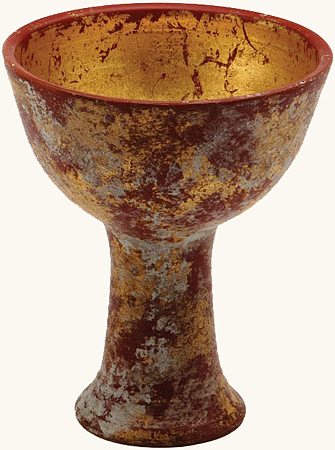
Well, here we go right into the stretch run of Keller’s book, the heart of Mark, and most importantly into the center of a crucial experience in the life of Jesus. This is the place in Mark’s Gospel where Jesus internalizes the full blow of what he will encounter in sacrificing his life for ours. “Something happened in the garden – Jesus saw, felt, sensed something – and it shocked the unshockable Son of God…now he is beginning to taste what he will experience on the cross.”

I am grateful for Keller’s choice of words. The words “saw,” “felt,” “sensed,” and most poignantly “taste” are instructive for us. These words illuminate the reality of who God is. As reflected in his Son Jesus, in the face of sin God is not stoic, staid, and steely.  God looks on the sin of his people and he is affected. He is moved to act, to intervene, and to rescue and that must mean that his Son whom he loves will suffer. And so in the intimacy of this prayer, the Father and the Son feel the import of what they are – mutually and together – to do for us. And it is not so much in what is said, but in what Jesus feels that tells us the cup will indeed not pass from him.

Keller uses the right word: taste. The cup, of course, always produces a taste. On many occasions Jesus has drank and reveled in the sweet taste of what his cup has produced. But not from this point forward. What he swallows is more than just a bad taste. It is the cup of death. And here in the garden, alone and fallen to the ground, he feels it.

Suffering has a feel. It’s palpable. For Jesus it produces feelings of being “deeply distressed and troubled…‘my soul is overwhelmed.’” And in his prayer he doesn’t repress or deny his emotion. Instead he channels it to God and allows his Father to transform his grief into gravely resolve. Jesus will go to the cross and die. But he will not do so in a cold and calculated tenor. Instead, he will invite his followers into his emotional landscape to show us that to be emotive is to be human and to lift up our feelings to the living God is to be like Christ.

Think about a season in your life when you have suffered. What did it feel like?

What do you do with the emotions of pain, grief, heartache, or sadness?

How do your prayers for yourself and for others who are suffering change because of what you have read in Mark 14.32-36?


Next installment of the King’s Cross blog post will be September 24th, looking at Ch 16 “the Sword”


the Feast

Today’s post comes from Jan in France about chapter 14: The Feast

Have you ever had a defining meal? This is one that commemorated or celebrated a defining moment in your life or that of someone special to you.  What comes to mind?  Most likely the reason, the person or people commemorated, the venue, the food.  You might even remember what you wore.  And sometimes it will be a quirky thing that occurred which will stand out, because it was so unlikely.  We could probably all share some great stories… ʽand then the Prime Minister turned up’… ʽand then the waiter gobbled the after dinner mints’ (both true).

Defining meals often have special food and drink.  The central feature of the original Passover meal for the Israelites was a whole unblemished male lamb which was to be eaten in haste.  By killing a lamb and using its blood to mark the doors as a sign of their faith and then taking the lamb into themselves during the meal, the plague of death passed over them.  Keller says that in every home that night there was either a dead child or a dead lamb, and the Israelites needed to accept the shelter of the substitute – this blood of the lamb.  Therefore, no mention was made of wine.

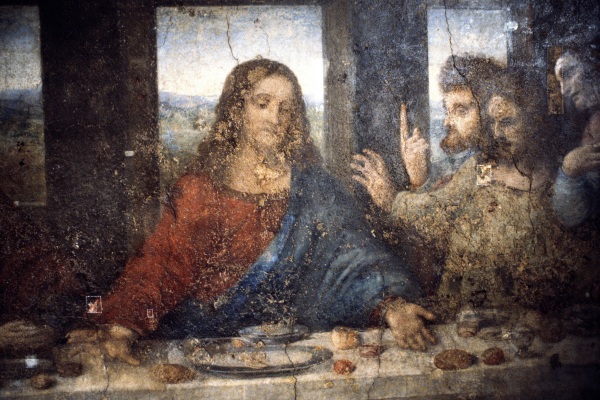
Coming forward to the time of Jesus, the final meal our Lord ate before he died was the Passover meal.  The Passover took a distinct form and included four cups of wine representing the four promises made by God in Exodus 6:6-7: rescue, freedom from slavery, redemption and a renewed relationship with God.  Jesus departed from the usual script, telling his disciples that the bread was His body.  “Take it,” He said, because it needed to be received actively and incorporated into themselves.  He planned to rescue them from the way of the world, free them from slavery to sin, redeem them fully, thus paving the way for a renewed relationship with God.

The cup of wine, from which they all drank, was the Lamb’s blood of the covenant – a new covenant of Jesus’ unconditional commitment to us, pointing us to the kingdom of God.  Keller says Jesus often compared God’s kingdom to sitting at a big feast and that this Passover meal makes the ultimate feast possible.

Isaiah 25:6 describes an endtime feast being prepared by the Lord of hosts:  a lavish banquet with refined aged wine and choice pieces with marrow.  This is when He swallows up death for all time (v.8).

However, in the gospel accounts of the Last Supper, there is no mention of eating meat.  Instead, the Lamb of God was at the table, and Keller says Jesus was the main course.

My question is:  What does “Jesus, the main course” mean for you?


Next installment of the King’s Cross blog post will be September 17th, looking at Ch 15 “the Cup”