• Our hope-filled future is bound up in sharing the story of Jesus, in discipling others, in bringing those disciples together into communities of believers, and in developing and releasing those believers to create other communities... till Jesus the King comes again!

Why the ‘tyranny of the urgent’ plagues us

Most of us have the best of intentions when we start out our day or our week.  Some of us may even have spent time reflecting, ahead of time, on what should be our ‘most important’ ministry tasks in that coming week. However, the week gets started and … two or three ‘urgent’ emails come into our box needing ‘immediate’ attention; a ministry partner calls and asks if you could do lunch together today; and the one hour Skype call turns into a two and one-half hour discussion.  It’s the ‘tyranny of the urgent’ where everything that comes across our desk needs to be addressed now.

tyranny of the urgentThe ‘tyranny of the urgent’ plagues all of us.

Our hearts, as cross cultural workers, are attuned to the needs of others and so we genuinely want to meet the needs of others; whether it’s an email, a luncheon appointment or an online discussion.  We just have a hard time saying ‘no’ in the moment and learning to juggle our days in light of His mission to which He has called us.

‘Interruptions’ are certainly God given opportunities for growth and ministry.  However, God has given us a missional task that calls for us to focus our energies, not dissipate them in a flurry of activity that may not lead us to seeing that missional task realized.

Perhaps the following steps (or others) might help us stem the tide of the plague of the ‘tyranny of the urgent’ in our lives:

Ask the simple question: Do I really need to do this now?  Oftentimes, I place the expectation of immediate response on myself.  When I go back to a person and ask if I can meet with them later or if I can answer their question in a few days, they are happy to give me that added time.

Solicit the help of others.  Many of the leadership teams I have worked on have helped me to respond to an immediate request by saying: “I need to talk to my leadership team about this before I can give you an answer.”  This lets me to put that activity in a larger context and to get the input of others first.

Ponder whether the ‘tyranny of the urgent’ activity helps to fulfill the larger calling of God on one’s life that week.  The answer may be a resounding ‘yes’ and you can jump in with all your gusto.  Or it may be a ‘no’.  Yet, by placing it in that larger context, it gives you the ability to sort out those ‘tyranny of the urgent activities’ so as to keep your mind and heart focused on the larger objective.

Can’t stop being intentional bis

A fellow WT colleague pointed me to the following short article by Ed Stetzer which I thought was a great follow up to our recent discussions on intentionality.

Read the article at: http://www.christianitytoday.com/edstetzer/2014/october/learning-to-lead-differently-as-you-age.html?utm_source=edstetzer&utm_medium=Newsletter&utm_term=14203663&utm_content=309428335&utm_campaign=2013

I would particularly draw your attention to his questions at the end of the article. They are worth reflection and discussion:

  • What have you learned about leadership transition that comes with age?
  • How can a leader overcome the challenges that come with age in a culture that is constantly seeking the newest idea, approach or technique?
  • What can we learn from Scripture in regards to leading into the later years?learncomm-hands

Can’t stop being intentional

The Gospel frees us to intentionally move towards others.

Another thought came to mind as I read a blog post by Aaron (http://www.bloggingtheologically.com/2010/08/03/book-review-rescuing-ambition-by-dave-harvey/):

As God rescues and redirects our ambitions, we have to understand that there’s a cost. We might fail. We might never see our ambitions fulfilled. But our ambitions are to have one goal in mind: serving our Savior. This is where we’re to find our contentment: not in the accomplishment, but in Him who has redeemed us and created us for these works.

In other words, godly ambitions are humble ambitions. To pursue godly ambitions means that we can forsake our comfort and well-being because Christ is sufficient. So it doesn’t matter if we fail. It doesn’t matter if we don’t’ see our plans play out. Jesus is enough.intentional-300x228

“Finishing well” actually means preparing the next generation to finish the work we begin. “True success means we will turn things over to the younger generation in such a way that enables them to run stronger and faster, with us cheering them all the way.”

Intentionality includes a multiplicational dynamic. If I choose to be intentional and invest in the lives of others, it will mean that at a given moment I will turn things over to them.  I will be intentionally investing in them for their development, intentionally preparing them to take the ministry and intentionally coming alongside them to platform and support them.

Such a multiplicational dynamic should impact the way I intentionally invest in others. A number of questions might come to mind that could help as one assesses his or her work with others:

  • How am I preparing another (or others) to take the current ministry even further?
  • How am I am impediment to that intentional desired growth of another? How am I a ‘multiplier’ of that intentional desired growth of another?
  • What needs to be part of my intentional investment that will ‘multiply’ its fruitfulness?

The Gospel frees us to intentionally move towards others. The Gospel frees us to honestly assess and grow in our intentional investment and ministry to others.


What’s it take to be intentional?

In our TC4u group last Thursday, we were talking about how the Gospel practically works itself out in specific acts of obedience in our lives. We are no longer slaves to an ‘ought to’ or ‘should do’ mentality.  The Gospel frees us to a life of thankfulness that issues in acts of kindness and service.be intentional[4]

How does that work out in actual practice? Let’s take the issue of intentionality. How do I be intentional without turning it into a ‘law’ I must live out?

Several thoughts came quickly to mind:

First, drinking deeply from the example of Jesus would fill my heart with that heart desire to move towards others. Francis, a member of the WTGA, drew this out in a recent devotional that he shared with the members of the WTGA.  In talking about John 4, he showed how Jesus turned away from a vibrant ministry to encounter others needing the message of the kingdom, and in particular a lost and needy woman in Samaria.  Jesus was regularly ‘going out of His way’ to connect with an individual who was open or seeking.  I don’t like interruptions in my planned schedule, but Jesus ‘saw’ interruptions as a means to intentionally connect with others.

Second, as I allow others to intentionally enter my world and learn to receive from them, it will move my heart to want to do the same with others. Intentionality is a ‘two way street’ and learning to be intentional can come from watching others be intentional or being on the receiving end of that intentionality.

Finally, the command is clear, but my heart is stubborn. Praying for God to move my heart by driving me deeper into the Gospel would issue in thankfulness for His love and push me towards others.  The Gospel reminds us that we truly need Jesus ‘every hour’. Without His work in our lives, we are lost in a sea of selfishness, lacking the desire to move towards others and invest in them.  Praying the Gospel into our lives and asking others to pray with us to this end should melt our hearts and begin to move us out towards others.

Being intentional, in the Gospel, without allowing it to become a law for us, pushes us to God and to others for help.


Choosing intentionality

The past few weeks, Rebecca and I have been ‘on the road’. Out of all the visits we made and the conversations we had, one word stands out in summary: intentionality.  Over and over again, we saw the power of intentionality and the fruit that flows from a deliberate choice to ‘be intentional’. intentional

The amazing thing is that it is not limited to one area or aspect of our work.

  • While on the campus of Sydney Missionary & Bible College, we saw fellow WT workers move towards students to listen to them and share with them the passion and adventure of sharing the Gospel and discipling others in cross cultural contexts.
  • While sitting in on one of our Sending Country board meetings, we heard discussion about intentionally approaching foundations and others for the funding needed to place mobilizers in key locations to share the vision of World Team.
  • While in Cambodia, we visited a ministry that responds to the total needs of the poor, but with an intentional focus on discipling workers in needed skills and new believers in their walk with Christ.
  • While visiting with long time friends in Austral Asia, we heard of their intentional efforts to raise up 2-3 new leaders within their group for the future.

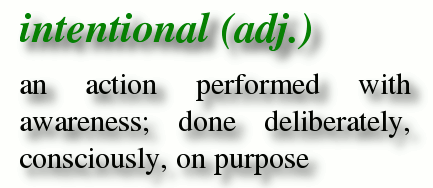
Intentionality is not the same thing as having good intentions. Intentionality is a conscious choice on our part to proactively engage others.  It calls for us to give of our time, our wisdom, and our investment.

The amazing thing is that as we are intentional with others, so will they be as well in their work with others.


Mushroom Eaters

We long to be more intentional this year in our outreach, our discipleship, our mentoring and our own personal growth and development.  Should we not also long to be more intentional in our innovation?

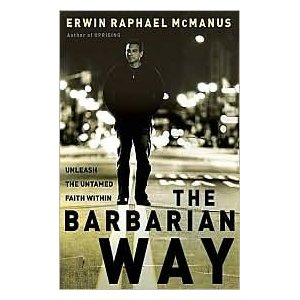
Jay recently shared this quote from Erwin McManus which speaks to this desire:

The Church Communication Network sent me an invitation to do a session on leadership in one of their national conferences… I would follow one of the most credible experts on church leadership… I was honored… Somewhere in his lecture he started to say something that totally threw me. Point-blank he instructed, “Don’t be an innovator; be an early adaptor… the innovator is the guy who eats the poisonous mushroom and dies. The early adaptor is the guy right next to him, who doesn’t have to eat it…” After thanking him for his amazing contribution to the body of Christ and for mentoring me through his books and ministry I went on to thank him for a new metaphor for my life. I am a mushroom eater… Any day now might be my last supper. But without risking the poisonous mushrooms, we never would have discovered the joys of portabellas. The barbarian call is just this simple; we are called to be mushroom eaters. A world without God cannot wait for us to choose the safe path. If we wait for someone else to take the risk, we risk that no one will ever act and that nothing will ever be accomplished. John the Baptist was a mushroom eater, and it cost him his life…”  [From: Erwin Raphael McManus, The Barbarian Way: Unleash The Tamed Faith Within, Thomas Nelson, Nashville: TN, 2005]


Maybe we should start praying to be “mushroom eaters”; choosing to take the risk and not be satisfied with the safe path.