• Our hope-filled future is bound up in sharing the story of Jesus, in discipling others, in bringing those disciples together into communities of believers, and in developing and releasing those believers to create other communities... till Jesus the King comes again!

Come let us worship

Recently, I asked a number of WT workers if they could share in less than three minutes how our core values are being worked out in their personal, team and ministry lives.  Last week you heard from Caressa about the Gospel.

This week, Daniela, one of our workers in Asia, shares how she sees prayer and worship worked out in her context.


Worship is all of life

In many evangelical circles, worship is often associated with music.  Go to your local church, house church or small group and you’ll spend the first part of community time in “worship” which is composed for the most part of a series of songs sung together.  After that, you’ll move on to a study of the Word, sharing the Lord’s Supper or other elements of community. worship

Some people criticize the worship=music formula by saying that “worship is all of life”.  What I think they mean is that in all that we do, our desire must be to turn all the praise back to God (Colossians 3:17).  What I find interesting is that the worship of this group is as limited, as incomplete as those who include only music in their worship.

Now I am definitely not against music as a means of worship.  The Scriptures are full of references to this effect.  I believe that most of us would also heartily agree that all that we do in life should give praise back to God.  As our Creator God we “live, move and exist” in Him.  However, what does worship mean?  What does it include?

Worship is the heart response to discovering more and more of who God is and is expressed in a multitude of ways.

And they came into the house and saw the Child with Mary His mother; and they fell down and worshiped Him; and opening their treasures they presented to Him gifts of gold and frankincense and myrrh.”  (Matthew 2:11)

And those who were in the boat worshiped Him, saying, “You are certainly God’s Son!””  (Matthew 14.33)

  • Worship may be expressed by the giving away of what we treasure to be used by God.
  • Worship may be expressed in words which declare who He is.
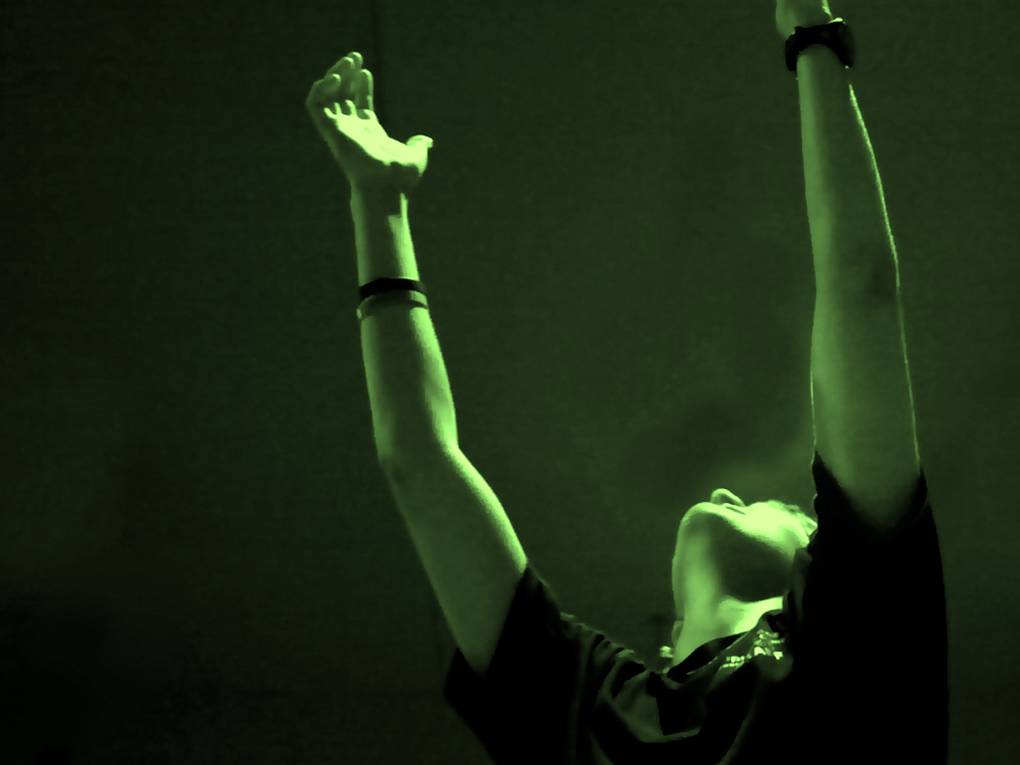
  • Worship may be expressed in the physical posture we choose to take.
  • Worship may be expressed as we make application of God’s Word to our daily lives after hearing and engaging others in the study of that Word.
  • Worship may be expressed by talking with God: sharing our hearts with Him and lifting Him up as the source of our life.

Come let us worship.

The “Our Father”

I grew up calling it: “The Lord’s Prayer”.  However, in French it is more often referred to as “The Our Father”.   I like that title because it puts the focus on where it should be in prayer, on God.our-father-in-heaven-matt-6

It seems only natural that out of the overflow of the Gospel would surge the desire to spend time with God our Father who has redeemed us by the work of Christ and applies forgiveness and righteousness to our hearts by the work of His Spirit.  It seems only natural that we would long to talk with Him, think about Him, and seek to discover how to make everything revolve around Him.

The reality is that often we are very weak when it comes to engaging God our Father in prayer.  A.W. Tozer wrote: “What comes into our minds when we think about God is the most important thing about us.”  The trouble is that what often comes into our minds when we think about God is us, and what we need from Him.  Maybe that is not your problem, but the largest segment of my prayer time often seems to be my prayer requests, what it is I am asking for from God.

Prayer is about centring ourselves anew on God.  It’s about basking in what it means to know God as “our Father” (Matthew 6) in its “breadth and length and height and depth”.

I’m trying to figure out more and more what that looks like as I talk with Him.  If nothing else, I certainly need to slow down and consider what it means that God is my Father and what expression of praise, of worship should spring from my heart as a result.


Experiencing the gospel virus

All of us enjoy chatting about our core values.  The real struggle, however, comes as we try to work them out daily in our lives and ministries.  I mentioned this thought when I began posting on our core values.

Listening to one another’s stories is one way we can find help to discern practical ways to make these core values the bedrock of all our ministry and life.

Chuck shared these thoughts in response to one of my posts on the Gospel and they’re worth mulling over:

When we went to Costa Rica, I found myself sharply critical of their work ethic.  They mixed work and play far too much.  Over time, my own values began to change.  I had drawn a sharp distinction: work hard, play hard, but don’t mix the two.  Slowly I grew in my awareness of my own compartmentalization of life.  I was focused on ‘getting the job done.’  The task is everything.  We can talk after work.  But I was odd man out among my Latin brothers and sisters.  Relationships drove both work and play; it was the ‘glue’ that permeated and enriched all of life.  The issue of work ethic, while important, was not the issue.  I needed a healthier, holistic view of life, viewed through the lens of community.  I needed, as it were, the gospel virus.

Sherwood Lingenfelter’s insightful little book, Ministering Cross-Culturally, speaks to the balance between task and relationship.  Jesus was constantly with people, interfacing with the Twelve, consistently stopping to minister to the afflicted, but all with an underlying purpose: he set his face resolutely to go to Jerusalem and the cross (Luke 9:51; cf. Isa. 50:7).  I am going to read the gospels again with this perspective.  He was committed to doing his Father’s will and constantly serving others, which seems to capture both his availability and his sense of purpose.  It flowed out of him because of who he is.internet_virus_la_clau

As David said earlier this week, I need to spend more time experiencing the Gospel “virus” in my own life, so that what I share with others will be “life to life,” flowing out of abiding in Him.  It seems to me that Jesus’ approach to ‘work’ was quite different from how we view it in the west; rather, it was a part of his daily walk, doing the will of God in tune with the Spirit.  And that included both work and play.  It was all of life lived before the audience of One.”


Not my first choice

Christian discipleship may be summed up in one phrase: “dying daily.””  This is not what most people, including myself, are expecting from the Gospel.  Yet, each day, the Gospel invites us to lay self down in order to choose Christ.Dying-to-Self-logo

Honestly, I don’t do real well at this part.

My friends at World Harvest Mission are good at helping to rehearse what the Gospel means, and particularly what it means to lay self down:  “Faith is a kind of dying, because it means we must choose to believe things that are contrary to what we naturally think.  Repentance is dying, for it requires giving up our cherished desires.  Love means dying, for it means giving up our lives for the sake of others.”

“Giving up our lives for others” works itself out in our lives as we choose to move towards others in love when they are judging, accusing or criticizing us.  This can feel like death, but deeper relationship with others in the Gospel cannot take place without this kind of dying to self.

So, here’s the question I probably need to ask myself more: how will dying daily work itself out, practically, in my life?  Maybe considering how this worked out in Jesus’ life would be helpful (1 Peter 2.20-24)?

What does it look like for you?

Recently, I asked a number of WT workers if they could share in less than three minutes how our core values are being worked out in their personal, team and ministry lives.

Caressa is one of our appointees and this is what she shared.