
• Our hope-filled future is bound up in sharing the story of Jesus, in discipling others, in bringing those disciples together into communities of believers, and in developing and releasing those believers to create other communities... till Jesus the King comes again!

What do we long for?

In our work as cross-cultural church planters, we are committed to being “incarnational”.  This is one of our guiding principles as World Team workers, and can be found in the WT Ministry Framework.
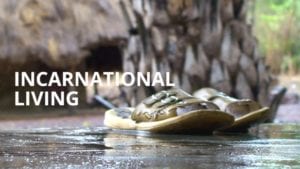
We describe what it means to be incarnational in this way: “As cross-cultural workers, we intentionally surrender our rights to our home culture, language, and ways and embrace those of the host culture. By this, we seek to model Christ, who emptied himself of the privileges and powers of divinity, taking on human form, in order to carry out his mission.”

How does this biblical principle, exemplified by Jesus Christ, work itself out in our daily life and ministry?  What is its relevance and impact?

There are at least four (4) applications of an incarnational lifestyle for us as cross-cultural workers.

  • We invest significant time in understanding the local culture in which we live and work at mastering the heart language of the people we serve.
  • Disciples and communities are trained to critically contextualize the gospel in a way that preserves the integrity of the gospel as it engages one’s local context.
  • We are not satisfied until we see the gospel multiplied by disciples making disciples, and communities multiplying themselves in other communities.
  • We are not the centre nor the ultimate motor of all this work.

In my recent reading, I ran across this quote: “… missionaries tend to be self-sufficient. It’s hard for the to be needy.  But not to receive from others make them look superior.”   The writer was speaking of a specific group of missionaries, but I think it applies to all of us in general.  None of the applications above could take root in our lives if we are not dependent on God for His grace and strength to learn one more phrase today in Tagalog, Khmer, Spanish or Portuguese.  None of the applications above could produce any fruit if we are not dependent on those we serve to carry the work of the gospel forward in their culture and context.

So, which one of the four applications is the hardest for you?  What small step might you take today to begin to work that application into your life and ministry this week?

Where is home?

It’s the blessing and the struggle of any cross-cultural worker.  The idea of ‘home’ seems elusive to our thoughts.  Where is home?  We know where our passport tells us we are from, but we feel at times caught between worlds.  We know how to ‘fit in’ in more than one culture, all the while sensing a certain aloofness or detachment at times to each one.

There are several common responses to living between worlds.  One response is to enjoy the blessings of a second culture, while pointing out regularly how our first culture is somewhat better.  Phrases like: “I just don’t understand the … [fill in the people of another culture]” or “We just wouldn’t do that in our culture”.  A second response is to seek to become a member of the second culture; to adopt all the ways of that culture without any questioning.  A third response is to ‘float’; to not fully adopt the new culture, nor hold tenaciously to one’s passport culture. 

One response is not better than another.  Living between cultures, living between worlds is just downright hard.  Nevertheless, God calls us to ‘excel still more’ (1 Thessalonians 4) in our walk with him; to learn how to navigate this life to which He has called us.

We affirm the fact that we are aliens and strangers in this world (1 Peter 1) and that God has reserved a ‘home’ for us elsewhere.  Yet, how do we live here and now?

That question often comes to mind when someone here asks me the proverbial question: “You’re not from here, so where is your home originally?”  It’s a reminder that I do live between worlds.  Yet, how do we live here and now?

A couple of suggestions for us to consider:

  • Learn to reason as one does in your adopted culture and appreciate that new perspective.
  • Ask the question: what does the Bible call me to do in this instance (rather than just my passport culture)?
  • Think on Christ who ‘lived between worlds’ and now lives in us, to show us how to live between worlds, and to give us the courage, grace and capacity to do so.

A simple read

I read a fair number of prayer letters of fellow WT workers.  It allows me to catch a small glimpse of their world and to be more informed in my prayers for them.

Sometimes, a simple read opens a door to an insight into a culture and to how fellow World Team workers are seeking to apply the Gospel in the context where they find themselves. Here’s one recent example:

It is K- New Year, one of the biggest holidays in this Asian country where everyone travels to their home provinces for a 3-day festival which marks the end of the harvest season … Our family spent some of the holiday in PV province and had the opportunity to attend the infamous Mango Party.  Our fellow teammates, J & C have been hosting the Mango Party for over ten years during K- New Year.  It is an event that embraces the traditions of the K- holiday of playing games and fellowshipping together, but also brings Jesus, our risen Savior, to the forefront during a time in this country where there is much focus on spirit worship … During this holiday, T & I, reflected on how in most religions water represents washing, cleansing, or starting over. As we watched people seek advice and guidance through elders and monks at local temples, our hearts were stirred once again to share the true living water of Jesus Christ with those we live amongst daily.  In our own power and strength, we can never wash away our sin or cleanse ourselves enough. How amazing is it that we have a Savior that loves us so much that he gives us Living Water EVERY DAY so that we may NEVER thirst, that we can come to him in our own broken condition and be accepted into his family and stand in the cover of his grace.”

Imagine that, a Mango Party that offers an opportunity to share the ‘water of life’ with others in that culture.

It was actually at a festival that Jesus made that famous pronouncement: “If anyone thirsts, let him come to me and drink.  Whoever believes in me, as the Scripture has said, ‘Out of his heart will flow rivers of living water.’” (John 7:37-38)

Thanks to my World Team colleagues who shared this insight in a recent prayer letter!  Much food (or ‘water’) for reflection!

Wise and competent

Old Testament scholar, Gerhard Von Rad once wrote that wisdom means becoming competent with regard to the realities of life: how things really happen, how things really are, and what to do about it.  Wisdom is not just knowing the principles and rules to live by, or to minister by, but it is knowing how to apply biblical principles and values in changing contexts.wisdom1

It involves becoming ‘competent’, that is becoming skilled and experienced, in both character and work.  That dual balance is a necessity for all of us.

The one without the other leaves us limping through our work or creating havoc in our lives and the lives of others.

Solid character, built on the wisdom of God and worked out in community, is essential.  However, solid character with low work competence limits a person’s capacity to influence and train others.

Solid work skills, formed through input and on the ground training, are vital.  However, solid work skills coupled with poor character leads to dangerous contexts that cause negative impact in others’ lives.

Growing in this kind of biblical wisdom involves community.  Just read through the book of Proverbs and you are struck by how often growth in wisdom occurs in a collective or community context.

We all need a community that not only nurtures us, but actually transforms us when it comes to learning and applying of biblical wisdom to our lives and ministries.

Ten reasons why World Team will change

Reason number 6: WT workers recognize that our calling remains the same, but the means or mode for communicating the message of Christ is in constant flux.top-ten-reasons-married

Our hearts continue to be driven by the simple mandate given to all disciples of Jesus: “Go therefore and make disciples of all the nations, baptizing them in the name of the Father and the Son and the Holy Spirit.”  We desire that others become part of the worshipping community that offers up praise and thanks to the Father, the Son and the Holy Spirit.

Our history as a mission is replete with different ways and approaches to sharing this message of Christ with unreached peoples.

However, the world and cultures around us continue to change at rapid speed.  Former ways of sharing the message may not be the best any more.  Technology has created a new avenue of ways to communicate Christ.  It has been noted that a large percentage of people in parts of Africa have committed their lives to Christ by watching a video on their cell phones.

The message, the task has not changed.  How we carry out that task, how we communicate the message of Christ calls for new and innovative thinking and ideas.  Andrew Walls, Scottish church historian, stated it so well when he wrote: “The essentially missionary nature of the church, the essentially missionary calling of the Christian, is where we began …what is changing is not the task, but the means and the mode.”

WT will change, not in its driving purpose and vision, but in the contextualized ways we seek to fulfill that vision and communicate the message of God.


In case you missed the first five (5) reasons:

Reason number 1: As the Gospel becomes more and more central to all our affections, it will work itself out in fresh ways in our ministries.

Reason number 2: Workers are rediscovering ‘the rush’ of walking with Jesus.

Reason number 3: Experienced workers are realizing that we are moving from being doers of the ministry to equippers for the ministry.

Reason number 4: New workers are arriving in greater numbers

Reason number 5: We are convinced that community is better than independence

“Inbetweeners”

I ran across this quote today and thought it was worth posting in place of our ongoing discussion on what we mean by “church”.  I have used the word “workers” to replace the normal word used:

All workers now have a new role of inbetweeners.  They are bridge-persons, culture brokers, who stand between worlds and help each to understand the other. They stand between the church and unreached people and between churches and missions in different lands.  This calls for a new understanding of the psychological, social, and cultural nature of the workers of the future.  They must truly be bicultural or transcultural people, living in different worlds but not fully at home in any of them.”

I am an “inbetweener” in my life as a believer as I experience the “already and the not yet”, seeking to bridge living in this world with the longing to be in the full presence of my Father.  But I am also an “inbetweener” in my work with others, seeking to build bridges of relationships whereby the message of the Father can be shared with many.

There’s a lot to consider in being an “inbetweener”.