• Our hope-filled future is bound up in sharing the story of Jesus, in discipling others, in bringing those disciples together into communities of believers, and in developing and releasing those believers to create other communities... till Jesus the King comes again!

Looking deeper

Sometimes when we look at an issue or a problem, a lot of creative ideas come quickly to mind. And certainly, a number of those are good solutions to that issue that we should consider implementing. 

However, that “quick response” reflex can sometimes keep us from looking deeper; from searching out other sources of that issue or problem.

In recent times, we have heard quite a bit about the decline of candidates from North America (and other places in the Western world); a decline in those who are considering serving in cross cultural church planting.  A number of reasons are put forth: an antipathy toward raising funds; the unknown of what is church planting; the feeling that one can do ministry right here in North America where the world is coming to us; or the desire to find a job overseas (rather than raise funds) and simply help a church plant get started somewhere in the world.

In light o those concerns, we create viable solutions to address them: creative funding solutions; marketplace ministry; diaspora outreach; or front loading more and more CP training.

Please hear me well: all of these are worthwhile endeavors that we should pursue.

However, I would encourage us to look more deeply at these issues in missions today in light of a few thoughts I have recently read:

  • In Mobilizing Gen Z, Jolene Erlacher and Katy White quote the Future of Missions study from Barna: “Only 35 percent of engaged Christian parents of young adults say they would definitely encourage their child to serve in missions, while 25 percent are not open to the idea at all.”
  • “In the West, we have multiple churches in any given community, yet more than half of the world’s population has little or no access to the gospel of Jesus Christ.”
  • A friend wrote recently: “The sacrifice of missions is real, it’s deep, it’s enduring.”

Maybe we should give time and energy to better understanding the hesitations of Christian parents, and how we might challenge them to pray for the future of their children from God’s perspective.  Perhaps, we might re-build the vision of the incredible ride and journey cross cultural church planting is.  And maybe, we just need to rehearse again and again Jesus’ call to disciple the nations – some of whom may not land on our shores.

Michael Griffiths wrote a short book many years ago called: Give Up Your Small Ambitions.  Maybe that’s a word for us today: how do we share the wonder, joy, and sacrifice that is cross cultural church planting with those around us?   What are your thoughts?

Just to be clear

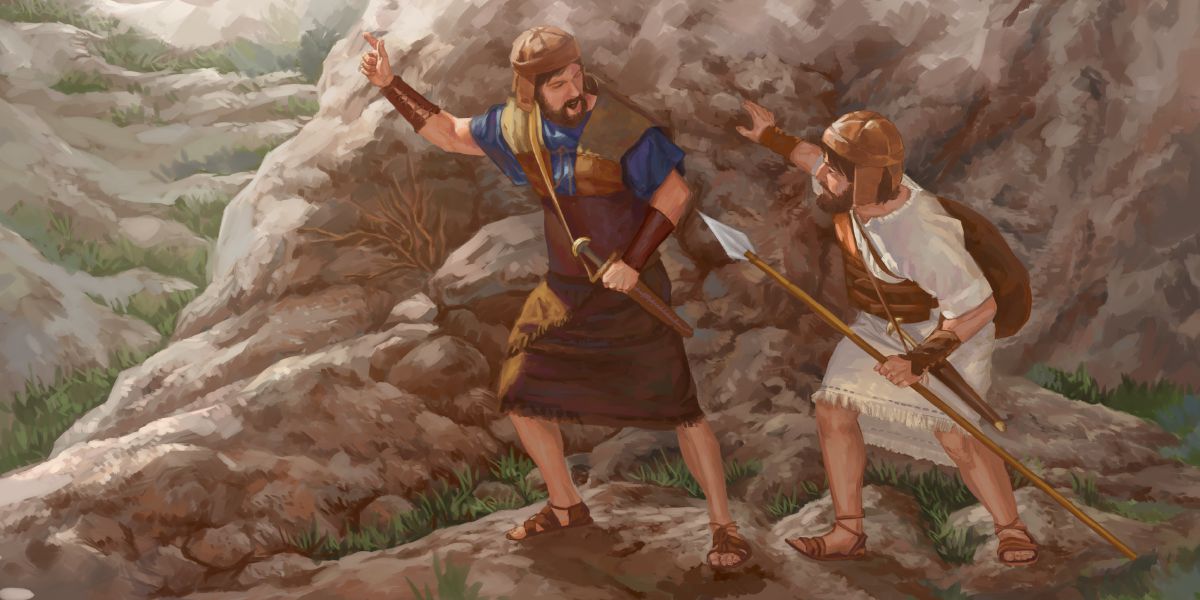
In his landmark book, Good to Great, Jim Collins wrote that if there was one thing you are passionate about and you can be best at, then you should do just that one thing.  We know from the Scriptures that we are to love the Lord our God with all our heart, mind, soul and strength (Matthew 22:37; Mark 12:30).  That is what we are to be “best at”.  But there is an interesting verse in 1 Samuel 14:7 when Jonathan asks his armour bearer for the two of them to go up alone against the garrison of the Philistines.  Listen to the armour bearer’s response: “Do all that is in your heart. Do as you wish. Behold, I am with you heart and soul.”  That sounds like a passionate commitment to a godly cause.

Just to be clear: we as World Team workers are passionate about seeing people come into relationship with Christ and experiencing the community of God’s people. And then sharing this same passion with others.

In mission jargon, we would say that we are passionate about church planting, or multiplicational church planting.  However, that can sometimes sound overly technical, dry, or even passion-less.  Re-discovering the passion of church planting can come by saying in other ways what drives us to love God more and what gets us out of bed in the morning.

World Team workers build healthy relationships with others.  As trust is established, they engage others in conversations about spiritual matters.  As interest arises, WT workers offer the opportunity to discover the message of the Bible together.  If interest wanes, WT workers remain strong and consistent friends.  However, as the message of the Bible draws people to Christ, they are equipped by WT workers to grow in their walk with Christ and to do the same with others.  These new believers come together in community and learn together what it will look like for them to be a witness for Christ where they live and work. And then whole process starts over again.

The exciting part is this passion is worked out in a variety of ways in World Team.  Yet it is all focused on the same end point: a living, vibrant community of believers that is growing, multiplying itself out to three, four and five generations of new believers.

That is God’s passion for the world.  May we say like that armour bearer: “Behold, I am with you heart and soul.

What keeps you in the work?

I’m sure that you have either asked yourself the question or been asked the question: What keeps you here?  What keeps you going when life and ministry get a bit tough? 

We’ve all had one of those days when we wonder how we can keep going in this work of cross cultural church planting.  And we’ve all had someone ask us the question as to what keeps us ploughing ahead when the work doesn’t go exactly as planned.

I’ve started reading and studying through Romans again and found the start of an answer in the very first words of Paul: “Paul, a servant of Christ Jesus, called to be an apostle, set apart for the gospel of God” (Romans 1:1).  To put it simply, what kept Paul in the work was a thoroughgoing understanding of God’s grace, and the truth that it was God who had sent Paul into this work.

Paul was a “servant” who served because he recognized the depths of the riches of God’s grace towards him (Paul).  And if God had shown Paul such grace through the gospel, then this gospel was for all peoples, all nations. One writer put it this way: “If we would be used of God, we must have view of the gospel that is as broad as the universe.” 

Paul was also an “apostle”, that is one who is sent.  If we were honest with ourselves, we would admit that we didn’t ‘run into this work’ on our own initiative and effort.  We felt the pull of God’s call upon our heart.  Most of us remember and could put words to that ‘calling’. He was the initiator. And what He did was to send us. 

So, when things get rough, when the work doesn’t progress as we would like, our best move is to run back to the Father.  Ask for Him to restore to us the joy of our salvation, to recognize His grace at work in our own lives.  And then remind ourselves who called us, who sent us to do the work of the ministry.

When I remember that latter piece in particular, that it was God who sent me, it can cause me to see how much more I need to grow in prayer and in ‘believing’.  And it will keep my feet from running from the work, towards engaging even more in the work.

Humility check

humility-copyLisa corrected a misstatement in my previous post.  I had written: “Up to this point, I have not found ‘humility’ as one of the assessment categories on an annual evaluation.”  However, there was such a category in our old Annual Ministry Review form.

This is what you would have found there:

Christian Character—a godly life which shows evidence of God’s work being conformed to the image of Christ as demonstrated by:

  1. a humble, teachable spirit
  Requires Improvement   Satisfactory   Exceptional
Comments:


The rub is that no one would have ever wanted to say that their humility factor was off the charts by checking the box, exceptional.

However, the point of that Annual Ministry Review exercise was to get ‘outside-in’ input from others on the ravages of pride in our lives.  Others help us have an accurate picture of where our trust is more in ourselves than in the Savior.  Most of us are self-unaware when it comes to how deep pride runs in our own hearts.  Jack Miller (Serge) used to say that at the root of every sin you would find pride and unbelief.

Humility, as a foundational principle for CPM, reminds us of how often ‘we’ get in the way of God’s missional work.

For a humility check, try asking several others: where do you see me relying more on myself than on Jesus?  Then be ready to take those responses back to Jesus, asking him to give you the grace to turn again from one’s pride and grab hold of His loving and forgiving hands.

Vital prayer

I remember reading an article, a number of years ago, about the importance of prayer to church planting.  Well, I found that article today in the archives of Mission Frontiers magazine (http://www.missionfrontiers.org/issue/article/the-ten-universal-elements).  This is what the authors wrote in the March/April 2000 issue:

we-pray“1. PrayerPrayer has been fundamental to every Church Planting Movement we have observed. Prayer typically provides the first pillar in a strategy coordinator’s master plan for reaching his or her people group. However, it is the vitality of prayer in the missionary’s personal life that leads to its imitation in the life of the new church and its leaders. By revealing from the beginning the source of his power in prayer, the missionary effectively gives away the greatest resource he brings to the assignment. This sharing of the power source is critical to the transfer of vision and momentum from the missionary to the new local Christian leadership.”

The authors of this article considered prayer as the ‘first pillar in a strategy coordinator’s master plan’.  Now that statement was written over seventeen years ago.  Yet, David Garrison in his work on church planting movements (CPM), came to the same conclusion just a few years ago when  he observed that prayer was the number one element in church planting movements; where there was an urgency, passion, and vitality to believers’ prayers.”

This truth is ‘self-evident’, we might say.  However, I wonder if our practice might say otherwise.  Both Mission Frontiers and David Garrison noted the ‘vitality’ of believers’ prayers for churches to be established and multiplied.

Vitality might best be defined as: the power of enduring; and having a lively and animated character.  Prayer that supports and seeks the startup of multiplying communities of believers is prayer that goes the long haul; that regularly pleads for God to call out His own from a people group; and that is full of enthusiasm and hope in the promise that God will build His church.

Prayer is the ‘pillar’ of our work. Figuring out avenues to grow in prayer ‘vitality’ is part of the church planting process.

Change case

Many of us have (or are facing) a situation such as the following:

A small group has been built as a result of one’s evangelistic and discipleship efforts.  Most of the people attending the small group have been discipled by you.  Your fellow co-wochangerkers have been encouraging you for a while to think about next steps in the church planting continuum.  Now you are feeling that it is time to ‘turn over’ this group to the local believers. 

However, each time you position someone to move into the leadership of the group, you are met with this response: “I just can’t do this.”  It’s either said overtly or it’s implied by the way in which each person avoids the conversation.”

Foundations are forever.”

Some of the possible ‘faulty foundations’ we may have planted in this situation might be, one, that the ministry centres on us as workers, and two, that to lead in any way one needs to have extensive training and education.  Now, we may not be stating these foundations outright, but our actions are certainly communicating these ideas.

So what can do to change these ‘faulty foundations’?

First, we can admit where we have gone wrong in laying the current foundations.  It’s never an easy step to say that we may have not taken the best steps in launching a group or a church.  Yet, such honesty can ‘level the field’ with local believers so that they (and we) will see that this small group, this work, is God’s doing and that we all have a part to play in its life.

Second, we can pray (and ask others to pray with us) for God to search our hearts and show us a way out of these faulty foundations; and how to build new foundations in the Gospel.  Each of us can be blinded to things that may inhibit local believers from getting involved in the work.  The Lord is gracious to show us our ‘hurtful ways’ and through the Gospel help us to build bridges back to our fellow believers, joining with them in the work.

Finally, we can start by asking others for help from the start.  People do need to be trained in the ministry. However, most of us hesitate from releasing local believers into the ministry because we always think they need even more preparation.  Some of their preparation though will probably come about through real live ministry experience.

Many of us have (or are facing) a situation such as the one above.  However, God works in seemingly impossible situations, both in our hearts and in the hearts of those to whom we are ministering.