• Our hope-filled future is bound up in sharing the story of Jesus, in discipling others, in bringing those disciples together into communities of believers, and in developing and releasing those believers to create other communities... till Jesus the King comes again!

Balancing Act

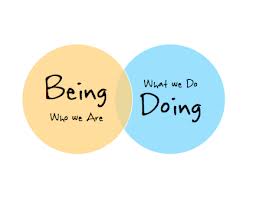
The other day we opened up the topic of the relationship between ‘being’ and ‘doing’.  Basically, we recognized that these two elements are inseparable.  One response was: “When I understand the great, free gift God has given me through Christ, then I cannot help but to share it out of the overflow of joy from my inner being. And the more we share the Good News, the more we realize just how reliant we are on Christ. Round and round we go.”  In many ways, it’s a careful balancing act to always allow one element to move us around to the other.air-conditioning-balancing-act

What I’m most interested in thinking about today in this post is: how does it all happen?  What does it practically look like when I ‘go to work’ as a church planter?

Let me suggest several ideas for us to chew on:

First, ask people close to us to participate in an honest assessment of our character and competencies.  We can easily overlook the weaknesses we have in our own character or work. We can excuse deficiencies in ourselves more quickly than we can in others.  All of this, points to our need to have others speak into our life and give feedback on character issues and core competency skills that need work.  By involving others in the assessment phase, we open the door, as well, to their potential coaching in helping us to grow in both character and competency.

Next, set a plan to grow in an area, but pray like mad that any effort would be inspired and driven by God.  All of us need to grow more in critical core skills related to our ministries.  However, that does not happen by osmosis.  We need to put effort to it.  That effort, though, cannot be separated from the ultimate power source, namely Jesus.  Round and round we go again.

Finally, remember that our model is our most powerful influence.  If we encourage others to be more in prayer, then we need to set the example.  If we complain to other workers about the fact that there are not more disciples or that the work is slow, we need to respond by re-engaging  ourselves in initiating spiritual conversations (see Core Skills module on evangelism, starting in January 2013) or in participating in developing and releasing others into ministry.  Our greatest help to new believers is actually engaging in ministry with them.  It will also be our greatest joy.

I’m sure there are others and I welcome hearing from you about them.  Let’s challenge each other more round and round the circle of character and competency.

Anything New Under the Sun?

Winston Churchill once said, “Those that fail to learn from history, are doomed to repeat it.”  The Scriptures tell us: “there is nothing new under the sun.”

British historian, Ian Shaw, in his recent work, Churches, Revolutions and Empires, demonstrates the very truth of this statement.  Using extensive research, Shaw highlights critical issues faced by the Church in the 18th and 19th centuries.  The examples he chooses would make you think he was talking about our current global context.   Shaw writes: “Many believed that, with the changing social and religious geography of Britain, urgent and innovative responses were needed if the church was to remain relevant in a new context.”  Sound vaguely familiar?  Shaw goes on to say: “One influential experiment was played out in the years after 1815, when the brilliant young minister, Thomas Chalmers … developed an approach to urban mission, which he publicized and promoted through his writings.”  How interesting that in 1815 the idea of ‘urban ministry’ was already in play.imagesCAVNOKB2

In our current day, we often juxtapose “being” and “doing”, or put another way, “character” and “competence”.  Time and again, one element of this combination is stressed to the exclusion of the other.  Many argue that what is most important is ‘being’ or our character.  God is not interested in numbers, but He is primarily interested in our heart.  Others counter by stating that the Bible is replete with instructions about stewardship and management of resources and that His ultimate desire is that we bear fruit in specific terms.

What’s interesting is that this same discussion has played out at many points in past centuries.  However, the debate waned at those times when people saw the two as being inseparable.  You cannot talk about “being” without it leading to “doing”.  You cannot speak about “character” without it implying the need for “competence”.

As we begin to move all our workers through the first core skills module on evangelism, our stance will be that spiritual intimacy with Christ will lead to sharing one’s story with another; and that sharing one’s story with another in a clear and contextual way will push us back to a deeper reliance upon and intimacy with God.  Both are equally essential in our ministries.


the Temple

Today’s post comes from Amy in the Philippines about chapter 13: The Temple

Jesus, King of Kings, enters Jerusalem on a non-consequential donkey.  He is the Lion of Judah and the lamb on the throne.  He enters the courts of the Temple for the Jewish holiday of Passover and his concern is for the nations.  The curtain is torn, and the Temple takes a new role in the lives of God’s people.

Keller tells us that Jesus’ personality, that which is full of “perfect justice yet boundless grace, absolute sovereignty yet utter submission,” is a “complete and beautiful whole.”  And the wholeness of our God’s beautiful personality is passionately concerned for the holiness of his people, including the Gentile nations.

I love that Keller draws our attention to what Jesus is doing.  Honestly, I never noticed the part where Jesus says, “Is it not written: ‘My house will be called a house of prayer for all nations’?”  But Keller draws us to this point because, he says, Jesus is not only overturning tables of money-changers, but overturning the sacrificial system itself.  He’s standing up for those (the nations) who still don’t know that God is fighting for them.

He’s preparing them, and us, for the cross by challenging the system of sacrifice enacted by God.  Keller tells us of the sword that blocked the way for Adam and Eve to re-enter Eden.  And the “sword” that exacts the death sacrifice of animals to atone for sins.  And the sword that Jesus must face to take the penalty for us and bring us into the holy place.  Jesus’ pre-Passover time in the Temple wasn’t filled with traditional worship, but was a last declaration that the Temple the people knew would never suffice again.  There was a new Temple now, known in the Body of Christ, and it was for all people.

But the most challenging part of this chapter for me is the parable of the fig.  Finally I know now, thanks to Keller, that Jesus’ curse on the fig tree was not unjust, but because the tree was meant to be fruitful even when not bearing figs; it was essentially not doing its job.  And neither was the sacrificial system of Israel.  And Keller asks us readers, “…is it clear to the people who know you best that your character is undergoing radical regeneration?”  In other words, are you a fruitless fig?

And that, Keller tells us, is Jesus’ challenge to us all: “Jesus, who unites such apparent extremes of character into such an integrated and balanced whole, demands an extreme response from every one of us…This man who throws open the gates of his kingdom to everyone, then warns the most devout insiders that their standing in the kingdom is in jeopardy without fruitfulness.”

Does your life and ministry show that Jesus is the one who opens the Kingdom? 

Or are you filling the courts of your work with activities or goals or objectives that get in the way of His purpose (i.e. creating a sacrificial system of your own)?

Are you fruitful where it counts? 

And I couldn’t ask it better than Keller: “Is it clear to the people who know you best that your character is undergoing radical regeneration?”


Next installment of the King’s Cross blog post will be September 10th, looking at Ch 14 “the Feast”